Art Nouveau gateway in Europe quarter where continental themes meet metropolitan innovation
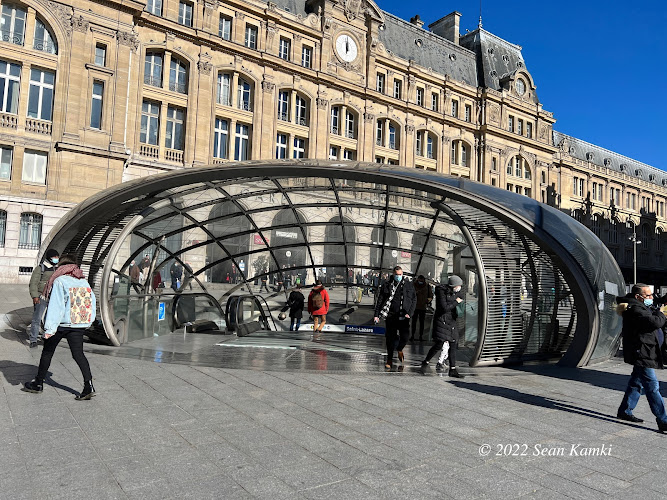
At Rome station on Boulevard des Batignolles between the 8th and 17th arrondissements, the Édicule Guimard stands as one of Hector Guimard’s protected Art Nouveau metro entrances, opened October 7, 1902, where cast iron and glass construction created transportation access that honored both its European quarter location and the innovative Style Métro system that revolutionized Parisian urban infrastructure. Named for nearby rue de Rome within a district celebrating major European cities, this entrance demonstrates how metro design could reflect neighborhood cultural identity while serving practical transportation needs through organic architectural forms that connected daily commuters to both continental heritage and modernist innovation integrated into essential urban services.
European quarter context and cosmopolitan identity
The station’s location within the Europe quarter, where streets honor major continental capitals, creates perfect context for Guimard’s internationalist Art Nouveau vision that drew inspiration from diverse cultural traditions while establishing distinctly Parisian aesthetic identity through metro entrances that served both local transportation needs and cultural education about design excellence. This geographic symbolism proves how urban planning can celebrate international connections while maintaining local architectural character through infrastructure that honors both global awareness and neighborhood identity.
The proximity to rue de Rome, commemorating Italy’s capital, creates appropriate setting for Art Nouveau design that itself represented international artistic movement transcending national boundaries while adapting to specific urban contexts through architectural innovation that demonstrated how cosmopolitan cultural exchange could enrich local infrastructure development through design excellence that served both practical transportation and aesthetic education within European cultural framework.
Cast iron innovation and naturalistic engineering
The distinctive oxidized brass green paint designed to resemble bronze patina, combined with custom Métropolitain lettering created specifically for metro identification, established a comprehensive visual identity that proved how systematic artistic vision could transform entire urban transportation networks through coordinated design maintaining stylistic consistency while adapting to diverse neighborhood contexts requiring both aesthetic distinction and functional reliability for effective public transit system operation.
Line 2 expansion and metropolitan development
The timing during Guimard’s most productive period (1900-1913) enabled the Rome station to benefit from the architect’s fully developed Art Nouveau philosophy, where five years of metro entrance experimentation had refined design approaches that achieved optimal balance between aesthetic innovation and practical transportation functionality through modular systems that served both artistic expression and operational efficiency required for expanding metropolitan transit networks.
Preservation achievement and cultural recognition
The 1978 Historical Monument classification, renewed in 2016, recognizes this entrance’s exceptional significance within Art Nouveau heritage while ensuring preservation standards that protect Guimard’s design integrity for future generations. This protection effort proved that exceptional public art requires both official recognition and ongoing maintenance to ensure innovative urban design survives changing aesthetic fashion while continuing to serve practical transportation needs through beauty that enhances rather than complicates daily metropolitan functionality.
Contemporary relevance and metropolitan identity
The Rome entrance’s role within the broader international recognition of Guimard entrances as quintessential Parisian architectural symbols proves that exceptional public design transcends its original functional purpose to become cultural ambassadors representing entire cities through design excellence that captures local aesthetic identity while inspiring worldwide appreciation for innovative urban planning that integrated natural wisdom into technological solutions required for modern metropolitan transportation serving diverse populations requiring both functional efficiency and cultural enrichment within European cosmopolitan contexts.
Essential information
- Designer: Hector Guimard (Art Nouveau pioneer)
- Opening: October 7, 1902 (Line 2 Étoile-Anvers extension)
- Location: Boulevard des Batignolles, 8th/17th arrondissement border
- District context: Europe quarter (European capital street names)
- Materials: Cast iron and glass with oxidized brass green paint
- Typography: Custom Métropolitain lettering by Guimard
- Protection: Historical monument (1978, renewed 2016)
- Survival status: One of 86 remaining from 167 original entrances
Design and cultural significance
- Naturalistic concept: Organic forms suggesting botanical growth
- Material innovation: Cast iron enabling sinuous Art Nouveau curves
- Systematic design: Modular elements creating stylistic consistency
- Cultural integration: European quarter context honoring international connections
- Preservation success: Protected status ensuring ongoing cultural heritage
Metropolitan expansion meets Art Nouveau excellence
The Édicule Guimard at Rome station embodies the successful integration of artistic innovation within practical metropolitan expansion, where Hector Guimard’s Art Nouveau vision created transportation infrastructure that honored both the Europe quarter’s cosmopolitan identity and the expanding metro system’s need for distinctive architectural character through organic design that connected international cultural awareness to local Parisian aesthetic identity. This extraordinary entrance proves that exceptional public art emerges when systematic artistic vision meets practical urban development requirements, creating metro access that serves both immediate transportation functionality and long-term cultural education through design excellence that demonstrates how natural observation can inform technological infrastructure while maintaining beauty that enriches daily urban experience. For Art Nouveau enthusiasts, metropolitan history admirers, or anyone interested in how international cultural awareness can inspire local architectural innovation, this Rome station entrance offers a remarkable encounter with cosmopolitan modernism, where European quarter context and organic Art Nouveau forms create transportation poetry that proves the finest urban design transcends purely functional requirements to become cultural institutions that continue inspiring appreciation for beauty integrated into essential city services, demonstrating that authentic metropolitan identity emerges when local architectural excellence honors international connections while serving practical community needs through infrastructure that makes ordinary commuting experiences more culturally significant and aesthetically enriching than utilitarian approaches to transportation access could achieve through mechanical efficiency alone.