
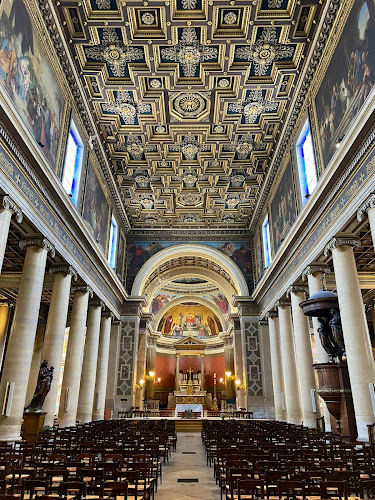
Description
The Église Notre-Dame-de-Lorette, located on Rue de Châteaudun in the 9th arrondissement of Paris, is the oldest church in the city. Built in 1420, it holds a special place in the history of Paris as the first church ever constructed in the city. Upon entering the Église Notre-Dame-de-Lorette, visitors are struck by the church’s stunning architecture, which features intricate details and ornate decorations. The church’s interior is equally impressive, with its soaring ceilings and beautiful stained-glass windows. One of the most notable features of the Église Notre-Dame-de-Lorette is its impressive pipe organ, which dates back to the 19th century. The organ has been restored several times over the years and remains one of the church’s most beloved treasures. In addition to its rich history and stunning architecture, the Église Notre-Dame-de-Lorette is also known for its vibrant community of parishioners. Visitors to the church are often struck by the warmth and friendliness of the congregation, which is made up of people from all walks of life. Overall, the Église Notre-Dame-de-Lorette is a must-visit destination for anyone interested in the history and culture of Paris. Whether you are a devout Christian or simply appreciate beautiful architecture and art, this church is sure to leave a lasting impression.
Key Features
- The Église Notre-Dame-de-Lorette is a neoclassical church dating back to the early 19th century.
- It boasts stunning marble and gold interiors, along with an impressive oak pulpit.
- The historical significance of the church makes it a must-see attraction, offering visitors a glimpse into its rich architectural and religious heritage.
Accessibility and Amenities
- The museum is equipped with accessibility features to accommodate visitors with disabilities, ensuring an inclusive experience for all.
- Amenities include restrooms, and visitors can also access dining options and a gift shop for souvenirs.
- Unique services such as audio guides and a coat check are available to enhance visitors' exploration of the museum.
Planning Your Visit
- To avoid crowds, it's advisable to visit during weekdays and early mornings.
- Visitors typically spend around 1-2 hours exploring the museum, immersing themselves in its architectural and historical wonders.
- Recommended itineraries include starting with the neoclassical church, followed by a leisurely stroll through the marble and gold interiors, and concluding with a visit to the oak pulpit.
What Makes Église Notre-Dame-de-Lorette Notable
Église Notre-Dame-de-Lorette is a neoclassical Roman Catholic church on Rue de Châteaudun in Paris’s 9th arrondissement. Completed in 1836 and dedicated to Our Lady of Loreto, it belongs to the nineteenth-century Paris shaped by expanding neighbourhoods north of the Grands Boulevards. Its formal classical language gives the building a different character from the medieval churches more often associated with central Paris.
The church also gives its name to a revealing piece of local social history. In the nineteenth century, lorette became a French term for young women living in the surrounding area. That association makes a stop here useful not only for church architecture but also for understanding the changing identity of the 9th arrondissement. It remains an active parish, so a visit should respect worship and parish activity.
Location & Neighborhood Context
Notre-Dame-de-Lorette sits in the 9th arrondissement, in the transition between the theatre-oriented streets and boulevards to the south and the residential, café-lined slopes leading towards Pigalle to the north. The nearby Nouvelle Athènes and Saint-Georges area rewards an unhurried walk: this is a district of nineteenth-century streets where the church fits naturally into the urban fabric rather than standing apart in a large monumental square.
It works well as a pause while exploring the upper 9th arrondissement on foot. Combine it with a stroll along Rue des Martyrs or through the streets around Place Saint-Georges, then continue towards the Grands Boulevards if your route heads south. The church is not a Seine-side sight; plan it as part of a neighbourhood walk through the Right Bank’s former artistic and residential quarters.
Visitor Highlights
- A clear nineteenth-century landmark: the 1836 completion date and neoclassical design offer a useful contrast with Paris’s Gothic churches.
- Local historical context: the origin of the word lorette connects the building directly to the social history of its neighbourhood.
- An active parish setting: this suits visitors interested in living religious heritage as well as architecture.
- Guided heritage visits: the parish lists selected Sunday guided visits led by an Art, Culture et Foi guide, including dates in autumn 2026; these are particularly useful for visitors who want interpretation rather than a brief independent look.
- Recent preservation work: the Chapel of Death and Resurrection, also called the Chapel of Souls, reopened in December 2025 after works.
Practical Planning Tips
Visit earlier in the day if you want a quieter architectural stop, or build the church into a morning or afternoon walk around the 9th. Allow time to take in the exterior and interior without treating it as a quick photo stop. Since it is a place of worship, keep voices low, dress respectfully, and avoid interrupting services or parish events.
Check the parish website shortly before you go for current access, worship, concerts and heritage visits. The published programme includes guided visits at 16:00 on selected Sundays in 2026, plus European Heritage Days dates in September, but programmes can change. If a concert or guided visit is the purpose of your trip, confirm arrangements directly with the parish rather than relying on a general sightseeing itinerary.
Frequently Asked Questions
When was Église Notre-Dame-de-Lorette completed?
The present neoclassical church was completed in 1836.
Why is the church called Notre-Dame-de-Lorette?
It is dedicated to Our Lady of Loreto. Its name later became associated with the surrounding neighbourhood through the nineteenth-century term lorette.
Are guided visits available?
The parish publishes selected guided visits, including several Sunday dates in 2026. Check its current programme before making a special journey.