
Description
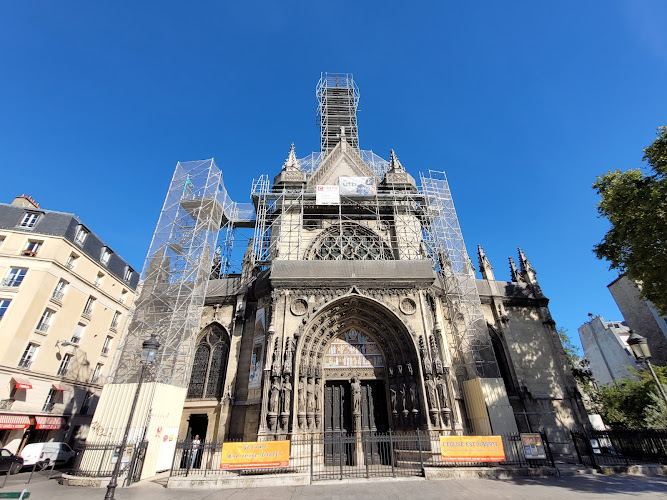
Nestled in the 10th arrondissement of Paris, the Église Saint-Laurent, also known as the Church of Saint Lawrence, is a grand monument that embodies the city’s rich history and architectural prowess. Designed by the renowned architect Louis-Philippe Dufour, this 18th-century church is one of the largest in Europe, boasting an impressive facade that commands attention from passersby. Despite its grandeur, the Église Saint-Laurent has had a turbulent past, having been destroyed by fire on multiple occasions. However, its resilience and enduring beauty are a testament to the unwavering spirit of Parisians and their commitment to preserving their cultural heritage. As you step inside the church, you are immediately struck by its soaring ceilings, intricate stained glass windows, and ornate decorations. The interior of the church is a true marvel, with its grand altar, towering columns, and intricate carvings that exude a sense of awe and reverence. The Église Saint-Laurent is not just a place of worship but also a cultural treasure that offers a glimpse into the rich history and artistry of Paris. Whether you are a history buff, an architecture enthusiast, or simply seeking a moment of quiet reflection, this monument is a must-visit destination that offers a unique and unforgettable experience.
Key Features
- The Église Saint-Laurent is a restored medieval Catholic church with elaborate Gothic features, including stunning stained glass and painting-filled chapels.
- The church holds significant historical and cultural value as a cultural landmark, making it a must-see for visitors interested in architectural and religious history.
Accessibility and Amenities
- The museum is equipped with accessibility features to accommodate visitors with disabilities, ensuring that all guests can fully experience the beauty and history of the church.
- Amenities include restrooms, and visitors can also avail themselves of unique services such as audio guides to enhance their understanding of the church's history and significance.
Planning Your Visit
- To avoid crowds, it is advisable to visit the Église Saint-Laurent during weekdays or in the morning.
- On average, visitors spend approximately 1-2 hours exploring the church and its various chapels, making it an ideal stop for a comprehensive cultural experience.
Why Église Saint-Laurent Matters
Église Saint-Laurent is a Roman Catholic church on boulevard de Magenta in Paris’s 10th arrondissement. It belongs to one of the city’s oldest parishes, whose origins reach back to the 6th century. That long parish history gives the church a different perspective from Paris’s headline monuments: this is an active religious place with a continuing role in local life, not simply an architectural stop on an itinerary.
The present building brings together Gothic and Baroque elements. This combination makes Saint-Laurent rewarding for visitors who like to read Parisian churches as buildings shaped over time rather than as a single, uniform style. Approach it with a little patience: pause to take in the overall composition, then look for the shifts in architectural language. Its character is best appreciated quietly, with due respect for worshippers and parish activity.
Location and Neighbourhood Context
The church stands at 68 boulevard de Magenta, in the 10th arrondissement, on a major north–south boulevard close to the Gare de l’Est area. This is a practical, lived-in part of Paris where transport, shops, cafés and daily movement give the streets a notably urban rhythm. Saint-Laurent provides a useful cultural pause between the larger-scale circulation of the boulevard and the more intimate streets of the surrounding quarter.
For a wider walk, pair the church with the nearby Canal Saint-Martin quarter, where waterside paths and local streets offer a contrasting pace. The location also works well at the beginning or end of a day exploring central and eastern Paris, particularly for travellers arriving through the station district. Allow time for the walk itself rather than treating the church as a rushed photo stop.
Visitor Highlights
- Long parish history: the parish’s 6th-century origins add historical depth to a visit in the 10th arrondissement.
- Architectural contrast: Gothic and Baroque elements invite a closer look at how different periods meet within the present church.
- An active Catholic parish: Saint-Laurent suits visitors interested in living religious heritage as well as architecture.
- A useful stop on foot: it fits naturally into walks around boulevard de Magenta, the Gare de l’Est area and Canal Saint-Martin.
- A reflective interlude: it is especially appropriate for independent travellers who prefer a quieter cultural visit away from the city’s largest visitor sites.
Practical Planning Tips
Plan a flexible visit and check the parish website shortly before setting out, as church access and services can be affected by worship, celebrations and parish events. A weekday morning or a period between services can offer a calmer experience, but avoid assuming that a church is open for sightseeing whenever there is no service listed. Keep voices low, dress respectfully and do not interrupt prayer or preparation for Mass.
The parish lists regular Masses on Monday at 12:15 and 18:30; Tuesday to Friday at 7:30 outside school holidays, 12:15 and 18:30; Saturday at 12:15 and 18:00; and Sunday at 11:00 and 19:00. The Sunday 11:00 Mass includes an English translation. If attending rather than visiting, arrive with enough time to settle in. The parish also lists regular adoration and confession times online; consult its current information for changes.
Frequently Asked Questions
Where is Église Saint-Laurent?
It is at 68 boulevard de Magenta in Paris’s 10th arrondissement, near the Gare de l’Est area.
What architectural styles does the church combine?
The current building features Gothic and Baroque architectural elements.
Can English-speaking visitors attend Mass?
Yes. The parish identifies its Sunday 11:00 Mass as including an English translation. Check the parish’s current schedule before travelling.