
<\!-- wp:heading -->
The legendary music hall that defined Belle Époque entertainment
<\!-- /wp:heading --><\!-- wp:paragraph -->
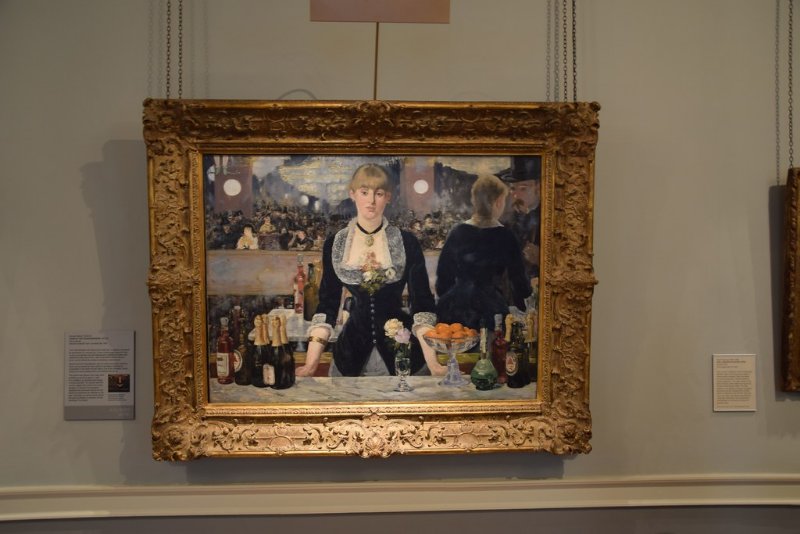
At 32 rue Richer in the 9th arrondissement, the Folies Bergère stands as one of Paris\u2019s most iconic entertainment venues and a living monument to the Belle Époque\u2019s revolutionary approach to popular culture. Opening on May 2, 1869, as the Folies Trévise before becoming the Folies Bergère on September 13, 1872, this music hall pioneered the revue format that would influence entertainment venues worldwide while serving as the subject of Édouard Manet\u2019s famous painting “A Bar at the Folies-Bergère.”
<\!-- /wp:paragraph --><\!-- wp:paragraph -->
Designed by architect Plumeret and patterned after London\u2019s Alhambra music hall, the venue represented French adaptation of international entertainment concepts while establishing distinctly Parisian approaches to music hall programming. The name “folies” itself refers to pleasure houses built near cities to provide discreet entertainment for the bourgeoisie and aristocracy, placing the venue within a broader tradition of Parisian leisure culture.
<\!-- /wp:paragraph --><\!-- wp:heading {"level":3} -->
Birth of the modern revue and revolutionary entertainment
<\!-- /wp:heading --><\!-- wp:paragraph -->
The Folies Bergère achieved legendary status on November 30, 1886, when Édouard Marchand staged “Place au jeûne\!”, the first revue-style music hall show featuring Alice Berthier and scantily clad chorus girls. This tremendous success established a new entertainment genre that combined musical comedy, dance, spectacle, and sensual display in unprecedented ways.
<\!-- /wp:paragraph --><\!-- wp:paragraph -->
By the 1890s, the theatre\u2019s repertory had expanded to encompass musical comedies, operettas, vaudeville sketches, ballets, eccentric dancers, acrobats, jugglers, tightrope walkers, and magicians. This diversity reflected the venue\u2019s commitment to providing comprehensive entertainment that could appeal to diverse audiences while pushing artistic and social boundaries.
<\!-- /wp:paragraph --><\!-- wp:heading {"level":3} -->
International stars and cultural innovation
<\!-- /wp:heading --><\!-- wp:paragraph -->
The Folies Bergère served as a launching pad for international entertainment stars, including American dancer Loïe Fuller in the early 1890s and the legendary Josephine Baker, whose 1926 performance in “La Folie du Jour” caused a sensation when she danced wearing her famous costume of artificial bananas. These performances established Paris as a global center for avant-garde entertainment and cultural innovation.
<\!-- /wp:paragraph --><\!-- wp:paragraph -->
The venue\u2019s influence extended beyond Paris to inspire entertainment venues worldwide, including the Ziegfeld Follies in the United States, Teatro Follies in Mexico, and Las Vegas Folies Bergère. This international impact demonstrates how Parisian entertainment innovation could reshape global popular culture.
<\!-- /wp:paragraph --><\!-- wp:heading {"level":3} -->
Art Deco transformation and architectural distinction
<\!-- /wp:heading --><\!-- wp:paragraph -->
In 1926, artist Maurice Pico completely redesigned the theatre\u2019s façade in Art Deco style, creating the only Parisian theater featuring blue decorations. The striking interior combines a bright blue ceiling with red glittering chandeliers and gold and ebony details that transport visitors to a different era, demonstrating how entertainment venues could achieve architectural distinction while serving practical performance needs.
<\!-- /wp:paragraph --><\!-- wp:paragraph -->
This Art Deco renovation reflected the venue\u2019s continued commitment to visual innovation and aesthetic excellence, ensuring that the architectural experience enhanced rather than competed with the entertainment programming. The distinctive design creates an immersive environment where audiences become part of the theatrical experience.
<\!-- /wp:paragraph --><\!-- wp:heading {"level":3} -->
Artistic immortalization and cultural legacy
<\!-- /wp:heading --><\!-- wp:paragraph -->
Édouard Manet\u2019s 1882 painting “A Bar at the Folies-Bergère” elevated the venue from popular entertainment to high art subject, demonstrating how music halls could inspire serious artistic reflection on modern urban life and social relationships. This artistic recognition established the Folies Bergère as more than entertainment venue—it became a symbol of Parisian modernity and social transformation.
<\!-- /wp:paragraph --><\!-- wp:paragraph -->
The painting\u2019s focus on the working-class bar girl surrounded by bourgeois spectacle reflects the complex social dynamics that made the Folies Bergère both commercially successful and culturally significant, serving audiences across class boundaries while commenting on contemporary social relationships.
<\!-- /wp:paragraph --><\!-- wp:heading {"level":3} -->
Enduring entertainment legacy
<\!-- /wp:heading --><\!-- wp:paragraph -->
Today, the Folies Bergère continues to operate as a major Parisian entertainment venue, presenting dance shows, comedy performances, and concerts that maintain the venue\u2019s tradition of innovative programming while adapting to contemporary artistic movements. This continuity demonstrates how historic entertainment venues can preserve their essential character while evolving to serve new generations of performers and audiences.
<\!-- /wp:paragraph --><\!-- wp:paragraph -->
For visitors to Paris interested in Belle Époque culture, entertainment history, or Art Deco architecture, the Folies Bergère offers an authentic encounter with the venue that helped define modern popular entertainment. The theatre proves that the finest entertainment venues achieve lasting cultural significance by combining architectural distinction with innovative programming, creating destinations that influence both local cultural life and international entertainment trends.
<\!-- /wp:paragraph -->