
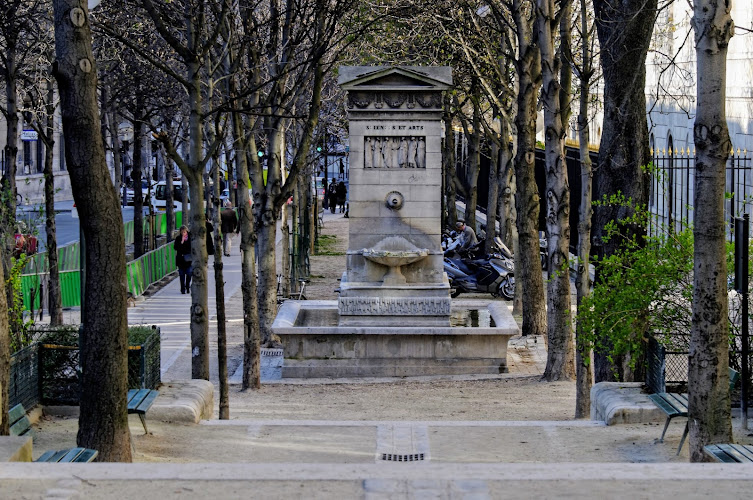
Description
The Fontaine de la Paix is a beautiful fountain located in the heart of Paris’s 6th arrondissement. It is situated on Rue Bonaparte and is a symbol of peace and harmony. The fountain is the most famous in the world and attracts visitors from all over the globe. The Fontaine de la Paix is a stunning piece of art that depicts the goddess of peace, holding an olive branch in one hand and a cornucopia in the other. The fountain was designed by the famous French sculptor, James Pradier, and was completed in 1845. The Fontaine de la Paix is a must-see attraction for anyone visiting Paris. It is a beautiful monument that represents the peaceful nature of the city. The fountain is surrounded by a small square, which is a great place to relax and enjoy the beauty of the fountain. Visitors to the Fontaine de la Paix can take in the stunning architecture of the surrounding buildings, including the École des Beaux-Arts and the Church of Saint-Sulpice. The area is also home to many quaint cafes and restaurants, making it the perfect place to stop for a bite to eat or a cup of coffee. Overall, the Fontaine de la Paix is a beautiful and peaceful monument that is a must-see for anyone visiting Paris. Its stunning design and peaceful nature make it a perfect representation of the city itself.
Key Features
- Fontaine de la Paix is a historical landmark located in the 6th arrondissement, known for its remarkable architectural design and historical significance.
- This monument serves as a must-see attraction, offering visitors a glimpse into its rich history and cultural importance.
Accessibility and Amenities
- The museum is equipped with accessibility features to accommodate visitors with disabilities, including wheelchair access and facilities.
- Amenities on-site include restrooms, dining options, and a gift shop offering unique souvenirs and memorabilia.
- Additionally, visitors can avail themselves of audio guides for a more immersive experience.
Planning Your Visit
- The best times to visit Fontaine de la Paix are during off-peak hours to avoid crowds and fully appreciate the monument's beauty and significance.
- On average, visitors spend about 1-2 hours exploring the museum and its surroundings. It is recommended to plan an itinerary that includes nearby attractions to make the most of the visit.
What Makes Fontaine de la Paix Notable
Fontaine de la Paix is a neoclassical fountain on Rue Bonaparte in Paris’s 6th arrondissement. Its name, “Fountain of Peace,” gives this small-scale monument a clear civic character: it is an urban feature to notice while moving through the streets of the Left Bank rather than a destination that requires a long, separate visit.
The fountain belongs to the early 19th-century programme of Napoleonic urban beautification described for the site. That context is useful when looking at it: Parisian fountains were part of the planned fabric of the city, combining practical street presence with architectural composition. Here, the neoclassical designation points visitors toward proportion, symmetry and the monument’s relationship with the surrounding façades and pavement.
Location and Neighbourhood Context
Rue Bonaparte runs through the 6th arrondissement, an area associated with the Saint-Germain-des-Prés quarter and a dense, walkable Left Bank street pattern. Fontaine de la Paix fits naturally into a walk in this part of Paris, where attention shifts between religious and cultural landmarks, historic streets, bookshops, galleries, cafés and smaller architectural details.
The Seine is within walking distance to the north, while the Luxembourg Garden lies farther south in the same broad Left Bank area. Use the fountain as a pause on a route rather than treating it as an isolated stop. Rue Bonaparte is especially well suited to slow exploration: look along the street as well as at the fountain itself, and allow time for the changing scale of intersections and adjoining streets.
Visitor Highlights
- A focused architectural stop: the fountain offers a concise introduction to neoclassical civic design and early 19th-century Parisian planning.
- Easy to combine: it works well within a self-guided walk around Rue Bonaparte and Saint-Germain-des-Prés.
- A street-level detail: visitors interested in public monuments, water features and the everyday architecture of Paris will find more to observe than a quick photograph suggests.
- Good for unhurried walkers: it suits travellers building a flexible Left Bank itinerary, as well as repeat visitors looking beyond the city’s largest monuments.
Practical Planning Tips
Plan to see Fontaine de la Paix in daylight, when the neoclassical form and its setting on Rue Bonaparte are easier to read. Morning can be a calmer time for photographs and observation; later in the day, pair it with a broader neighbourhood walk. Keep the visit short but deliberate: take a few minutes to view it from more than one angle and to consider how it sits within the street.
There is no need to build an itinerary around fixed tour timing. Instead, group the fountain with nearby Left Bank sights and leave room for walking between stops. Before setting out, check current local conditions and any temporary works that may affect the pavement or views. As with any central Paris street, stay aware of pedestrians, bicycles and traffic when stopping to take pictures.
Frequently Asked Questions
Where is Fontaine de la Paix?
It is on Rue Bonaparte in Paris’s 6th arrondissement, on the Left Bank.
What style is the fountain?
It is described as a neoclassical fountain, so its appeal lies in its formal architectural character and civic setting.
How long should I allow for a visit?
Allow a brief stop, then continue on foot through Rue Bonaparte and the wider Saint-Germain-des-Prés area.