
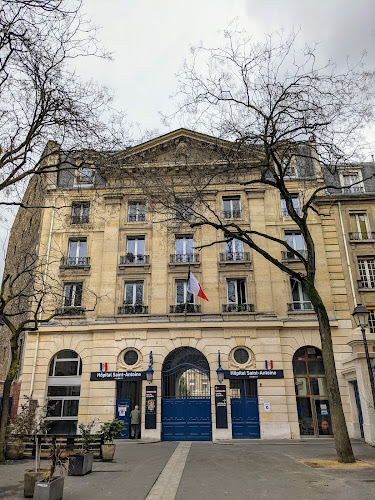
Description
The Hôpital Saint-Antoine, located in the 5th arrondissement of Paris, is a major teaching hospital of the University of Paris and a landmark in the city. Founded in 1848, the hospital was built on the site of the former St. Antoine Hospital and designed by the architect François-Joseph Boulanger. With its neoclassical design and large central courtyard, the hospital was intended to be a teaching hospital for the University of Paris. Today, the hospital remains an important institution for medical education and research in Paris. As a member of the European Society of Hypertension, it is at the forefront of medical advancements and treatments. Visitors to the hospital can witness the dedication and expertise of its staff, as well as the historic architecture that has stood the test of time. For those interested in the history of medicine and architecture, the Hôpital Saint-Antoine is a must-see destination in Paris. Its location in the 5th arrondissement also provides easy access to other notable attractions in the area, such as the Jardin des Plantes and the Panthéon. Whether you are a medical professional, a history buff, or simply a curious traveler, the Hôpital Saint-Antoine is a unique and fascinating monument that should not be missed.
Key Features
- Hôpital Saint-Antoine is a historic general hospital located in the 12th arrondissement of Paris.
- The hospital has a rich history dating back to its establishment in the 13th century, making it a significant landmark in the city.
- Visitors can explore the architectural features of the hospital, including its notable facades and interior design, which reflect various periods of French history.
Accessibility and Amenities
- The museum provides accessibility features to accommodate visitors with disabilities, including wheelchair access and accessible restrooms.
- Amenities at the museum include restrooms, a cafeteria offering dining options, and a gift shop with unique souvenirs related to the hospital's history.
- Additionally, visitors can avail of audio guides for a more immersive experience and utilize the coat check service during their visit.
Planning Your Visit
- To avoid crowds, it is advisable to visit the museum during weekdays and in the morning hours.
- On average, visitors spend around 1-2 hours exploring the hospital and its exhibits.
- Recommended itinerary includes exploring the hospital's historical architecture, visiting the exhibition areas, and taking a guided tour to gain insights into the hospital's significance in Parisian history.
What Makes Hôpital Saint-Antoine Notable
Hôpital Saint-Antoine is a major public teaching hospital in Paris’s 12th arrondissement and part of the AP-HP, the Assistance Publique–Hôpitaux de Paris network. It is first and foremost a working healthcare institution, rather than a conventional sightseeing monument. Its interest lies in its place within the city’s medical, institutional and local history.
The hospital’s story is rooted in the former Abbey of Saint-Antoine-des-Champs, giving the site a historical connection that reaches beyond its present-day clinical role. For readers tracing Paris’s historic institutions, it provides a useful point of reference for understanding how religious sites, public services and the expanding city have shaped the east of Paris over time. Approach it with respect for patients, staff and the daily work of the hospital.
Location and Neighborhood Context
The hospital stands at 184 rue du Faubourg-Saint-Antoine, in the 12th arrondissement. This long east–west street is a historic route leading away from the Bastille area into eastern Paris. It is a useful corridor for exploring a side of the capital that feels more residential and working in character than the monumental centre.
The surrounding Faubourg Saint-Antoine quarter is associated with Paris’s longstanding artisan and furniture-making identity. It rewards an unhurried walk: look along the main street and into the passages and side streets, while remembering that the hospital itself is an active public facility. The address also makes sense as part of a wider east-Paris route, rather than as a stop requiring a dedicated interior visit.
Visitor Highlights
- A historic institutional site: the hospital is linked to the former Abbey of Saint-Antoine-des-Champs and adds depth to an exploration of Parisian history beyond royal landmarks and museums.
- A living public-service landmark: its significance comes from its continuing role as a major AP-HP teaching hospital, not from a staged visitor experience.
- A strong neighborhood context: it suits walkers interested in the Faubourg Saint-Antoine and the urban fabric of the 12th arrondissement.
- Best for context-minded visitors: architecture and history enthusiasts, urban observers and those with hospital-related appointments will get more from the site than travelers seeking an attraction with a formal route.
Practical Planning Tips
Plan Hôpital Saint-Antoine as an exterior and neighborhood stop unless you have a medical appointment or another legitimate reason to enter. A hospital does not operate like a museum: access, circulation and waiting areas are organised around care, and conditions may change according to service needs. Do not expect a tourist reception, a self-guided historical route or unrestricted access to clinical spaces.
For a calmer impression of the street, make your neighborhood walk outside the busiest weekday arrival and departure periods. Allow time to continue on foot through the Faubourg Saint-Antoine rather than rushing between landmarks. If you need to visit the hospital, confirm the relevant department’s instructions in advance through the official AP-HP information, and carry the details connected with your appointment.
Frequently Asked Questions
Is Hôpital Saint-Antoine a tourist attraction?
No. It is an active public teaching hospital. Its value to visitors is mainly historical and urban, viewed respectfully from the surrounding neighborhood.
Where is Hôpital Saint-Antoine?
It is at 184 rue du Faubourg-Saint-Antoine in Paris’s 12th arrondissement.
What is the site’s historical connection?
The hospital has a long history rooted in the former Abbey of Saint-Antoine-des-Champs.