
<\!-- wp:heading -->
Gabriel Ruprich-Robert\u2019s neo-Norman Gothic cathedral of Catholic higher education
<\!-- /wp:heading --><\!-- wp:paragraph -->
At 74 rue de Vaugirard in the 6th arrondissement, the Institut catholique de Paris stands as one of France\u2019s most distinguished Catholic universities and a remarkable example of how religious higher education survived and flourished despite Third Republic anticlericalism. Founded in 1875 following the law on Higher Education, this institution represents the successful adaptation of medieval Catholic educational traditions to contemporary academic standards while maintaining distinctive religious identity and intellectual excellence.
<\!-- /wp:heading --><\!-- wp:paragraph -->
Originally housed in former Carmelite monastic premises on rues d\u2019Assas and de Vaugirard for approximately twenty years, the institute\u2019s architectural development reflects both the challenges and ultimate success of Catholic education in maintaining independent institutional identity within republican France.
<\!-- /wp:paragraph --><\!-- wp:heading {"level":3} -->
Ruprich-Robert\u2019s Gothic revival architecture and construction challenges
<\!-- /wp:heading --><\!-- wp:parameter --><\!-- wp:paragraph -->
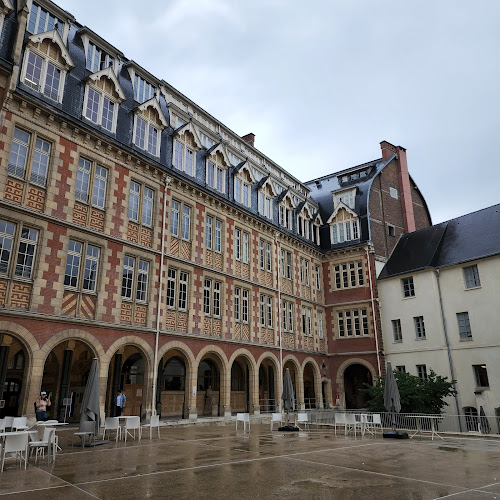
Gabriel Ruprich-Robert, architect of Historic Monuments, created the instituteu2019s distinctive 1894 building in neo-Norman Gothic style using brick and iron-framed construction that demonstrates how Catholic educational architecture could achieve both spiritual dignity and contemporary functionality. The architectural approach reflects understanding that religious education requires inspiring environments that connect students to Catholic intellectual tradition while providing modern facilities for comprehensive academic programming.
<\!-- /wp:paragraph --><\!-- wp:parameter --><\!-- wp:paragraph -->
The completion of the rue d\u2019Assas building in 1929—forty years after the original design—required extraordinary institutional persistence through financial difficulties and the anticlerical Third Republic\u2019s 1905 Law that sequestered religious goods. This delayed completion demonstrates Catholic educational commitment to architectural excellence despite political opposition and financial constraints.
<\!-- /wp:paragraph --><\!-- wp:heading {"level":3} -->
Comprehensive academic structure and Catholic intellectual heritage
<\!-- /wp:heading --><\!-- wp:parameter --><\!-- wp:paragraph -->
The institute\u2019s academic organization includes six faculties—theology and religious sciences, canon law, philosophy, letters, social sciences, economics and law, education—along with specialized research units and ten associated schools that create comprehensive Catholic university environments serving diverse intellectual and professional preparation needs while maintaining religious identity and educational excellence.
<\!-- /wp:paragraph --><\!-- wp:parameter --><\!-- wp:paragraph -->
As inheritor of medieval Liberal Arts Colleges and continuation of Sorbonne traditions, ICP demonstrates how Catholic higher education can honor historical academic traditions while adapting to serve contemporary professional and intellectual needs through comprehensive programming that integrates religious and secular knowledge within unified educational frameworks.
<\!-- /wp:paragraph --><\!-- wp:heading {"level":3} -->
UDESCA network and national Catholic education coordination
<\!-- /wp:heading --><\!-- wp:parameter --><\!-- wp:paragraph -->
The institute\u2019s membership in UDESCA (Union of Catholic Higher Educational Establishments) connecting the five French Catholic institutes—Paris, Lille, Lyon, Angers, and Toulouse—demonstrates how individual Catholic universities can maintain local identity while participating in national networks that coordinate Catholic higher education and ensure academic standards appropriate to contemporary professional and intellectual requirements.
<\!-- /wp:paragraph --><\!-- wp:parameter --><\!-- wp:paragraph -->
This network participation reflects successful integration of Catholic educational institutions within broader French higher education while maintaining distinctive religious character and intellectual approaches that distinguish Catholic education from purely secular academic alternatives.
<\!-- /wp:paragraph --><\!-- wp:heading {"level":3} -->
Research excellence and cultural contributions
<\!-- /wp:heading --><\!-- wp:parameter --><\!-- wp:paragraph -->
The institute\u2019s research unit in religion, culture, and society demonstrates how Catholic universities can contribute to broader intellectual discourse while maintaining religious perspective on contemporary social, cultural, and ethical challenges that require both academic rigor and spiritual wisdom for comprehensive understanding and effective response.
<\!-- /wp:paragraph --><\!-- wp:parameter --><\!-- wp:paragraph -->
For visitors to the 6th arrondissement interested in Catholic intellectual tradition, neo-Gothic architecture, or the evolution of religious higher education, the Institut catholique offers insight into how Catholic educational institutions can maintain excellence while adapting to serve contemporary academic needs. The institute proves that great religious universities emerge when spiritual vision meets architectural excellence, creating environments where Catholic intellectual tradition can flourish while contributing to broader cultural and academic life that enriches both religious and secular communities through comprehensive education that honors both faith and reason in service of human development and social advancement.
<\!-- /wp:paragraph -->