
Description
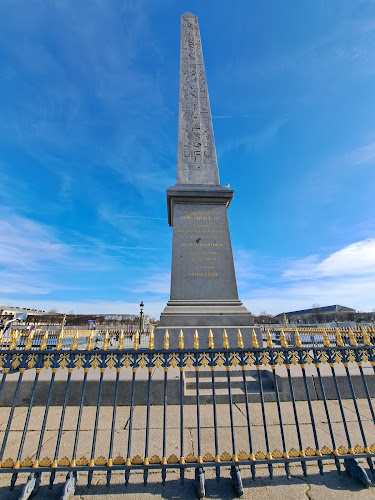
The Obélisque de Louxor is a magnificent monument located in the heart of Paris. Standing tall in the Place de la Concorde, it is a symbol of the French Revolution and the city of Paris itself. The obelisk was originally located in Luxor, Egypt, and was gifted to France by the ruler of Egypt in the early 19th century. It was transported to Paris and erected in its current location in 1836. The Obélisque de Louxor is made of pink granite and stands at an impressive height of 75 feet. It is adorned with hieroglyphs and inscriptions that tell the story of its history and significance. Visitors to the Obélisque de Louxor can take in the stunning views of the surrounding area from the top of the monument. From this vantage point, they can see the Champs-Élysées, the Arc de Triomphe, and the Eiffel Tower in the distance. The Obélisque de Louxor is a must-visit for anyone interested in history, architecture, or the French Revolution. It is a testament to the enduring legacy of this important period in French history and a reminder of the city’s rich cultural heritage.
Key Features
The Obélisque de Louxor, located in the 8th arrondissement, is a historical landmark that dates back to ancient Egypt. It was originally located at the entrance of the Luxor Temple and was gifted to France in the 19th century. The obelisk stands at approximately 23 meters tall and is intricately decorated with hieroglyphs, making it a unique and must-see attraction for visitors.
Accessibility and Amenities
The museum offers accessibility features to accommodate visitors with disabilities, including wheelchair access and accessible restrooms. Additionally, visitors can make use of audio guides to enhance their experience and a gift shop to purchase souvenirs.
Planning Your Visit
The best times to visit the Obélisque de Louxor are during the early morning or late afternoon to avoid the crowds. Visitors typically spend around 30 minutes to an hour exploring the monument and its surroundings. It is recommended to combine a visit to the obelisk with nearby attractions such as the Champs-Élysées or the Arc de Triomphe for a comprehensive itinerary.
What Makes the Obélisque de Louxor Notable
The Obélisque de Louxor stands at the centre of Place de la Concorde, where its tall, tapered silhouette gives a clear vertical focus to one of Paris’s broadest and most formal public spaces. Approximately 23 metres high and weighing around 230 tonnes, it brings an ancient Egyptian form into a setting shaped by Parisian avenues, gardens and monumental perspectives.
Egypt gave the obelisk to France in 1830, and it was erected here in 1836. That history makes it more than a useful meeting point: it is a striking example of how a single historic object can alter the reading of an entire square. Take time to view it from several sides rather than treating it as a quick photograph; the changing viewpoints reveal its role in organising the space around it.
Location & Neighborhood Context
The monument is on Place de la Concorde in the 8th arrondissement, at a major hinge between central Paris’s grand public spaces. The Jardin des Tuileries begins to the east, making the obelisk an easy point to include on a walk towards the Louvre area. To the west, the Champs-Élysées continues the city’s celebrated monumental axis, while the Seine lies just to the south.
This is a large, traffic-heavy square rather than a quiet enclosed plaza, so the experience is as much about urban scale as close-up detail. Use the designated pedestrian routes and crossings, and pause at a safe distance to appreciate the relationship between the obelisk, the open square and the long avenues that meet here. It combines particularly well with a walk through the Tuileries or along the river.
Visitor Highlights
- A rare historic contrast: an ancient Egyptian obelisk set within a defining Parisian civic square.
- Strong city views: its central position helps orient a walk between the Tuileries, the Champs-Élysées and the Seine.
- An efficient stop: suitable for visitors building a self-guided route through central Paris rather than planning a separate indoor visit.
- Good for architecture and urbanism enthusiasts: the site rewards attention to long sightlines, scale and the arrangement of public space.
- Easy to pair with a stroll: ideal for travellers who prefer to connect landmarks on foot and stop for photographs along the way.
Practical Planning Tips
Visit in the earlier part of the day if you want a calmer moment for photographs and for reading the square’s geometry before foot traffic builds. Later daylight can also be rewarding, when the monument stands out against the open sky and the surrounding avenues take on a more animated character. Conditions change with weather, traffic and events, so allow flexibility rather than relying on the square as a fixed, quiet stop.
No separate museum-style itinerary is needed: plan the obelisk as an outdoor pause within a wider walk. Wear comfortable shoes for the distances between nearby sights, remain alert when crossing the square, and keep your route simple by choosing one onward direction—east through the Tuileries, west along the Champs-Élysées, or south towards the Seine. There is no need to book ahead to view the monument from the public square.
Frequently Asked Questions
What is the Obélisque de Louxor?
It is an ancient Egyptian obelisk at the centre of Place de la Concorde. Egypt gifted it to France in 1830, and it was erected in Paris in 1836.
Can visitors go inside the obelisk?
No. It is an outdoor monument viewed from the public square, so the visit centres on its form, history and position within the surrounding cityscape.
What should I combine with a visit?
Continue east into the Jardin des Tuileries, walk west towards the Champs-Élysées, or head south for the Seine. Each route places the obelisk in a different Parisian setting.