
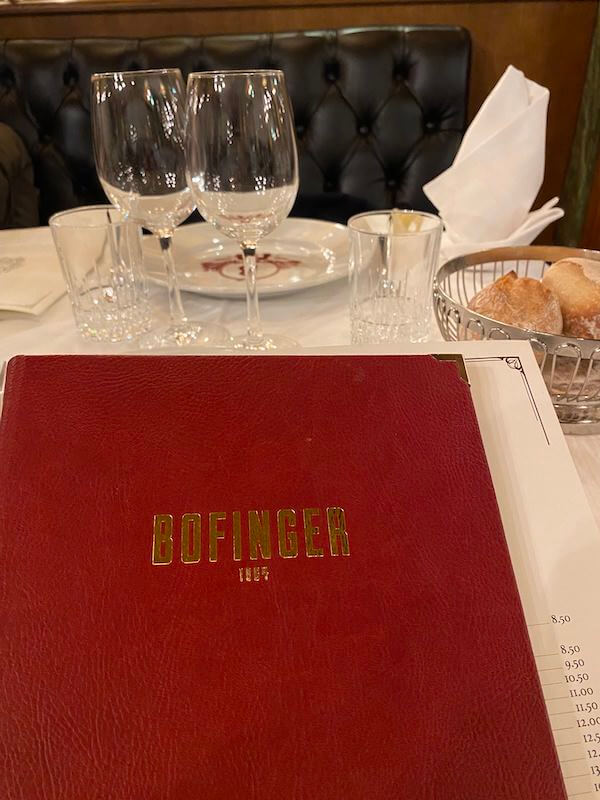
Paris’s oldest brasserie where Belle Époque meets Alsatian tradition
At 3-7 rue de la Bastille, strategically positioned between Place de la Bastille and Place des Vosges, Brasserie Bofinger stands as Paris’s oldest brasserie and a living monument to Belle Époque dining culture. Founded in 1864 by Frédéric Bofinger, an Alsatian from Colmar, this legendary establishment transformed Parisian restaurant culture by introducing draught beer and Alsatian cuisine while creating the magnificent Art Nouveau interior that makes dining here an encounter with both culinary excellence and architectural artistry.
Alsatian innovation in the heart of Paris
Frédéric Bofinger brought the beer culture of his native Alsace to Paris, establishing the first brasserie to offer draught beer on tap in the capital. This innovation transformed Parisian drinking culture while introducing the brasserie concept—combining brewery, restaurant, and social gathering place—that would become fundamental to French urban dining.
The introduction of Alsatian specialties including choucroute (sauerkraut), vol-au-vent, kouglof, and flammekueche created new culinary experiences for Parisians while maintaining authentic regional traditions. Bofinger’s famous choucroute, prepared according to original family recipes with goose confit and Baltic herrings, continues to attract diners seeking authentic Alsatian flavors.
Art Nouveau transformation and architectural splendor
Between 1919 and 1921, the brasserie underwent complete Art Nouveau redesign by architect Legay and decorator Mitgen, creating the stunning interior that earned historic monument classification in 1984. The crown jewel of this transformation is the colorful domed stained-glass ceiling above the central dining room, crafted by master glaziers Neret and Royer in 1909.
The comprehensive Art Nouveau program includes winding wooden staircases, brass light fixtures, original tile floors, black leather banquettes, decorative mirrors, and ceramic sculptures that create an immersive Belle Époque environment. Every architectural element contributes to the authentic period atmosphere that makes dining at Bofinger a journey back to Paris’s golden age.
Political and cultural gathering place
Throughout its 160-year history, Bofinger has served as a gathering place for French political, cultural, and artistic elites. The restaurant’s most famous political moment came when François Mitterrand reserved the first floor to celebrate his 1981 presidential election victory, cementing its status as a venue where French political history unfolds alongside culinary tradition.
The brasserie’s location near Place de la Bastille makes it a natural gathering place for political discussions and cultural celebrations, where the revolutionary spirit of the neighborhood meets the refined dining traditions that define French gastronomic culture.Living heritage and culinary continuity
Bofinger represents more than historic restaurant—it embodies the living tradition of French brasserie culture where architectural heritage enhances culinary experience. The preservation of its Art Nouveau interior ensures that contemporary diners can experience Belle Époque elegance while enjoying traditional Alsatian cuisine that connects Paris to its regional French heritage. The restaurant’s continuing success demonstrates how great culinary institutions can honor their founding traditions while adapting to contemporary tastes, maintaining authentic character while serving new generations of diners seeking both exceptional food and historical atmosphere.Essential information
- Founded: 1864 by Frédéric Bofinger (Alsatian from Colmar)
- Distinction: Oldest brasserie in Paris
- Art Nouveau renovation: 1919-1921 (Legay and Mitgen)
- Heritage status: Historic monument (1984)
- Location: 3-7 rue de la Bastille, 4th arrondissement
- Famous ceiling: Stained glass by Neret and Royer (1909)
- Innovation: First Parisian brasserie with draught beer
Dining experience
- Alsatian specialties: Famous choucroute, kouglof, flammekueche
- Architecture: Complete Art Nouveau interior with protected elements
- Political history: Mitterrand’s 1981 election celebration venue
- Atmosphere: Authentic Belle Époque brasserie environment
- Cultural significance: Gathering place for French political and cultural elites