
Description
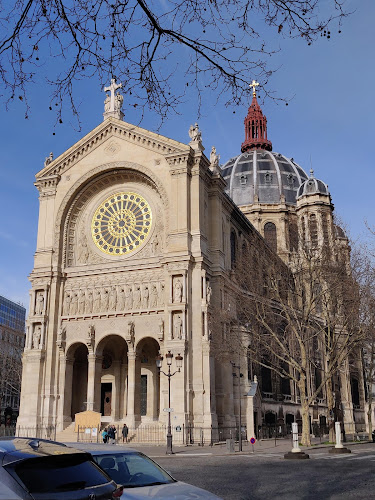
Église Saint-Augustin, located in the 8th arrondissement of Paris, is a stunning monument that should not be missed. The church, which is dedicated to Saint Augustine of Hippo, was designed in the Second Empire style by architect Victor Baltard. As you approach Église Saint-Augustin, you’ll be struck by its impressive size and grandeur. The church’s façade features a massive portico supported by four Corinthian columns, and a beautiful rose window above the entrance. Once inside, you’ll be equally impressed by the church’s ornate interior. The nave is lined with marble columns and adorned with intricate frescoes and stained-glass windows. The high altar, which is dedicated to Saint Augustine, is particularly stunning, featuring a beautiful marble sculpture of the saint. Église Saint-Augustin is also home to a number of interesting artifacts, including a 17th-century painting of the Virgin Mary and a beautiful organ that dates back to the 19th century. For those interested in history and architecture, a visit to Église Saint-Augustin is a must. Whether you’re a devout Catholic or simply appreciate beautiful art and design, you’re sure to be impressed by this magnificent monument in the heart of Paris.
Key Features
- The Église Saint-Augustin is a lofty, 19th-century Roman Catholic place of worship featuring a vast dome designed by Victor Baltard, making it a remarkable architectural masterpiece.
- Visitors can admire the historical significance of the monument, which has stood as a symbol of faith and architectural prowess for over a century.
Accessibility and Amenities
- The museum is equipped with accessibility features to accommodate visitors with disabilities, ensuring a welcoming experience for all.
- Amenities include restrooms, and visitors can also enjoy dining options and explore unique services such as audio guides to enrich their visit.
Planning Your Visit
- To avoid crowds, it's advisable to plan a visit during non-peak hours or weekdays.
- On average, visitors spend around 1-2 hours exploring the monument, and it's recommended to follow a suggested itinerary to fully appreciate the unique attractions and historical significance of the Église Saint-Augustin.
Why Église Saint-Augustin stands out
Église Saint-Augustin is one of the defining church buildings of Paris’s Second Empire cityscape. Built between 1860 and 1871 to designs by Victor Baltard, it presents a Romanesque-Byzantine exterior while relying on an innovative metal framework within. That meeting of historical-looking forms and modern nineteenth-century construction is the key to reading the building: it is both a place of worship and a bold response to the scale and ambitions of modernising Paris.
Its large dome and emphatic mass make it particularly rewarding from the surrounding streets as well as from close range. Rather than treating the church as a quick photographic stop, take time to look at the relationship between its stone-facing exterior, the broad urban setting and the structural logic suggested by its unusually ambitious design. It offers an architectural counterpoint to the better-known landmarks around central Paris.
Location and neighbourhood context
The church stands on Place Saint-Augustin in the 8th arrondissement, on the Right Bank. This is a formal, spacious part of Paris shaped by wide streets and the planning ideals of the nineteenth century. The building’s scale makes sense here: it was designed to hold its own amid major avenues rather than sit quietly within a dense medieval street pattern.
Saint-Augustin works well as a stop while exploring the area between the Madeleine quarter, the Saint-Lazare district and Parc Monceau. The neighbourhood is best approached on foot, when the changing street perspectives reveal how the church was positioned as an urban landmark. Pair it with a broader Right Bank walk rather than treating it as an isolated destination; the surrounding boulevards and more residential side streets give useful context to its presence.
Visitor highlights
- Victor Baltard’s design: a chance to see how a nineteenth-century architect combines a Romanesque-Byzantine visual language with a metal structural system.
- A strong exterior viewpoint: the church is especially effective when viewed from across Place Saint-Augustin, where its dome and overall proportions are easier to take in.
- Second Empire Paris in context: ideal for travellers interested in architecture, urban planning and the transformation of Paris in the 1800s.
- A useful cultural pause: it suits visitors looking for a substantial church visit within a central walking itinerary, without committing to a museum-style programme.
- A working religious setting: visitors should remember that this is a Roman Catholic church and keep their visit considerate of worshippers and services.
Practical planning tips
Visit in daylight if you want to appreciate the exterior and the church’s role in the streetscape. Earlier in the day can make it easier to pause on the square and study the façade before the surrounding business district becomes busier. Allow extra time for an unhurried circuit of the place and nearby streets; the changing angles are part of the experience.
As access may be affected by religious services or church activity, check the church’s official website before setting out, particularly if you are planning a dedicated interior visit. Dress and behave appropriately for an active place of worship, keep voices low, and do not assume that every area is available to visitors. No advance booking information is stated here, so confirm current arrangements directly with the church rather than relying on general sightseeing assumptions.
Frequently asked questions
Who designed Église Saint-Augustin?
The church was designed by Victor Baltard and built between 1860 and 1871.
What is architecturally unusual about the church?
Its Romanesque-Byzantine exterior conceals an innovative metal framework, a notable nineteenth-century construction approach.
Where is Église Saint-Augustin in Paris?
It is on Place Saint-Augustin in Paris’s 8th arrondissement, within easy walking territory for a wider Right Bank itinerary.