
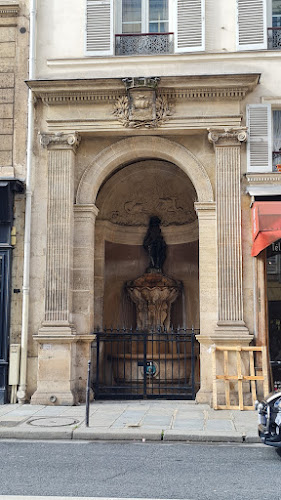
Description
The Fontaine de Joyeuse is an iconic monument located in the heart of Paris. Built in the 12th century, it is one of the oldest and most beautiful fountains in the world. Situated in the 4th arrondissement of Paris, it is a very important part of French history and one of the most well-known fountains in the world. This magnificent fountain is a testament to the skill and craftsmanship of the artisans who built it. The Fontaine de Joyeuse features intricate carvings and sculptures that are truly breathtaking. As you approach the fountain, you’ll be struck by the sheer size and grandeur of this magnificent monument. One of the things that makes the Fontaine de Joyeuse so special is its location. Situated in the heart of Paris, it is surrounded by some of the city’s most famous landmarks and attractions. From the fountain, you can easily walk to the Louvre Museum, the Notre Dame Cathedral, and the Pompidou Center. If you’re interested in history, the Fontaine de Joyeuse is a must-see attraction. It has played an important role in French history, and it is a symbol of the country’s rich cultural heritage. Whether you’re a history buff, an art lover, or simply someone who appreciates beautiful architecture, the Fontaine de Joyeuse is a must-visit destination in Paris. Overall, the Fontaine de Joyeuse is a stunning monument that is sure to leave a lasting impression on anyone who visits it. Whether you’re a first-time visitor to Paris or a seasoned traveler, this iconic fountain is a must-see attraction that should not be missed.
Key Features:
The Fontaine de Joyeuse is a historical landmark with a rich history dating back to its construction in the 16th century. It is renowned for its unique architectural features and historical significance, attracting visitors from around the world.
Accessibility and Amenities:
The museum is equipped with accessibility features to accommodate visitors with disabilities, including wheelchair access and facilities. Amenities include restrooms, dining options, and a gift shop offering souvenirs and local crafts. Additionally, visitors can avail themselves of audio guides to enhance their experience.
Planning Your Visit:
To avoid crowds, it is advisable to visit the Fontaine de Joyeuse during off-peak hours. The average visit duration is approximately 1-2 hours, allowing visitors to explore the landmark thoroughly. For a comprehensive experience, it is recommended to follow suggested itineraries that highlight the monument's historical and architectural significance.
Fontaine de Joyeuse: a historic detail on rue de Turenne
Fontaine de Joyeuse is a historic Paris fountain at 41 rue de Turenne, in the 3rd arrondissement. Named for the Duke of Joyeuse, it belongs to the long tradition of ornamental fountains erected in Paris during the 17th and 18th centuries. It rewards a slower look rather than a rushed landmark checklist: the point is to notice an older civic feature within the fabric of an everyday street.
For visitors interested in Paris beyond its largest monuments, the fountain offers a useful way to read the city at street level. Historic fountains were both practical urban elements and visual markers, and Fontaine de Joyeuse remains part of that wider story. Pair it with an unhurried walk through the surrounding streets, allowing time to look at façades, entrances and the changing scale of the Marais rather than treating the stop as a destination requiring a long visit.
Location and neighborhood context
The fountain stands on rue de Turenne in the 3rd arrondissement, an area associated with the northern part of the Marais. This is a dense, historic quarter best explored on foot, where short blocks and older streets encourage detours. Rue de Turenne is a useful north–south thread through the neighborhood, making the fountain easy to incorporate into a wider walk rather than a separate excursion.
The setting suits travelers who enjoy urban texture: small-scale architectural details, changing streetscapes and the contrast between residential passages and busy local routes. It also works well as a pause while moving between different parts of the Marais. Wear comfortable shoes and leave room in your itinerary for spontaneous turns; this part of Paris is more rewarding when approached at walking pace.
Visitor highlights
- A focused historical stop: Fontaine de Joyeuse connects to Paris’s tradition of 17th- and 18th-century ornamental fountains.
- A named civic landmark: its association with the Duke of Joyeuse gives the fountain a distinct identity within the neighborhood.
- Well suited to walkers: the rue de Turenne location fits naturally into a self-guided Marais itinerary.
- Good for detail-oriented visitors: architecture and local-history enthusiasts can use it as a prompt to observe the surrounding street rather than simply take a quick photograph.
- A low-commitment addition: it is best approached as a brief exterior stop alongside other plans in the 3rd arrondissement.
Practical planning tips
Visit in daylight, when it is easier to examine the fountain and place it in its streetscape. Morning can feel calmer for photographs and close observation, while an afternoon visit works well if you are already walking through the Marais. Since this is a compact stop, plan extra time for the surrounding streets rather than allocating a full sightseeing block to the fountain alone.
No advance booking is needed for a street-side view. Conditions on the street can change because of maintenance, works or everyday neighborhood activity, so keep expectations flexible. If you are building a route around several historic sites, group them by walking distance and save Fontaine de Joyeuse for a natural pause between longer visits.
Frequently asked questions
Where is Fontaine de Joyeuse?
It is at 41 rue de Turenne in Paris’s 3rd arrondissement.
Why is the fountain called Fontaine de Joyeuse?
The fountain is named after the Duke of Joyeuse.
How long should I allow for a visit?
Allow a short stop to view it, then continue on foot through the 3rd arrondissement and the surrounding Marais streets.