
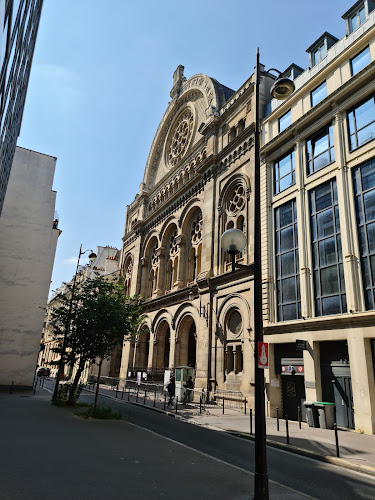
Description
The Grande synagogue de Paris, located in the 9th arrondissement at 44 rue de la Victoire, is a must-visit for anyone interested in the city’s Jewish history. The synagogue, which dates back to 1826, is not only the oldest synagogue in Paris but also the largest, with a capacity of 2,500 people. Its grandeur is matched by its historical importance. The synagogue has been the site of many significant events, including the deportation of French Jews during World War II. Today, it remains a vibrant hub of Jewish life in Paris, hosting regular services and events. One of the most impressive features of the Grande synagogue de Paris is the largest Torah scroll in the world, which is on display for visitors to see. Additionally, the synagogue boasts a number of paintings by the renowned artist Giorgio Vasari. But beyond its historical and cultural significance, the Grande synagogue de Paris is simply a beautiful building. Its stunning architecture and intricate details make it a sight to behold. For those looking to explore Paris beyond the typical tourist attractions, a visit to the Grande synagogue de Paris is a must. It offers a unique glimpse into the city’s rich Jewish heritage and is a testament to the resilience and vibrancy of the Jewish community in Paris.
Key Features
The Grande Synagogue de Paris, located in the 9th arrondissement, is an orthodox synagogue with a seating capacity of 1,800. Built in 1874, it serves as the seat of the French chief rabbi and is open for arranged visits. The synagogue's historical significance and architectural grandeur make it a must-see attraction for visitors.
Accessibility and Amenities
The museum is committed to ensuring accessibility for all visitors, with facilities to accommodate individuals with disabilities. Additionally, visitors can benefit from amenities such as restrooms, and a gift shop. Unique services include the availability of audio guides to enhance the visitor experience.
Planning Your Visit
To avoid crowds, it's best to visit during weekdays and early mornings. Visitors typically spend around 1-2 hours exploring the synagogue and its surroundings. A recommended itinerary includes a guided tour to fully appreciate the historical and cultural significance of this landmark.
Grande Synagogue de Paris: why it matters
The Grande Synagogue de Paris, also called the Synagogue de la Victoire, is the largest synagogue in Paris and one of France’s most significant Jewish religious buildings. Inaugurated in 1874, it stands on rue de la Victoire in the 9th arrondissement and is listed as a historic monument. For visitors interested in Paris beyond its better-known royal, imperial and Catholic landmarks, it provides an essential point of reference for the city’s Jewish history and religious life.
Its Moorish-Byzantine architecture gives the building a distinctive identity within the streetscape. The name “La Victoire” is widely used locally, after its street address. Even from outside, take time to look at the composition of the façade and the way its historic architectural language contrasts with the dense, late-19th-century fabric of this part of Paris. This is first and foremost a place of worship, so a respectful approach is central to any visit.
Location and neighbourhood context
The synagogue is at 44 rue de la Victoire, in the 9th arrondissement. This is a compact central district shaped by broad boulevards, theatres, department-store streets and residential side roads. Rue de la Victoire sits in the area between the Opéra quarter and the streets around Notre-Dame-de-Lorette, making the synagogue straightforward to combine with an architectural walk through the northern side of central Paris.
The immediate setting is urban rather than monumental: the reward is in noticing how a major religious building is integrated into an everyday Paris street. Continue on foot toward the Opéra area for grander commercial and cultural streets, or head north toward the foothills of Montmartre for a change of scale. It is not on the Seine, so plan it as part of a 9th-arrondissement or Opéra-area itinerary rather than a river walk.
Visitor highlights
- A major Jewish landmark: the largest synagogue in Paris, with a prominent place in the religious and civic history of the city.
- Historic architecture: an 1874 Moorish-Byzantine building whose design merits close observation from the street.
- A protected site: its historic-monument status underlines its architectural and cultural importance.
- Well suited to: travellers exploring Jewish heritage, religious architecture, 19th-century Paris, or the 9th arrondissement on foot.
- A thoughtful stop: best for visitors who understand that worship and community activity take priority over sightseeing.
Practical planning tips
Start with the exterior, which can be appreciated without assuming access to the interior. Conditions for visiting a working synagogue can change, and security procedures may apply. Before travelling specifically for an interior visit, consult the synagogue’s own information or contact the relevant Jewish community office to confirm whether visits are possible, what identification or advance arrangements may be required, and the appropriate dress and conduct.
Choose a weekday daytime walk if you want to read the façade and surrounding streets at an unhurried pace, while remaining prepared for access restrictions. Avoid treating religious services as tourist opportunities. Build flexibility into your route: the Opéra and surrounding 9th-arrondissement streets offer useful nearby alternatives if the building is not receiving visitors. Keep photography discreet and follow instructions given on site.
Frequently asked questions
Where is the Grande Synagogue de Paris?
It is at 44 rue de la Victoire in Paris’s 9th arrondissement, near the Opéra-side districts of central Paris.
What architectural style is the synagogue?
The building is described as Moorish-Byzantine. It was inaugurated in 1874 and is listed as a historic monument.
Can visitors go inside?
Do not assume interior access. Confirm current arrangements directly before your visit, and respect security and worship requirements.