
<\!-- wp:heading -->
Renaissance architectural gem housing Paris\u2019s first public library and historical archives
<\!-- /wp:heading --><\!-- wp:paragraph -->
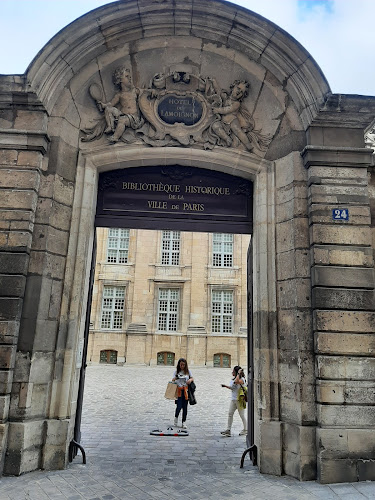
At 24 rue Pavée in the 4th arrondissement, the Hôtel d\u2019Angoulême Lamoignon stands as the best-preserved 16th-century residence in Paris and a remarkable testament to Renaissance domestic architecture in the Marais. Built beginning in 1584 on land inherited by its wealthy owner near the intersection of rue des Francs-Bourgeois and rue Pavée, this magnificent mansion demonstrates how aristocratic residential architecture could achieve both intimate domestic comfort and impressive urban presence.
<\!-- /wp:paragraph --><\!-- wp:paragraph -->
The building\u2019s construction, likely interrupted by the Wars of Religion and completed in a second phase in 1611, reflects the turbulent political conditions that shaped late Renaissance France while showcasing the architectural excellence that emerged when stability returned and noble families could invest in sophisticated urban residences.
<\!-- /wp:paragraph --><\!-- wp:heading {"level":3} -->
Renaissance architectural mastery and Diana\u2019s hunt symbolism
<\!-- /wp:heading --><\!-- wp:paragraph -->
The mansion\u2019s distinctive features include its striking watchtower and main building displaying Henry III style elements that exemplify Renaissance architectural sophistication. The sculptural program, including a tympanum with naked children symbolizing Truth and Prudence, demonstrates how aristocratic architecture could incorporate moral and philosophical themes through decorative art.
<\!-- /wp:paragraph --><\!-- wp:parameter --><\!-- wp:paragraph -->
The pediments showcase attributes of Diana, goddess of the hunt—heads of dogs and deer, crescent moon, nymphs, and hunting trophies—reflecting the aristocratic lifestyle and interests that shaped Renaissance noble culture while creating unified decorative programs that enhanced architectural dignity and cultural significance.
<\!-- /wp:paragraph --><\!-- wp:heading {"level":3} -->
Architectural attribution and Métezeau family legacy
<\!-- /wp:heading --><\!-- wp:parameter --><\!-- wp:paragraph -->
Long attributed to Baptiste Androuet du Cerceau on stylistic grounds, recent archival discoveries in 1984 have led historians to suggest Thibault Métezeau as the more likely architect, with his son Louis Métezeau also proposed by some scholars. This attribution uncertainty reflects the collaborative nature of Renaissance building projects while highlighting the Métezeau family\u2019s significant contribution to French architectural development.
<\!-- /wp:paragraph --><\!-- wp:parameter --><\!-- wp:paragraph -->
The architectural achievement, regardless of specific attribution, demonstrates the high level of design sophistication achieved by French Renaissance architects in creating residential buildings that balanced practical domestic needs with aesthetic excellence and cultural symbolism appropriate for aristocratic urban living.
<\!-- /wp:paragraph --><\!-- wp:heading {"level":3} -->
Paris\u2019s first public library and bibliophile heritage
<\!-- /wp:heading --><\!-- wp:parameter --><\!-- wp:paragraph -->
The mansion\u2019s transformation into a center of learning began when bibliophile and scholar Moriau used it to house his extensive private library documenting Paris\u2019s history. Upon his death in 1759, his bequest of 14,000 volumes to the city led to the 1763 opening of Paris\u2019s first public municipal library, establishing precedents for public access to scholarly collections that influenced library development throughout France.
<\!-- /wp:paragraph --><\!-- wp:parameter --><\!-- wp:paragraph -->
This pioneering public library demonstrates how aristocratic residential architecture could be successfully adapted to serve broader educational and cultural missions while preserving the dignity and beauty that made these buildings architecturally significant and culturally valuable.
<\!-- /wp:paragraph --><\!-- wp:heading {"level":3} -->
Contemporary Bibliothèque Historique and cultural continuity
<\!-- /wp:heading --><\!-- wp:parameter --><\!-- wp:paragraph -->
Since 1969, the mansion has housed the Bibliothèque Historique de la Ville de Paris, specializing in Paris and Île-de-France regional history, while the Hôtel-Lamoignon Mark Ashton Garden provides public green space that enhances the building\u2019s cultural and recreational functions. This continued library use maintains the building\u2019s educational mission while adapting to contemporary research and public access needs.
<\!-- /wp:paragraph --><\!-- wp:parameter --><\!-- wp:paragraph -->
The classification as a historic monument ensures preservation of the Renaissance architectural achievement while supporting the building\u2019s ongoing function as a vital cultural institution that serves both scholarly research and public education about Parisian history and culture.
<\!-- /wp:paragraph --><\!-- wp:heading {"level":3} -->
Living Renaissance heritage and urban sanctuary
<\!-- /wp:heading --><\!-- wp:parameter --><\!-- wp:paragraph -->
Today, the Hôtel d\u2019Angoulême Lamoignon continues to embody Renaissance architectural excellence while serving contemporary cultural and educational needs, demonstrating how great historic buildings can maintain their essential character while adapting to serve new generations of users and cultural purposes.
<\!-- /wp:paragraph --><\!-- wp:parameter --><\!-- wp:paragraph -->
For visitors to the Marais interested in Renaissance architecture, library history, or aristocratic residential design, the mansion offers an exceptional encounter with authentic 16th-century architecture that continues to serve its educational mission. The building proves that great residential architecture achieves lasting cultural significance when architectural excellence meets ongoing educational function, creating environments where historical heritage enhances contemporary cultural life while preserving important connections to the intellectual traditions that have shaped Parisian civilization.
<\!-- /wp:paragraph -->