
Where Art Nouveau first bloomed in Paris
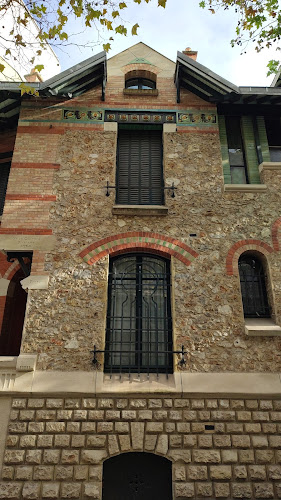
At 142 avenue de Versailles in the 16th arrondissement, Hôtel Jassedé stands as a pivotal monument in the birth of Art Nouveau in Paris. Designed in 1893 by a 26-year-old Hector Guimard for grocery store owner Louis Jassedé, this remarkable mansion represents the earliest publicly visible example of Guimard’s revolutionary aesthetic that would transform Parisian architecture and establish him as the master of French Art Nouveau.
Young Guimard’s architectural awakening
Created when Guimard was only 26 years old—five years before his national success with Castel Béranger in 1898—the Villa Jassedé demonstrates the young architect’s early exploration of the non-symmetrical constructions and medieval-inspired style that would define his mature work. The building represents Guimard’s passionate application of Viollet-le-Duc’s theories about honest architectural expression.
Architectural drawings signed “Paris le 15 mai 1893/Hector Guimard,” now preserved in the Musée d’Orsay collection, document this crucial moment when Guimard began developing the aesthetic language that would revolutionize Parisian public and private architecture throughout the Belle Époque.
Material innovation and decorative experimentation
The mansion showcases Guimard’s early material experimentation, blending brick, millstone, and ceramics to create textural richness that departed dramatically from Haussmannian uniformity. The building features stepped windows and colorful floral friezes that announce Art Nouveau’s commitment to natural inspiration and organic decoration.
The characteristic Guimard ironwork and floral motifs that would become his signature first appear here in nascent form, demonstrating how the artist developed his distinctive vocabulary through practical residential commissions that allowed creative experimentation with sympathetic clients.
Auteuil setting and neighborhood character
The mansion’s location in the Auteuil neighborhood—where Guimard had lived with his godmother during his youth—provided the perfect setting for architectural experimentation. The area’s garden suburb character and wealthy, artistically inclined residents created an environment receptive to innovative design that challenged conventional architectural wisdom.
This neighborhood context enabled Guimard to develop his Art Nouveau principles within a supportive community that appreciated artistic innovation, establishing Auteuil as an early center for architectural experimentation that would influence Parisian residential design for decades.
Historic monument and architectural significance
Designated as a Monument Historique, the Hôtel Jassedé receives official recognition as the oldest easily visible work by Guimard and a crucial document in the development of Art Nouveau in France. This protection ensures that the building where Art Nouveau first announced itself in Paris continues to inspire appreciation for architectural innovation and creative courage.
The mansion’s preservation allows contemporary visitors to experience the moment when French architecture began its transformation from rigid academic traditions toward the organic, nature-inspired aesthetic that would define the modern movement’s emergence from Art Nouveau foundations.
Architectural pilgrimage and Art Nouveau origins
For Art Nouveau enthusiasts and architectural historians, the Hôtel Jassedé represents essential pilgrimage destination where the movement’s Parisian origins can be experienced firsthand. The building demonstrates how great architectural movements begin through individual creativity and client courage, creating precedents that influence entire cultural periods.
Essential information
- Design date: May 15, 1893
- Architect: Hector Guimard (age 26)
- Client: Louis Jassedé (grocery store owner)
- Location: 142 avenue de Versailles, 16th arrondissement
- Architectural significance: First Art Nouveau building in Paris
- Heritage status: Monument Historique
- Historical importance: Predates Castel Béranger by 5 years
Art Nouveau pioneering features
- Materials: Brick, millstone, and ceramics blend
- Decorative elements: Stepped windows, colorful floral friezes
- Signature details: Early Guimard ironwork and floral motifs
- Design philosophy: Non-symmetrical construction challenging Haussmannian rigidity
- Theoretical foundation: Viollet-le-Duc’s honest architectural expression
Art Nouveau genesis
Hôtel Jassedé embodies the courageous experimentation that gave birth to Art Nouveau in Paris, where young Hector Guimard’s architectural vision found expression through a sympathetic client willing to challenge conventional taste. This remarkable mansion demonstrates how architectural movements begin through individual creativity and client confidence, creating precedents that reshape entire cultural periods. For Art Nouveau pilgrims, architectural historians, or anyone interested in how artistic movements emerge, the Hôtel Jassedé offers an extraordinary encounter with creative origins, where Guimard’s first mature architectural statement announced the arrival of a new aesthetic that would transform Parisian design, proving that great architectural innovation often begins in modest commissions that allow young architects to experiment with revolutionary ideas within supportive communities.