
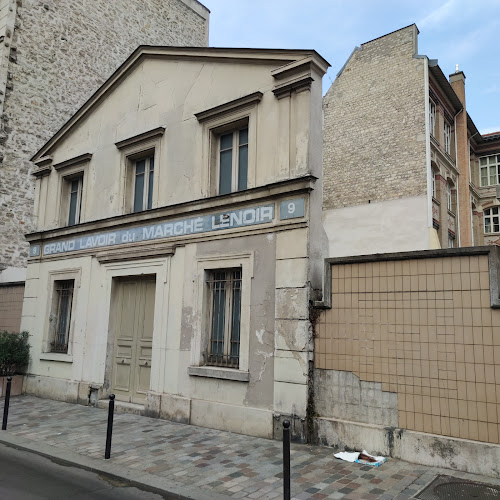
Description
Hidden in the 1st arrondissement of Paris, Lavoir du marché Lenoir is a historic market that dates back to the early days of Paris. With its charming and authentic atmosphere, this market is a must-visit for anyone looking to experience the city’s rich history and culture. Located in the former market of Lenoir, Lavoir du marché Lenoir is one of the oldest markets in Paris. It is small, but it is packed with fresh produce and other items that are sure to satisfy any foodie’s cravings. The market is also quite historical, and it is a great place to learn about the city’s past. One of the best things about Lavoir du marché Lenoir is its authentic atmosphere. Unlike some of the more touristy markets in Paris, this market has managed to maintain its traditional charm. From the vendors shouting out their wares to the locals haggling over prices, this market is a true Parisian experience. Overall, Lavoir du marché Lenoir is a hidden gem in the heart of Paris. It is a great place to experience the city’s history and culture while also enjoying some delicious food. Whether you are a foodie or a history buff, this market is definitely worth a visit.
Key Features:
- The Lavoir du marché Lenoir, located in the 12th arrondissement, is a historical place with a unique feature as a lavoir, or public washhouse, dating back to the 19th century.
- Visitors can explore the historical significance of the lavoir, which served as a communal laundry facility for local residents, reflecting an important aspect of Parisian daily life in the past.
- The architectural design of the lavoir, characterized by its large open space and distinctive stone construction, offers a glimpse into the communal washing practices of the time.
Accessibility and Amenities:
- The museum provides accessibility features to accommodate visitors with disabilities, including wheelchair access and accessible restrooms.
- Amenities at the Lavoir du marché Lenoir include restroom facilities and a gift shop offering unique souvenirs and historical memorabilia.
- Visitors can opt for audio guides to enhance their experience and gain deeper insights into the historical significance of the lavoir.
Planning Your Visit:
- To avoid crowds, it is recommended to visit the lavoir during weekdays and in the morning hours.
- The average visit duration is approximately 1 to 1.5 hours, allowing visitors to explore the historical exhibits and architectural features at a leisurely pace.
- A suggested itinerary includes starting with an overview of the lavoir's history, followed by a detailed exploration of the architectural elements and historical artifacts on display.
What Makes Lavoir du marché Lenoir Notable
Lavoir du marché Lenoir is a surviving trace of the public washhouses that once supported everyday life in working-class Paris. A lavoir was a shared place for laundry: practical civic infrastructure rather than a grand monument. Its interest lies precisely in that modest scale, bringing a less familiar chapter of the city’s social and urban history into view.
Associated with the Lenoir market area, the site recalls a time when washing clothes was organised beyond the private home. It rewards visitors who enjoy looking past Paris’s major landmarks to understand how neighbourhoods functioned. Approach it as a historic remnant and an architectural detail within the street scene, rather than as a conventional museum visit or a market attraction.
Location & Neighborhood Context
The lavoir stands at 7, 9 rue de Cotte in the 12th arrondissement, close to the edge of the Bastille area. This is a dense, lived-in part of eastern central Paris, where older streets and everyday commerce sit near major routes and transport connections. The address is easy to incorporate into a walk rather than treating it as a destination requiring a long standalone visit.
From here, the streets around Bastille offer a useful orientation point for continuing through the surrounding quarters. The Seine is also within the wider central-city walking area, so the lavoir can work as a brief historical stop between a neighbourhood stroll and time by the river. Keep the focus on the immediate streets: the character of the visit comes from noticing a fragment of former local infrastructure in its urban setting.
Visitor Highlights
- A rare everyday-history stop: the site evokes the network of public washhouses that served Parisian neighbourhoods.
- Market-area context: its connection with the Lenoir market area helps explain the practical, communal role such facilities played.
- Best for observant walkers: architecture, social history and urban-planning enthusiasts will get the most from a short, attentive look.
- An easy addition to an eastern Paris route: use it to vary an itinerary built around larger sights with a quieter local-history address.
Practical Planning Tips
Plan this as a brief exterior-oriented stop unless you have independently confirmed access on the day of your visit. There is no need to over-allocate time: pause to examine the building in relation to rue de Cotte and the surrounding blocks, then continue your walk. Morning is often a comfortable time for close street-level observation before busier parts of a day’s itinerary, while daytime gives the clearest view of architectural details.
Do not assume regular visitor facilities, guided visits or interior entry. Check current local information before travelling specifically for access, especially if the lavoir is central to your plans. Pair it with other nearby streets, cafés or public spaces according to your interests, and leave room for unplanned discoveries rather than trying to turn a small historic site into a tightly timed excursion.
Frequently Asked Questions
What is Lavoir du marché Lenoir?
It is a historic public washhouse associated with the Lenoir market area and one of the remaining reminders of Paris’s former lavoir network.
Where is it located?
The address is 7, 9 rue de Cotte, in Paris’s 12th arrondissement, near the Bastille area.
Is it suitable for a long visit?
It is best approached as a short stop on a neighbourhood walk. Confirm current access arrangements independently before expecting an interior visit.