
Belle Époque café preserving Metro’s golden age
At 3 boulevard de Grenelle in the 15th arrondissement, Le Relais du métro stands as a charming monument to Belle Époque café culture and the early romance of Parisian public transportation. Opened around 1900 as the Metro system began transforming urban life, this historic café-bar demonstrates how commercial establishments could achieve cultural significance through their role in neighborhood life while preserving artistic treasures that document the optimistic spirit of early 20th-century Paris.
Belle Époque café culture and Metro romance
The café’s establishment coincided with the birth of the Paris Metro system, creating a gathering place where Parisians could discuss the marvels of underground transportation while enjoying the social rituals of café life that defined Belle Époque urban culture. The name “Le Relais du métro” captured the excitement surrounding this revolutionary transport system that was transforming daily Parisian life.
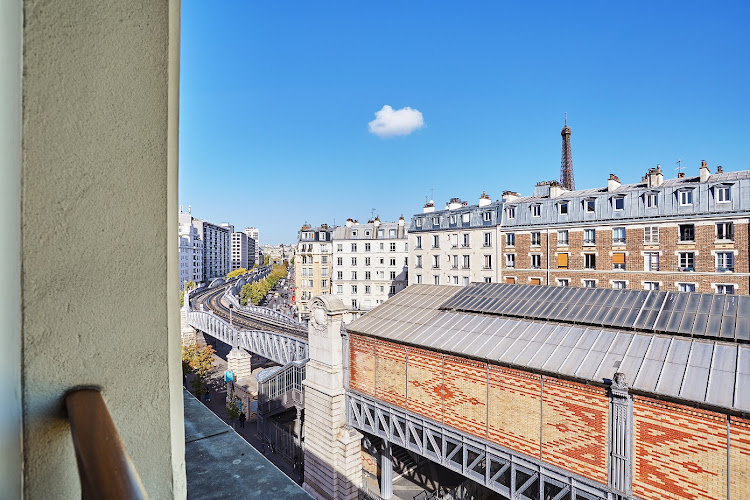
The café’s location on boulevard de Grenelle placed it within the heart of the 15th arrondissement’s transportation network, where elevated Metro lines created spectacular urban views while neighborhood cafés provided social spaces for residents to gather and experience the community life that great public transportation systems could foster.
E. Mérou’s seasonal allegories and artistic decoration
The café’s interior originally featured four painted canvases signed by E. Mérou, presenting seasonal allegories in Belle Époque period clothing that transformed commercial space into artistic gallery. These decorative paintings demonstrated how turn-of-the-century commercial establishments could achieve aesthetic distinction through commissioned artwork that enhanced customer experience while supporting local artists.
Only one panel, “le Printemps” (Spring), remains visible today, preserving a fragment of the café’s original artistic program while the others lie hidden behind contemporary décor. This surviving artwork provides tangible connection to Belle Époque decorative traditions and the period’s optimistic celebration of seasonal renewal and urban progress.
Historic monument protection and cultural preservation
The café’s inscription as a historic monument on May 23, 1984, protecting its interior décor, acknowledges the cultural importance of preserving examples of Belle Époque commercial decoration that document how ordinary Parisians experienced art and beauty in their daily neighborhood environments. This recognition demonstrates how modest commercial buildings can achieve heritage significance through their artistic and social contributions.
The preservation of original artistic elements ensures that contemporary visitors can appreciate how Belle Époque café culture integrated aesthetic beauty with social function, creating commercial spaces that served both practical refreshment needs and cultural enrichment through artistic decoration and community gathering.Transportation heritage and neighborhood evolution
The café’s relationship to Metro history continues through its location within the 15th arrondissement’s unique transportation landscape, where Line 6 rises above ground to provide spectacular elevated views that connect underground urban efficiency with scenic appreciation of Parisian architecture and urban planning. Contemporary operation as “Le Grand Prix” (since 1997) maintains the building’s essential function as neighborhood gathering place while preserving the architectural and artistic elements that earned historic monument protection, demonstrating how commercial heritage can adapt while maintaining cultural significance.Essential information
- Opening: c. 1900 (Belle Époque)
- Location: 3 boulevard de Grenelle, 15th arrondissement
- Heritage status: Historic monument (May 23, 1984)
- Protected elements: Interior décor
- Artist: E. Mérou (seasonal allegory paintings)
- Surviving artwork: “le Printemps” panel
- Current name: “Le Grand Prix” (since 1997)
- Historical significance: Metro-era café culture
Cultural and artistic significance
- Period atmosphere: Belle Époque optimism and Metro excitement
- Artistic program: Four seasonal allegory paintings in period costume
- Social function: Neighborhood gathering place and cultural anchor
- Transportation context: Location within elevated Metro Line 6 area
- Heritage preservation: Protected Belle Époque commercial decoration
Belle Époque café heritage
Le Relais du métro embodies the intersection of transportation innovation and café culture that defined Belle Époque Parisian life, where the excitement of the new Metro system met the traditional social rhythms of neighborhood gathering places. This charming establishment demonstrates how commercial buildings can achieve cultural significance through their role in community life while preserving artistic elements that document the optimism and aesthetic refinement of early 20th-century Paris. For Belle Époque enthusiasts, Metro history admirers, or anyone interested in how transportation shaped neighborhood culture, Le Relais du métro offers a meaningful encounter with commercial heritage, where E. Mérou’s surviving seasonal allegory continues to celebrate the artistic integration that made ordinary café experiences into encounters with beauty and community that defined the golden age of Parisian urban life.