
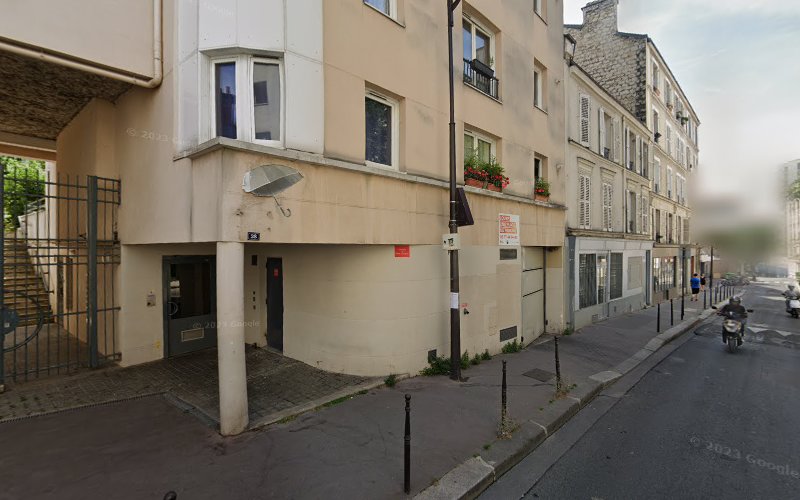
Description
The Saint-Lazare prison is a Parisian landmark with a rich and fascinating history. Located in the 10th arrondissement at 107 rue du Faubourg-Saint-Denis, the prison is renowned for having housed some of the world’s most notorious criminals. It is also where the first execution of a prisoner in France took place. The prison has been in use for executions since the 16th century, and the last execution was carried out in 1919. Today, the prison has been transformed into a national museum, open to the public. Visitors can explore the cells and learn about the history of the French judicial system. The Saint-Lazare prison is not only a museum but also houses the French Ministry of Justice and the French National Archives. This makes it a significant site for those interested in French history and politics. In addition to its historical significance, the prison is a symbol of the resilience of the French people. Despite its dark past, the Saint-Lazare prison has played a key role in shaping the history of Paris and remains an important landmark in the city. Visiting the Saint-Lazare prison is a unique and unforgettable experience that offers a glimpse into the darker side of Parisian history. Whether you are a history buff or simply looking for a unique cultural experience, the Saint-Lazare prison is a must-see destination in Paris.
Key Features:
- The Prison Saint-Lazare, located in the 10th arrondissement, is a historic site with a compelling past, having served as a prison for women during the 19th and 20th centuries.
- Visitors can explore the haunting cells and gain insight into the daily lives of the incarcerated women, offering a unique and thought-provoking experience.
- The museum showcases the history of the prison and its significance in the context of women's rights and social reform, making it a must-see for history enthusiasts.
Accessibility and Amenities:
- The museum is equipped with accessibility features to ensure a welcoming experience for visitors with disabilities, including wheelchair access and accessible restrooms.
- Amenities such as restrooms, a gift shop, and possibly a café provide convenience for visitors, with the option to purchase souvenirs and enjoy refreshments during their visit.
- Audio guides may be available to enhance the visitor experience, offering detailed insights into the exhibits and the history of the prison.
Planning Your Visit:
- To avoid crowds, it's advisable to plan the visit during weekdays and to consider visiting during the morning hours for a more tranquil experience.
- Visitors typically spend around 1 to 2 hours exploring the museum, depending on their level of interest and engagement with the exhibits.
- A recommended itinerary includes exploring the various sections of the prison, learning about its historical significance, and taking time to reflect on the stories of the women who were imprisoned there.
Prison Saint-Lazare: a layered institutional history
Prison Saint-Lazare is an important historical reference point in Paris’s 10th arrondissement. Its story begins with an earlier leper hospital, before the site was converted into a women’s prison. The prison operated from the 17th century until its closure in 1935, linking the address to several centuries of Parisian approaches to illness, charity, confinement and social control.
Rather than approaching Saint-Lazare as a conventional monument with a simple visitor circuit, approach it as a place of urban history. Its significance lies in the changing use of an institutional site and in the way Paris continually remakes its older districts. It is especially relevant for visitors interested in the city beyond its better-known royal, religious and civic landmarks.
Location and neighbourhood context
The address is 107 rue du Faubourg-Saint-Denis, in the 10th arrondissement. This is a dense, active part of northern central Paris, shaped by historic routes leading out of the city and by the wider railway-station quarter. Rue du Faubourg-Saint-Denis is best explored on foot: its long north–south course connects changing streetscapes, everyday shops and the older fabric of the arrondissement.
The location works well within a walk focused on the 10th arrondissement’s institutional and transport history. The nearby Canal Saint-Martin area offers a useful contrast: a more open waterside setting compared with the close-grained streets around the faubourg. The Seine is not the immediate setting here, so plan this as a neighbourhood visit rather than a riverside monument stop.
Visitor highlights
- Long historical span: the site’s evolution from leper hospital to women’s prison gives it an unusually broad social history.
- A different view of Paris: it suits travellers who want to understand institutions and daily urban life, not only grand ceremonial architecture.
- 10th-arrondissement walk: pair the address with a self-guided exploration of Faubourg-Saint-Denis and the Canal Saint-Martin area.
- Thoughtful context: the subject is best for readers interested in the history of confinement, public welfare and the changing functions of Parisian buildings.
Practical planning tips
Build Saint-Lazare into a daytime walking itinerary, when street orientation and architectural details are easiest to read. Allow time to walk the surrounding blocks rather than treating the address as an isolated stop. Morning is often a comfortable moment for an unhurried neighbourhood walk; later in the day, combine it with cafés, shops or a canal-side stroll according to your route.
Do not assume that a historic prison is open for interior visits, or that original cells can be entered. Before setting out, check current access arrangements through an authoritative local or official source. If entry is not available, the address still makes sense as part of a historically informed exterior walk. Keep the visit respectful: this is a former place of detention, not a theatrical attraction.
Frequently asked questions
What was Prison Saint-Lazare?
It was a Paris detention facility in the 10th arrondissement, established on the site of an earlier leper hospital and later used as a women’s prison.
When did the prison close?
Its prison operation ended in 1935.
Can visitors go inside Prison Saint-Lazare?
Interior access should not be presumed. Confirm the current situation before travel and plan an exterior, neighbourhood-based visit if no public access is announced.