
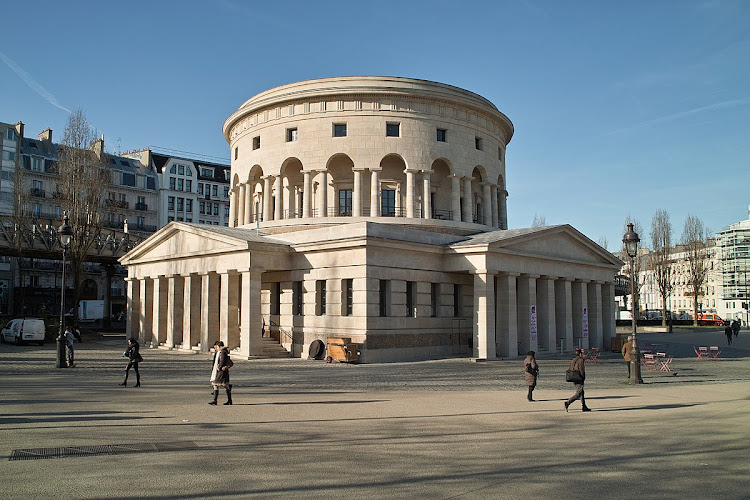
A neoclassical masterpiece from revolutionary times
Standing majestically on Place de la Bataille-de-Stalingrad in the 19th arrondissement, the Rotonde de la Villette represents one of the finest achievements of neoclassical architecture in Paris. This imposing circular building, designed by the visionary architect Claude-Nicolas Ledoux between 1784 and 1788, stands as a survivor of revolutionary upheaval and a testament to architectural ambition that transcended its original mundane purpose.
Ledoux’s vision for urban taxation
The Rotonde de la Villette was constructed as part of Ledoux’s grand project to create the Mur des Fermiers généraux—a 24-kilometer wall that encircled Paris to collect taxes on goods entering the city. Originally known as the Barrière Saint-Martin, this toll house was the largest and most impressive of the 60 barriers designed by Ledoux, demonstrating his belief that even utilitarian buildings should embody architectural beauty and dignity.
Ledoux’s revolutionary approach combined classical architectural principles with bold, simplified forms that would later influence modern architecture. The Rotonde’s perfect cylindrical form, surrounded by a colonnade of Doric columns, exemplified his philosophy that architecture should serve both practical and spiritual purposes, elevating even tax collection to the realm of art.
From tax collection to cultural transformation
The building served its original purpose as a toll house until the French Revolution, when the unpopular tax barriers were abolished and most were demolished by angry Parisians. The Rotonde de la Villette survived due to its architectural merit and substantial construction, finding new purposes throughout the 19th and 20th centuries as a salt storehouse, municipal guard barracks, and archaeological storage facility.
In 1907, recognizing its historical and architectural significance, the building was designated a Monument Historique. This protection ensured its survival through various threats, including a devastating fire in the mid-1930s and proposed demolition during the construction of Metro Line 2.
Renaissance as a cultural hub
Following a comprehensive renovation in 2010, the Rotonde de la Villette has been transformed into a vibrant cultural and social destination. The building now houses multiple venues that bring life back to this historic structure:
- La Rotonde Stalingrad, a trattoria offering Italian cuisine
- A contemporary art gallery showcasing rotating exhibitions
- Bars and social spaces for community gathering
- Co-working spaces that serve the creative community
- Event spaces for cultural programming
This mixed-use approach ensures that the building remains a living part of the community rather than a static monument, continuing its role as a place where Parisians gather and interact.
Architectural significance and urban context
The Rotonde stands as one of only four surviving Ledoux toll houses from the original 60, making it an irreplaceable piece of Parisian architectural heritage. Its location facing the Bassin de la Villette creates a magnificent urban tableau, where 18th-century neoclassicism meets 19th-century canal engineering and 21st-century urban renewal.
The building’s influence on architectural history cannot be overstated—Ledoux’s bold geometric forms and stripped-down classicism prefigured modernist architecture by more than a century. The Rotonde demonstrates how revolutionary architectural thinking could emerge from the most practical requirements.
Gateway to canal culture
Today’s Rotonde serves as the perfect introduction to the charms of Paris’s canal district. Its terrace offers spectacular views over the Bassin de la Villette, where canal boats depart for journeys along the historic waterways. The surrounding area has been beautifully redesigned with fountains and green spaces that complement the monument’s classical dignity.
Essential information
- Construction: 1784-1788
- Architect: Claude-Nicolas Ledoux
- Original function: Toll house (Barrière Saint-Martin)
- Historical significance: Part of the Mur des Fermiers généraux
- Heritage status: Listed as Monument Historique since 1907
- Current use: Restaurant, gallery, cultural venue
- Renovation: 2010 restoration
Visiting experience
- Location: Place de la Bataille-de-Stalingrad, 19th arrondissement
- Best for: Architecture enthusiasts, history buffs, canal district exploration
- Dining: La Rotonde Stalingrad restaurant with terrace views
- Nearby attractions: Bassin de la Villette, Canal Saint-Martin, Parc de la Villette
- Transportation: Stalingrad Metro station (lines 2, 5, and 7)
- Photography: Exceptional views from terrace, particularly at sunset
Architectural legacy
The Rotonde de la Villette stands as more than a beautiful building—it represents the intersection of visionary architecture, revolutionary history, and contemporary urban renewal. Ledoux’s masterpiece demonstrates how great architecture can outlive its original purpose to serve new generations in unexpected ways. For visitors seeking to understand Paris’s architectural evolution, this monument offers a unique opportunity to experience revolutionary-era design that remains startlingly modern, where the idealism of the Enlightenment meets the practicalities of urban life beneath one of the most perfect domes in classical architecture.