
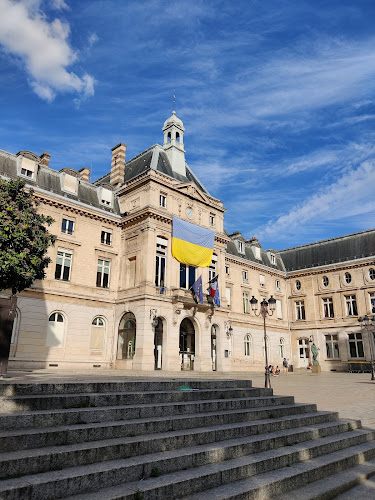
Renaissance municipal palace where Universal Exhibition excellence honors arrondissement governance
At 31 rue Péclet in the 15th arrondissement, the Town Hall stands as architect Désiré Louis Henri Devrez’s 1873-1876 Renaissance masterpiece, where symmetrical facade motifs and architectural simplicity earned a gold medal at the 1878 Universal Exhibition while creating municipal architecture that serves both practical arrondissement administration and cultural heritage preservation through design excellence that honors democratic governance within architectural contexts worthy of ongoing institutional service and heritage protection. This extraordinary building demonstrates how exceptional municipal architecture can achieve both immediate governmental functionality and lasting cultural significance through construction that serves local democratic administration while establishing architectural landmarks that document 19th-century municipal development and administrative excellence worthy of Historical Monument recognition and contemporary community cultural appreciation.
Universal Exhibition recognition and architectural model excellence
Festival hall decoration and artistic collaboration
Léon Jaussely expansion and architectural evolution
Bourdelle sculpture and artistic neighborhood heritage
Essential information
- Architect: Désiré Louis Henri Devrez (1824-1896)
- Construction: 1873-1876 (central section)
- Location: 31 rue Péclet, 15th arrondissement
- Architectural style: Renaissance with symmetrical facade motifs
- International recognition: 1878 Universal Exhibition gold medal
- Marriage hall: Ferdinand Humbert and Pierre Lagarde (1886)
- Expansion architect: Léon Jaussely (1913)
- Historical protection: Festival hall Monument historique (2011)
Architectural and cultural significance
- Municipal model: International exhibition recognition for governmental architecture
- Artistic integration: Allegorical ceiling motifs and decorative excellence
- Cultural commemoration: Antoine Bourdelle statue honoring Jean-Baptiste Carpeaux
- Architectural evolution: Expansion maintaining original design integrity
- Contemporary service: Ongoing administrative function with heritage preservation
Municipal architecture excellence creates international governmental building model
The Town Hall of Paris XVe arrondissement embodies the extraordinary achievement of municipal architecture that proved French governmental building excellence could inspire international administrative design through Désiré Louis Henri Devrez’s Renaissance design that earned 1878 Universal Exhibition recognition while creating arrondissement governance facilities that serve both immediate democratic administration and lasting architectural influence on governmental building development worldwide, demonstrating how exceptional municipal buildings emerge when architectural excellence meets practical administrative requirements through construction that honors both democratic service effectiveness and cultural heritage creation. This remarkable institution proves that successful governmental architecture transcends mere functional building to become cultural landmark that serves both ongoing administrative excellence and community cultural identity through buildings that maintain both practical governmental functionality and aesthetic distinction worthy of both heritage protection and contemporary civic programming. For municipal architecture enthusiasts, governmental building admirers, or anyone interested in how democratic institutions can achieve lasting architectural significance, this rue Péclet masterpiece offers an extraordinary encounter with civic excellence, where Renaissance symmetry and Universal Exhibition validation demonstrate the architectural sophistication required to create governmental buildings that serve both immediate administrative effectiveness and long-term cultural heritage preservation through municipal architecture that honors both democratic governance principles and community cultural identity development, proving that the finest governmental buildings achieve immortality through ongoing civic service rather than mere architectural preservation, creating spaces where democratic administration continues inspiring civic pride and governmental effectiveness within architectural contexts that honor both local community service excellence and broader governmental institutional achievement worthy of both heritage protection and ongoing community cultural appreciation serving diverse civic and cultural needs through exceptional municipal architecture excellence.