<\!-- wp:heading -->
Where Art Nouveau meets metro innovation
<\!-- /wp:heading --><\!-- wp:paragraph -->
On Avenue du Général-Leclerc in the 14th arrondissement, the Édicule Guimard at Mouton-Duvernet station represents a perfect synthesis of Hector Guimard\u2019s revolutionary Art Nouveau vision and practical urban transportation needs. This entrance, featuring Guimard\u2019s signature green cast-iron balustrade with organic motifs, stands as a testament to early 20th-century Parisian innovation and artistic excellence.
<\!-- /wp:paragraph --><\!-- wp:paragraph -->
Named after Rue Mouton-Duvernet, which honors 19th-century general Régis Barthélemy Mouton-Duvernet, this Line 4 station holds a unique place in metro history. Beyond its Guimard entrance, the station gave its name to an entire renovation philosophy that transformed Parisian metro aesthetics in the late 1960s.
<\!-- /wp:paragraph --><\!-- wp:heading {"level":3} -->
Classic entourage design
<\!-- /wp:heading --><\!-- wp:paragraph -->
The Mouton-Duvernet entrance exemplifies Guimard\u2019s “entourage” design—the simpler but equally elegant form of his metro entrance concepts. The green cast-iron balustrades feature the architect\u2019s characteristic whiplash motifs and floral cartouches, creating organic forms that seem to grow from the urban pavement.
<\!-- /wp:parameter --><\!-- wp:paragraph -->
Large green panels in pure Art Nouveau style frame the entrance, while the famous “Métropolitain” sign—rendered in Guimard\u2019s own custom typeface—rises between two sinuous stalks topped with orange molded flower buds. These elements create the distinctive “brin de muguet” (lily-of-the-valley) silhouette that has become iconic of Parisian metro entrances.
<\!-- /wp:paragraph --><\!-- wp:heading {"level":3} -->
Industrial materials, artistic vision
<\!-- /wp:heading --><\!-- wp:paragraph -->
Guimard\u2019s revolutionary approach abandoned traditional masonry in favor of modern materials: cast iron, glass, and enameled lava. This choice reflected both practical economics—cast iron cost less than stone—and aesthetic philosophy, as these materials allowed for the flowing, organic forms impossible to achieve in traditional construction.
<\!-- /wp:paragraph --><\!-- wp:paragraph -->
The green patina finish, designed to resemble aged bronze, ensures the entrance harmonizes with the urban environment while maintaining its distinctive character. This thoughtful color choice has become so associated with Paris that Art Nouveau architecture throughout the city came to be known as “le style Métro” and “le style Guimard.
<\!-- /wp:paragraph --><\!-- wp:heading {"level":3} -->
Metro design legacy
<\!-- /wp:heading --><\!-- wp:paragraph -->
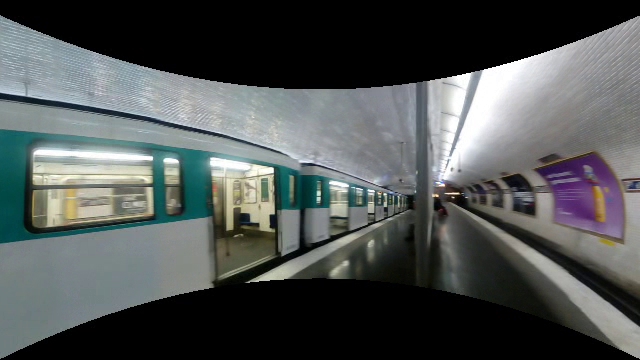
Mouton-Duvernet station achieved additional fame in metro history when it became the first station renovated with the new orange tile design in early 1969. This “Mouton design” renovation style was subsequently applied to twenty stations between 1965 and 1974, demonstrating how the station continued to influence metro aesthetics decades after Guimard\u2019s original design.
<\!-- /wp:paragraph --><\!-- wp:paragraph -->
Though the station interior has since been renovated again as part of the Renouveau du métro program in 2007, the Guimard entrance remains unchanged, preserving this essential piece of Parisian cultural heritage for future generations.
<\!-- /wp:paragraph --><\!-- wp:heading {"level":3} -->
Enduring symbol of Parisian elegance
<\!-- /wp:heading --><\!-- wp:paragraph -->
Today, the Mouton-Duvernet entrance continues its dual function as both practical infrastructure and beloved urban artwork. Protected as a historic monument since 1978, it stands among the 86 surviving Guimard entrances that define Parisu2019s visual identity as much as the Eiffel Tower or Arc de Triomphe.
<\!-- /wp:paragraph --><\!-- wp:paragraph -->
For visitors exploring the 14th arrondissement\u2019s rich cultural landscape, the Édicule Guimard offers a moment to appreciate how thoughtful design can transform mundane urban experiences into encounters with beauty. It represents Guimard\u2019s enduring vision that artistic excellence should be accessible to everyone, integrated into the fabric of daily life rather than confined to museums or elite spaces.
<\!-- /wp:paragraph -->