
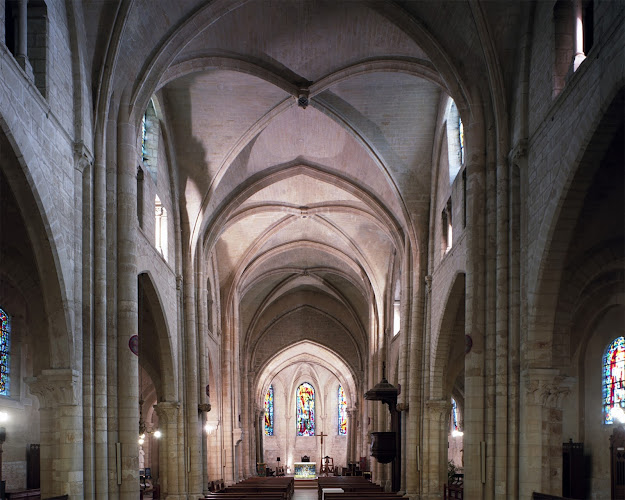
Montmartre’s ancient soul where Roman temple became Christian sanctuary
Atop Montmartre’s sacred hill in the 18th arrondissement, Église Saint-Pierre stands as Paris’s second-oldest parish church after Saint-Germain-des-Prés, where 900 years of continuous worship have transformed a Roman temple to Mars into Christianity’s most enduring Montmartre sanctuary. Consecrated in 1147 by Pope Eugene III alongside Saint Bernard of Clairvaux and Peter the Venerable in the presence of King Louis VII, this extraordinary church demonstrates how religious architecture can embody historical continuity through building layers that span Roman antiquity to contemporary spiritual practice, creating sacred spaces that honor multiple civilizations while maintaining unbroken devotional traditions.
Royal foundation and Benedictine excellence
King Louis VI’s 1133 purchase of the Merovingian church site to establish Montmartre Abbey created one of France’s most influential Benedictine nunneries, where for over six centuries the church served both parish community and royal monastery through dual functions that demonstrated how religious institutions can serve multiple spiritual needs simultaneously. This royal patronage proved that exceptional religious architecture emerges when political authority supports monastic excellence through foundations that transcend immediate political needs to serve eternal spiritual purposes.
The abbey’s establishment represented both religious devotion and political strategy, where Benedictine presence on Montmartre’s strategic height provided spiritual authority over Paris’s expanding urban landscape while creating educational and cultural institutions that served both aristocratic and common spiritual needs through monastic communities dedicated to prayer, learning, and service.
Architectural evolution and stylistic integration
The church’s remarkable architectural synthesis—Roman temple foundations, Merovingian church elements, 12th-century Romanesque construction, early Gothic innovations, and 15th-century Flamboyant Gothic vault replacement—creates a building that documents French religious architecture evolution through structural layers that honor previous sacred use while adapting to contemporary liturgical needs. This architectural palimpsest proves that the finest sacred buildings achieve greatness through respectful integration rather than wholesale replacement.
The survival of Roman pillars and Merovingian capitals within 12th-century construction, combined with Paris’s oldest pointed arch (1147) in the apse, demonstrates how medieval builders could incorporate ancient elements into innovative architectural systems that honored historical sanctity while embracing technical advances that improved both structural integrity and spiritual atmosphere through design evolution that maintained sacred continuity.
Ignatian spirituality and Jesuit origins
The August 15, 1534, gathering in the church crypt where Ignatius of Loyola and companions dedicated their religious project to Our Lady of Montmartre created the Society of Jesus (Jesuits), proving how ancient sacred spaces can inspire new spiritual movements that influence global Christianity. This founding moment demonstrates how medieval religious architecture can continue generating spiritual innovation through environments that support contemplation and commitment to divine service that transcends national boundaries.
The choice of Saint-Pierre’s crypt for this momentous religious dedication reveals how sacred spaces accumulate spiritual power through centuries of prayer, where ancient sanctity provides appropriate settings for new religious commitments that require connection to historical Christian tradition while embracing contemporary evangelical missions that serve global rather than local spiritual needs.
Revolutionary survival and restoration triumph
The church’s miraculous survival after the 1794 Revolutionary destruction of Montmartre Abbey, where the last abbess was guillotined and nuns expelled, followed by near-demolition threats and 1896 closure before triumphant 1900-1905 restoration, illustrates how authentic spiritual heritage can outlive political upheaval through community devotion that preserves sacred architecture regardless of institutional persecution. This survival proves that religious buildings achieve immortality through popular affection rather than official protection when sacred spaces serve genuine spiritual needs.
The 1923 Historic Monument classification and ongoing parish function demonstrate how restored sacred architecture can achieve both cultural preservation and active spiritual service through buildings that honor historical significance while maintaining contemporary religious relevance, proving that the finest church preservation emerges when conservation serves living faith communities rather than museum purposes.
Contemporary pilgrimage and ancient sanctity
Saint-Pierre’s position behind Sacré-Cœur Basilica creates a quieter alternative for visitors seeking authentic medieval spiritual atmosphere without tourist crowds, where ancient stones and surviving architectural elements provide direct connection to 12th-century religious devotion. This accessibility proves that the finest spiritual sites achieve their greatest impact through intimate encounter rather than spectacular presentation, where personal prayer and meditation can connect contemporary visitors to centuries of accumulated sanctity.
The church’s role as both historical monument and active parish demonstrates how sacred architecture achieves optimal preservation when buildings continue serving their original spiritual purpose while accommodating cultural tourism that respects ongoing religious use, creating spaces where historical appreciation and contemporary faith enhance rather than conflict with each other through shared reverence for sacred heritage.
Essential information
- Construction: Started 1133, completed 1147
- Consecration: Pope Eugene III with St. Bernard and Peter the Venerable
- Royal presence: King Louis VII and Queen Adélaïde of Savoy
- Abbey connection: Benedictine nunnery for 600+ years
- Jesuit founding: 1534 crypt meeting with Ignatius of Loyola
- Historic status: Monument historique (1923)
- Age rank: Second-oldest parish church in Paris
- Location: Behind Sacré-Cœur, Montmartre summit
Architectural and spiritual significance
- Historical layers: Roman temple, Merovingian church, medieval construction
- Architectural styles: Romanesque, early Gothic, Flamboyant Gothic vaults
- Ancient elements: Roman pillars, Merovingian capitals preserved
- Record achievement: Paris’s oldest pointed arch (1147)
- Survival story: Revolutionary threats, near-demolition, triumphant restoration
Sacred continuity creates spiritual immortality
Église Saint-Pierre de Montmartre embodies the extraordinary power of sacred architecture to transcend political upheaval through spiritual continuity that connects Roman temple worship to contemporary Christian devotion, where 900 years of prayer have created sanctity that survives revolutionary destruction and near-demolition to serve ongoing spiritual needs. This remarkable church proves that authentic religious heritage achieves immortality through community devotion rather than institutional protection, creating sacred spaces where ancient stones inspire contemporary faith through architectural layers that document civilization’s spiritual evolution while maintaining unbroken worship traditions. For medieval architecture enthusiasts, religious history admirers, or anyone seeking spiritual encounter with Paris’s most ancient Christian heritage, Saint-Pierre offers an unparalleled experience of sacred continuity, where Roman pillars support Gothic vaults beneath medieval walls that witnessed Jesuit foundation and Revolutionary survival, proving that the finest sacred architecture achieves eternal relevance through ongoing spiritual service that honors historical sanctity while serving contemporary religious needs in spaces where prayer transcends architectural style to create holy ground that connects every generation of believers to the accumulated spiritual power that makes certain places sacred forever.