
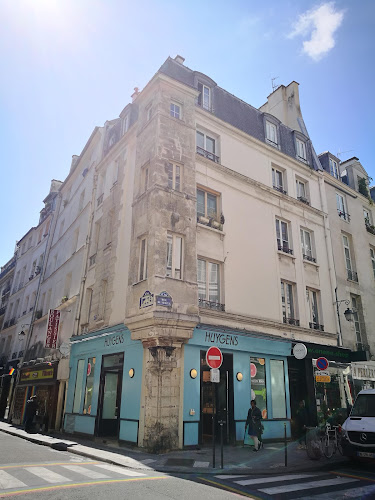
Hôtel Le Rebours isn’t a hotel or a museum—it’s a 17th‑century hôtel particulier (aristocratic townhouse) at 12 rue Saint‑Merri, 75004. Tucked behind a street façade a minute from Centre Pompidou, it’s a listed Monument historique best known for its Rocaille portal, wrought‑iron grand staircase, and calm cobbled courtyard. Interior rooms are private; the courtyard is typically accessible to the public during the day.
Quick Facts
- Type: Hôtel particulier (private townhouse)
- Address: 12 rue Saint‑Merri, Paris 4e (west side borders rue Pierre‑au‑Lard)
- Built: 1624 for Jean Aubery by master mason Claude Monnard
- Later owners/works: Purchased 1672 by Thierry Le Rebours; street façade reworked c. 1738 by architect Victor‑Thierry Dailly (Rocaille style)
- Heritage status: Inscrit Monument historique (31 July 1990)
- What you can see: Street façade and free entry to the courtyard via the porte‑cochère; vestibule and the grand staircase with iron balustrade are visible from the passage
- Not a museum: No exhibitions, ticket office, or guided tours on‑site; interiors are private/residential/tenanted
Why it matters
Le Rebours captures three centuries of Parisian domestic architecture in one ensemble: a Louis XIII‑era layout around a symmetrical four‑wing courtyard, later dressed with Louis XV vocabulary and a Dailly‑designed street portal. It’s a concise lesson in how Marais townhouses evolved as owners changed and tastes shifted.
Architecture Highlights (what to look for)
- Rocaille portal (street side): The carved mascaron (a satyr’s head) above the porte‑cochère; note the “chapeau de gendarme” cornice profile.
- Façades on the courtyard: Classical symmetry—ground floor arcades, tall piano‑nobile windows, and a mansard roof punctuated by a round‑pedimented central dormer flanked by triangular ones.
- Grand staircase: Inside the passage, glance left to the vestibule; the wrought‑iron ramp climbs to the second floor—intact and richly drawn.
- Urban fabric: The ensemble backs onto the cul‑de‑sac du Bœuf and abuts the former Hôtel de Berlize; it’s a compact block‑within‑a‑block typical of the Marais.
Accessibility & On‑site Amenities
- Access: You can step in from the street through the open portal when the courtyard is accessible (daytime hours are most reliable). Doors may be closed at times; respect any posted signs.
- Mobility: The passage and courtyard are cobbled; there may be a small threshold at the portal. There is no staffed accessibility service.
- Amenities: None on‑site. No restrooms, café, gift shop, audio guides, or coat check.
Planning Your Visit
- When to go: Weekday mornings are quiet. Avoid times when tenants have deliveries or courtyard parking turnover.
- How long: 10–15 minutes is enough for façade details, the courtyard, and a peek at the staircase from the passage.
- Etiquette: This is private property with public access to the courtyard only. Keep voices low; no flash or tripods; do not attempt to access closed doors or upper floors.
- Combine with: Église Saint‑Merri, Fontaine Stravinsky, Centre Pompidou, Hôtel de Ville, and a short wander along rue Pierre‑au‑Lard.
Getting There
- Métro: Hôtel‑de‑Ville (Lines 1, 11) or Rambuteau (Line 11)
- Walk: 2 minutes from Centre Pompidou’s Piazza via rue Saint‑Merri
Don’t confuse it with…
A different “Hôtel Le Rebours” once stood at 18 rue des Quatre‑Fils (3e)—known from early 20th‑century photographs. Today, the notable site for visitors is the 12 rue Saint‑Merri (4e) address described above.
Note: Hours and access can vary; always defer to on‑site signage and residents’ privacy.