
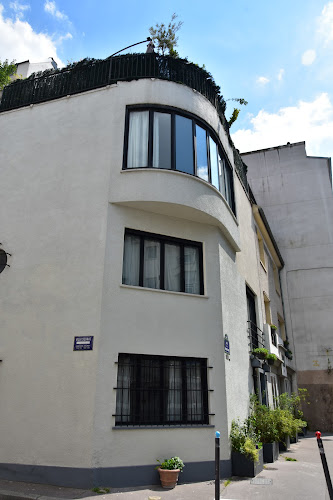
Modernist sanctuary where literary giants found creative refuge
Hidden in the 14th arrondissement near Parc Montsouris, Villa Seurat stands as one of Paris’s most remarkable artist colonies, where modernist architecture and avant-garde creativity converged to create a literary and artistic sanctuary. This intimate 130-meter cul-de-sac, designed in 1924 by André Lurçat and the Perret brothers, became home to an extraordinary gathering of creative genius including Henry Miller, Anaïs Nin, Salvador Dalí, and Chaïm Soutine, proving that great art can flourish in purpose-built environments designed to support creative work and artistic community.
André Lurçat’s visionary artist community
The vision for Villa Seurat emerged in 1924 when painter Jean Lurçat and his architect brother André Lurçat conceived creating an accessible and affordable artists’ town equipped with modern comfort. Named Cité Seurat in 1926 to honor post-impressionist master Georges Seurat, the development represented pioneering urban planning that prioritized creative community over commercial profit.
André Lurçat and the Perret brothers’ modernist architectural approach embraced ornamental simplicity, clean lines, asymmetrical volumes, and facades stripped of excessive decoration. This aesthetic philosophy created environments that supported artistic concentration while establishing one of the first areas to embody avant-garde architectural principles in residential design.
Henry Miller’s literary sanctuary and “Tropic of Cancer”
Number 18 Villa Seurat holds extraordinary literary significance as the studio where Henry Miller wrote his groundbreaking novel “Tropic of Cancer.” Starting in 1934, Miller lived in this studio that Anaïs Nin found and possibly financed for him, creating the stable creative environment necessary for completing his revolutionary work.
On September 1, 1934, the same day Miller finally had a home to call his own rather than lodging with Nin’s mother, “Tropic of Cancer” was published and delivered to his door—creating a perfect convergence of personal independence and literary achievement within the supportive artistic community of Villa Seurat.
Extraordinary roster of avant-garde residents
Villa Seurat attracted an unparalleled gathering of modernist and avant-garde talent including Anaïs Nin (writer and erotica pioneer), Salvador Dalí (Surrealist painter), Mario Prassinos (painter), Chaïm Soutine (expressionist painter), Antonin Artaud (theater revolutionary), and Alberto Magnelli (Italian modern painter at No. 20). This concentration of genius created an artistic ecosystem that fostered creativity through proximity and collaboration.
Miller captured the community’s creative spirit, writing “the whole street is given up to quiet joyous work… every house contains a writer, painter, musician, sculptor or actor,” demonstrating how the colony achieved its goal of creating supportive environment for serious artistic production.Modernist architecture meets creative community
The villa’s architectural design reflected modernist beliefs that living spaces should enhance rather than constrain creative work, where clean lines and functional layouts supported artistic concentration while communal outdoor spaces encouraged the creative exchange that made the colony so productive for its residents. The integration of architectural innovation with artistic community demonstrated how modernist design principles could serve creative purposes, creating environments specifically designed to nurture the kind of experimental work that defined 1920s and 1930s avant-garde culture.Literary pilgrimage and continuing legacy
Today’s Villa Seurat continues to attract literary pilgrims and architecture enthusiasts who come to experience the setting where some of the 20th century’s most important artistic works were created. The preservation of the colony’s modernist architecture and intimate scale allows visitors to understand how purposeful creative communities can flourish within appropriate architectural frameworks.Essential information
- Development: 1924-1926
- Architects: André Lurçat, Perret brothers
- Original name: Cité Seurat (honoring Georges Seurat)
- Location: 14th arrondissement, near Parc Montsouris
- Dimensions: 130m × 6m private cul-de-sac
- Architectural style: Modernist (clean lines, stripped decoration)
- Purpose: Affordable artist housing with modern amenities
Famous residents and cultural achievements
- Henry Miller: No. 18 (wrote “Tropic of Cancer”)
- Anaïs Nin: Writer and Miller’s patron
- Salvador Dalí: Surrealist painter
- Chaïm Soutine: Expressionist painter
- Alberto Magnelli: No. 20 (Italian modern painter)
- Literary achievement: “Tropic of Cancer” published 1934
Creative sanctuary in modernist architecture
Villa Seurat embodies the successful marriage of architectural innovation and artistic community, where André Lurçat’s modernist vision created living spaces that nurtured some of the 20th century’s most important creative achievements. This remarkable colony demonstrates how purposeful architectural design can support artistic production while fostering the collaborative relationships that enable revolutionary cultural work. For literary pilgrims, modernist architecture enthusiasts, or anyone interested in how creative communities flourish, Villa Seurat offers an extraordinary encounter with artistic sanctuary, where Henry Miller’s “Tropic of Cancer” and countless other avant-garde works emerged from a hidden cul-de-sac designed to prove that the finest creative environments combine architectural innovation with community support, ensuring that great art can find the peaceful refuge necessary for challenging conventional wisdom and creating lasting cultural transformation.