
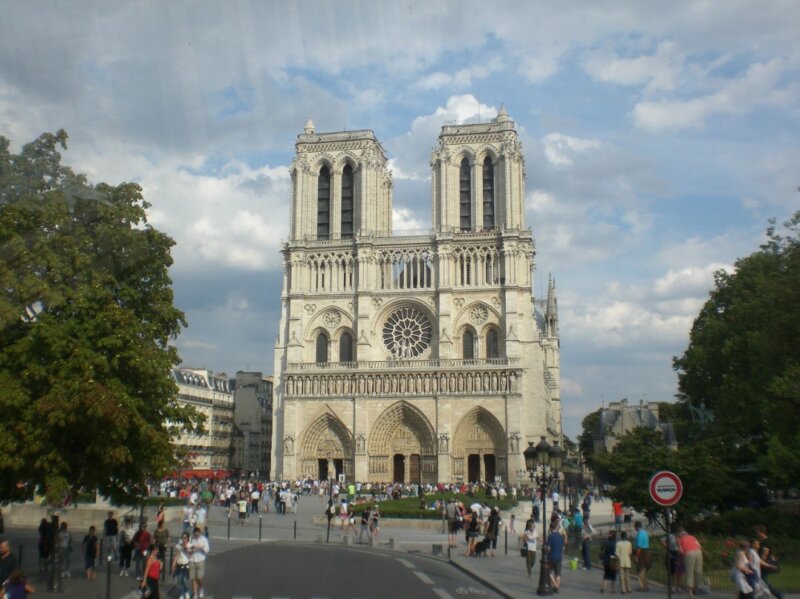
Gothic masterpiece reborn from flames
Rising majestically from the Île de la Cité, Notre-Dame Cathedral stands as the ultimate symbol of Gothic architectural achievement and French cultural resilience. This 861-year-old Gothic landmark, constructed between 1163 and 1260, has survived wars, revolutions, and most recently, the devastating fire of April 15, 2019, to emerge triumphant once again. Its December 7, 2024 reopening marks not just architectural restoration but the renewal of one of humanity\s greatest spiritual and artistic treasures.
Medieval vision of Bishop Maurice de Sully
The cathedral\s creation began with Bishop Maurice de Sully\s ambitious vision that 12th-century Paris needed a grander cathedral to match its growing importance as a European capital. Construction commenced in 1163 and was largely completed by 1260, creating what would become the definitive example of French Gothic architecture and a model for cathedrals throughout Europe.
The building\s revolutionary design incorporated groundbreaking architectural innovations including flying buttresses, rib vaults, and enormous rose windows that transformed religious architecture. These technical advances allowed walls to be built higher and thinner while supporting unprecedented window sizes that flooded the interior with divine light.
Gothic innovation and structural mastery
Notre-Dame\s high vaults over choir, transept, and nave span approximately 12 meters and reach heights of more than 33 meters, demonstrating the medieval mastery of stone construction that would define Gothic architecture. The cathedral\s flying buttresses—external supports that became hallmarks of Gothic design—enabled the revolutionary window walls that characterize the style.
The three magnificent rose windows, particularly the west rose (9.6 meters in diameter, created around 1225), represent pinnacles of medieval stained glass artistry. These masterpieces survived the 2019 fire intact, preserving 13th-century craftsmanship that continues to inspire wonder nearly eight centuries after its creation.
Viollet-le-Duc\s 19th-century renaissance
The cathedral underwent transformative restoration between 1844 and 1864 under Eugène Viollet-le-Duc and Jean-Baptiste Lassus, who won a competition in 1843 to lead the comprehensive renovation. Viollet-le-Duc\s controversial but ultimately successful restoration reconstructed the spire (removed in the 18th century) and added the iconic gargoyles that have become synonymous with Notre-Dame\s dramatic silhouette.
This 19th-century intervention demonstrates how great monuments can be enhanced by later generations who understand and respect the original architectural vision while adding elements that serve contemporary needs and aesthetic sensibilities.
Tragedy, resilience, and rebirth
The April 15, 2019 fire that destroyed the spire and wooden roof represented one of the most dramatic challenges in Notre-Dame\s long history. However, the stone vaulted ceiling largely contained the damage, protecting the interior and demonstrating the wisdom of medieval builders who designed structures to withstand catastrophic events.
The five-year restoration, completed with €700 million in funding and the work of over 1,200 skilled artisans, employed traditional 12th-century materials and techniques. This approach ensured that the restoration honored the original builders\ vision while incorporating modern safety and preservation technologies.
Cultural and spiritual significance
Notre-Dame serves simultaneously as active cathedral, UNESCO World Heritage Site, and architectural pilgrimage destination that attracts millions of visitors annually. As the seat of the Archbishop of Paris, it continues its 861-year mission of spiritual service while functioning as one of the world\s most important examples of Gothic architectural achievement.
The cathedral\s role in French national identity—from royal ceremonies to revolutionary transformations to wartime survival—makes it more than religious building; it embodies the resilience and cultural continuity that define French civilization.
Artistic treasures and architectural mastery
Beyond its structural innovations, Notre-Dame houses extraordinary artistic treasures including its historic pipe organs, sculptural decoration that demonstrates the naturalism and abundance of Gothic art, and the Crown of Thorns, one of Christianity\s most revered relics. The cathedral\s combination of architectural innovation and artistic excellence creates an environment where spiritual experience and aesthetic appreciation unite.
Essential information
- Construction: 1163-1260 (12th-13th centuries)
- Founder: Bishop Maurice de Sully
- Architectural style: French Gothic
- Location: Parvis Notre-Dame, Île de la Cité, 4th arrondissement
- Major restoration: 1844-1864 (Viollet-le-Duc)
- 2019 fire: April 15, 2019
- Reopening: December 7, 2024
- Heritage status: UNESCO World Heritage Site
Architectural innovations
- Structural features: Flying buttresses, rib vaults, 33-meter-high vaulting
- Windows: Three 13th-century rose windows, revolutionary Gothic glazing
- Artistic elements: Gargoyles, naturalistic sculpture, Crown of Thorns relic
- Capacity: Over 6,000 people
- Restoration approach: Traditional 12th-century materials and techniques
Eternal Gothic legacy
Notre-Dame Cathedral stands as more than architectural monument—it represents the triumph of human creativity, spiritual aspiration, and cultural resilience across nearly nine centuries. This Gothic masterpiece demonstrates how great buildings can survive catastrophic challenges to emerge renewed while maintaining their essential character and mission. For architecture enthusiasts, spiritual pilgrims, or anyone seeking to understand the foundations of Western cultural achievement, Notre-Dame offers an unparalleled encounter with Gothic innovation and French heritage, where medieval builders\ vision of reaching toward heaven through stone and light continues to inspire millions beneath vaults that have been restored to their original glory through the dedication of contemporary craftsmen honoring 800-year-old traditions.