
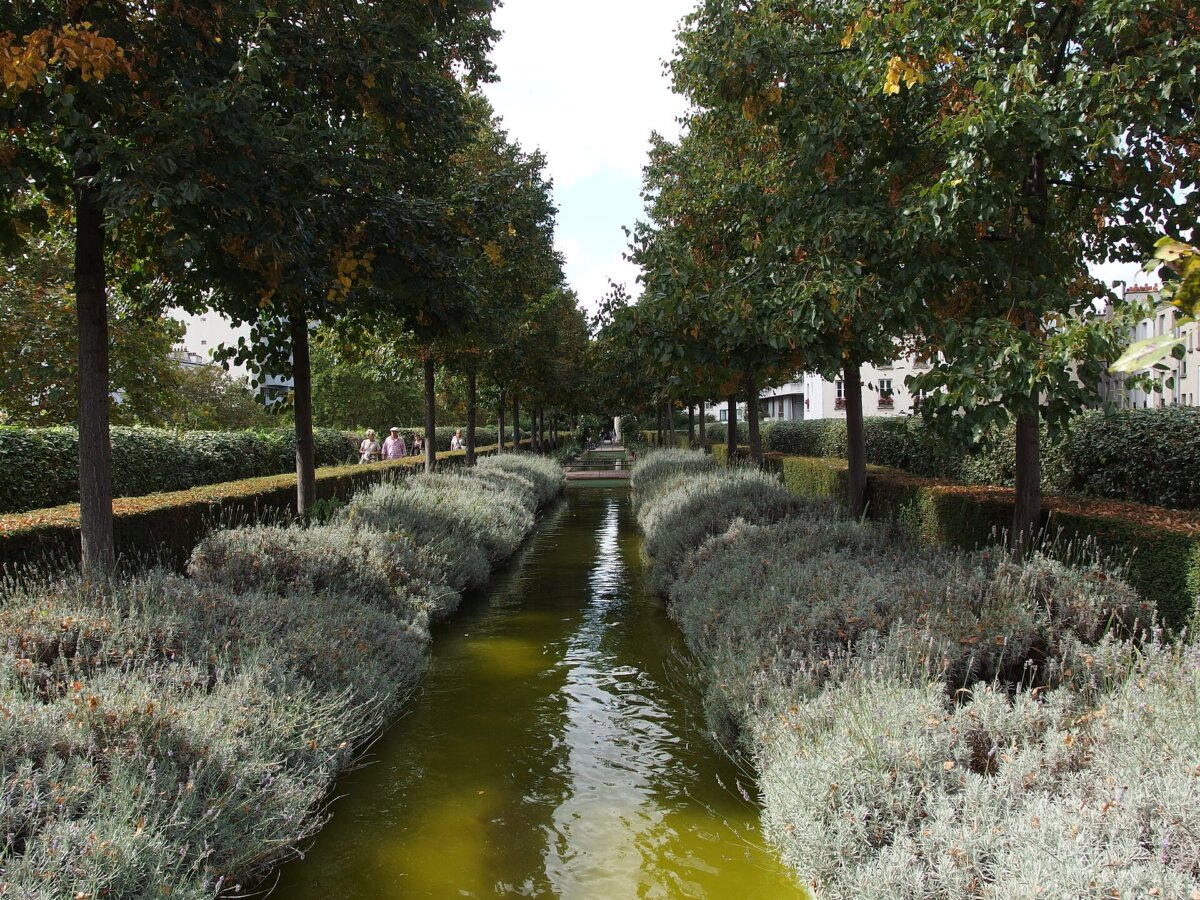
Paris has a ton of famous walks, but the Promenade Plantée still feels like one of the city’s best-kept secrets. This elevated urban garden runs nearly three miles through the 12th arrondissement, tracing a former railway viaduct that’s turned into a lush green path above the streets. Along the way, you’ll spot roses climbing iron trellises, sneak peeks into hidden courtyards, and see Paris from a totally different angle than most tourists ever do.
What really sets the Coulée Verte René-Dumont apart is how it weaves nature right into the city’s industrial past. The walkway sits on railway arches from the 1800s, and when it opened in 1993, it actually inspired New York’s High Line years later. Down below, artisan workshops and studios fill the old viaduct arches, while up top, birds dart between bamboo groves and cherry trees.
The Promenade Plantée walk gives you a version of Paris most people never even realize exists. If you want a peaceful morning jog, a quirky photography spot, or just a break from the crowded boulevards without leaving the city, this hidden green corridor is a real breath of fresh air.
Key Takeaways
- The Promenade Plantée is a free, elevated park built on an old railway viaduct in eastern Paris
- You can walk the whole route in about two hours, with several entry points and access to artisan shops below
- The park opens early and closes in the evening, offering gardens, viewpoints, and quiet spots to escape city crowds
What Is the Promenade Plantée Walk?
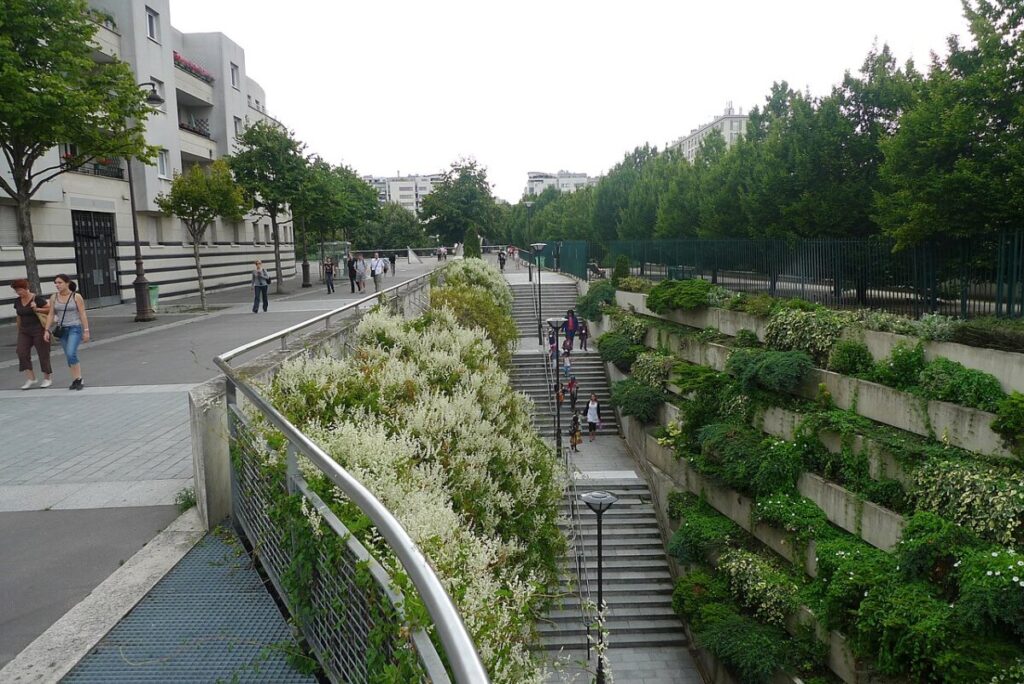
The Promenade Plantée is a 4.5-kilometer elevated linear park built on top of an old railway viaduct slicing through Paris’s 12th arrondissement, about 10 meters above the street. It’s part planted walkway, part urban garden, and honestly, it’s one of the most peaceful escapes you’ll find in the city.
Overview of the Elevated Linear Park
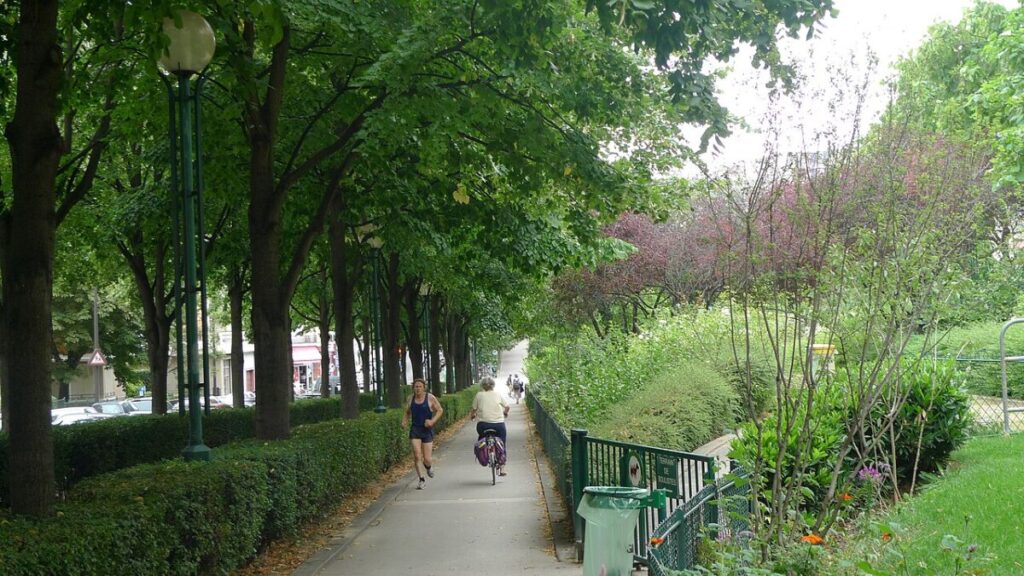
Step onto this elevated park running through eastern Paris, and you’ll immediately notice how different it feels from the chaos below. The planted promenade stretches from just behind the Opéra Bastille all the way to the Périphérique near Bois de Vincennes.
You’re up about three stories, surrounded by bamboo, cherry blossoms, roses, and neat hedges. The path is wide enough for joggers, families with strollers, and people like me who just want to plop down on a bench and watch the city from a fresh angle.
Landscape architects Philippe Mathieux and Jacques Vergely created the Promenade Plantée in 1988, turning the abandoned Vincennes railway line into something genuinely special. Here’s a fun fact: this was actually the world’s first elevated urban park of its kind, beating New York’s High Line by over twenty years.
Origins of the Name and Local Nicknames
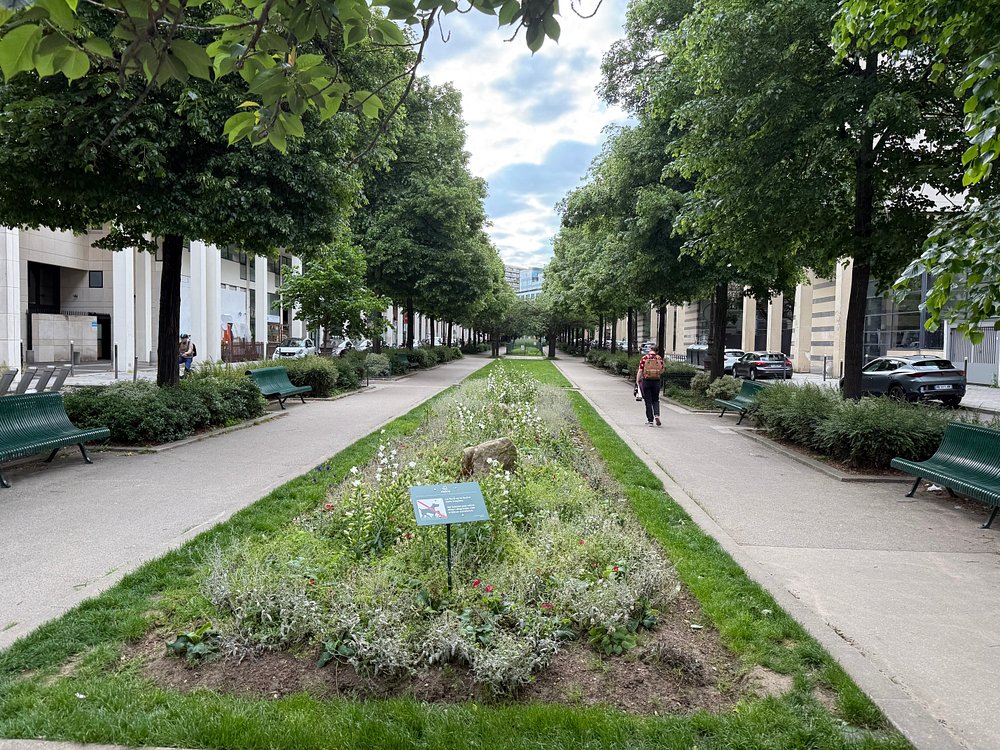
The official name is Coulée Verte René-Dumont, after a French environmentalist and politician. But, let’s be honest, hardly any Parisian calls it that.
Locals usually just say “Coulée Verte” (which means “green flow” or “green stream”) or “Promenade Plantée” (planted promenade). Tourists, in my experience, stick with Promenade Plantée—it’s easier to say and remember.
The name “planted promenade” really fits—every section feels like you’re wandering through someone’s carefully curated garden. You’ll also spot it called La Coulée Verte on maps and guidebooks, which kind of hints at the long green ribbon it creates across the arrondissement.
Paris’ Trailblazing Urban Garden Concept
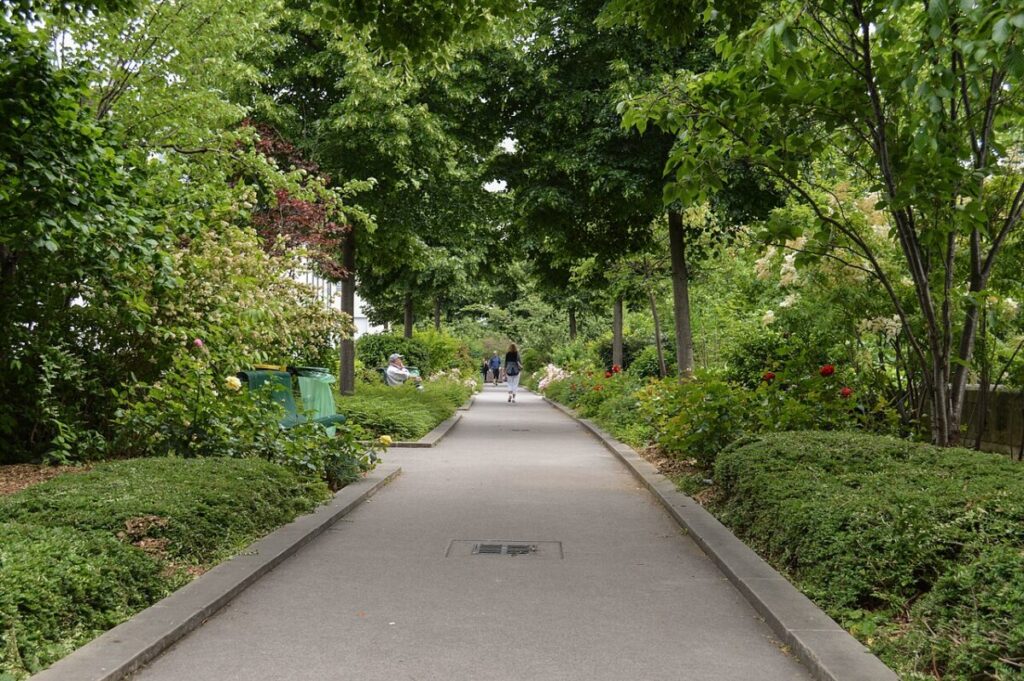
Paris did it first—before anyone else thought to turn obsolete infrastructure into green public space, this city took the leap. The railway line sat unused since 1969, and instead of tearing it down, the city just reimagined it.
The world’s first High Line elevated urban park set a blueprint for similar projects around the world. New York’s High Line, which opened in 2009, directly drew inspiration from what Paris pulled off here decades earlier.
But the Promenade Plantée isn’t just a historical footnote—it’s a living, breathing example of how cities can reclaim industrial spaces for people. The first stretch sits on top of the Viaduct des Arts, where artisan workshops and galleries fill the archways below. Up above, you wander through tunnels of wisteria and pass modern sculptures, feeling completely removed from the urban environment just a few meters down.
See Related: Best Way to Visit Paris Monuments Efficiently: Discover Top Sights in Less Time
History and Transformation of the Vincennes Railway
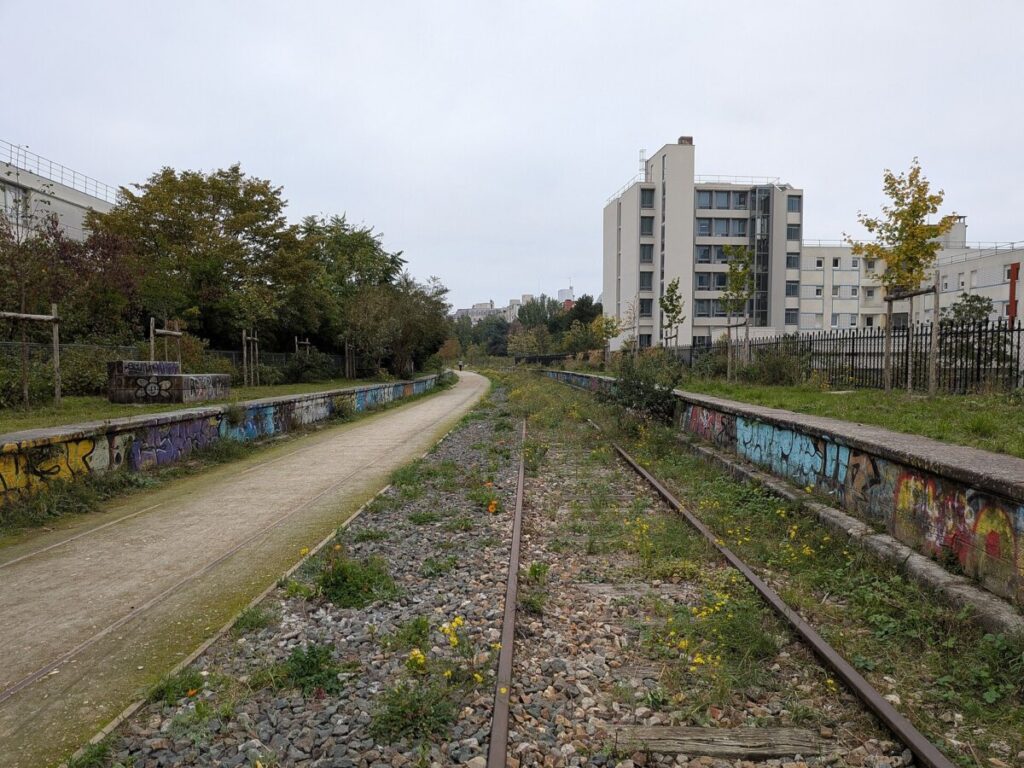
The Vincennes railway line ran through Paris for over a century before anyone thought to turn it into an elevated park. Two architects saw potential in those abandoned tracks, even as most Parisians just wanted them gone.
The Original Vincennes Railway Line
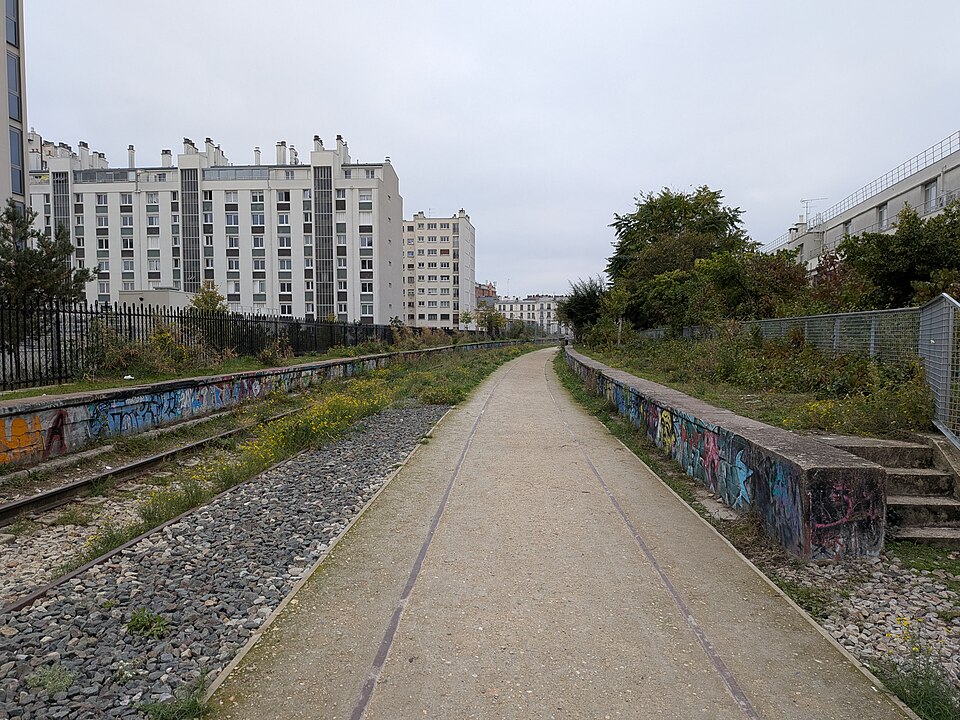
The Vincennes railway opened in 1859 as a steam train line connecting Gare de la Bastille to Verneuil-l’Étang, about 60 kilometers southeast of Paris. For 110 years, trains carried passengers through the 12th arrondissement and out to the suburbs.
Passenger service ended in 1969, but the railway didn’t vanish overnight—it kept running freight trains until 1985.
After that, the section beyond Vincennes got absorbed into the RER network. The part closest to Paris just sat there, growing more overgrown and run-down each year. By the late 1970s, the abandoned viaduct had turned into a bit of an eyesore, with crumbling brick arches and weeds everywhere.
Conversion from Rails to Green Space
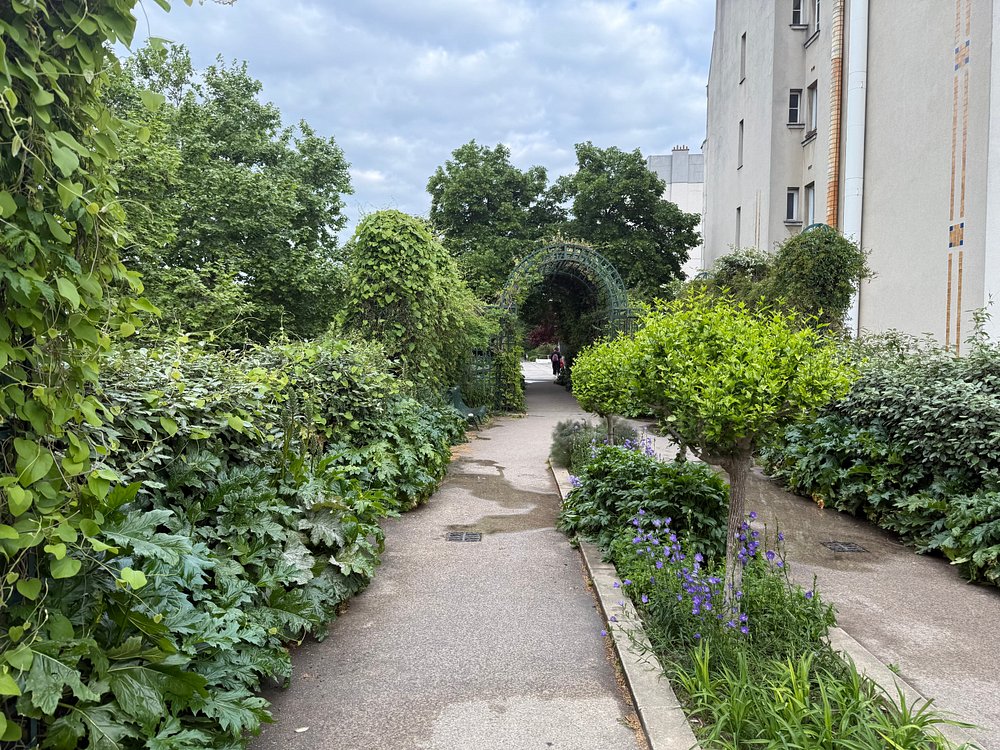
When the city started planning redevelopment, officials wanted to demolish the old railway line. That’s when architects Jacques Vergely and Philippe Mathieux pitched a pretty wild idea.
They suggested transforming the derelict railway into an elevated park instead of just tearing it down. A lot of Parisians thought it was a waste of money—kind of like how folks reacted to the Eiffel Tower way back when.
The Promenade Plantée opened in 1993, becoming the first elevated linear park in the world. The project restored the 10-meter-tall brick archways under the viaduct, which became the Viaduc des Arts with its glass-fronted artisan workshops.
Role of Visionaries and Designers
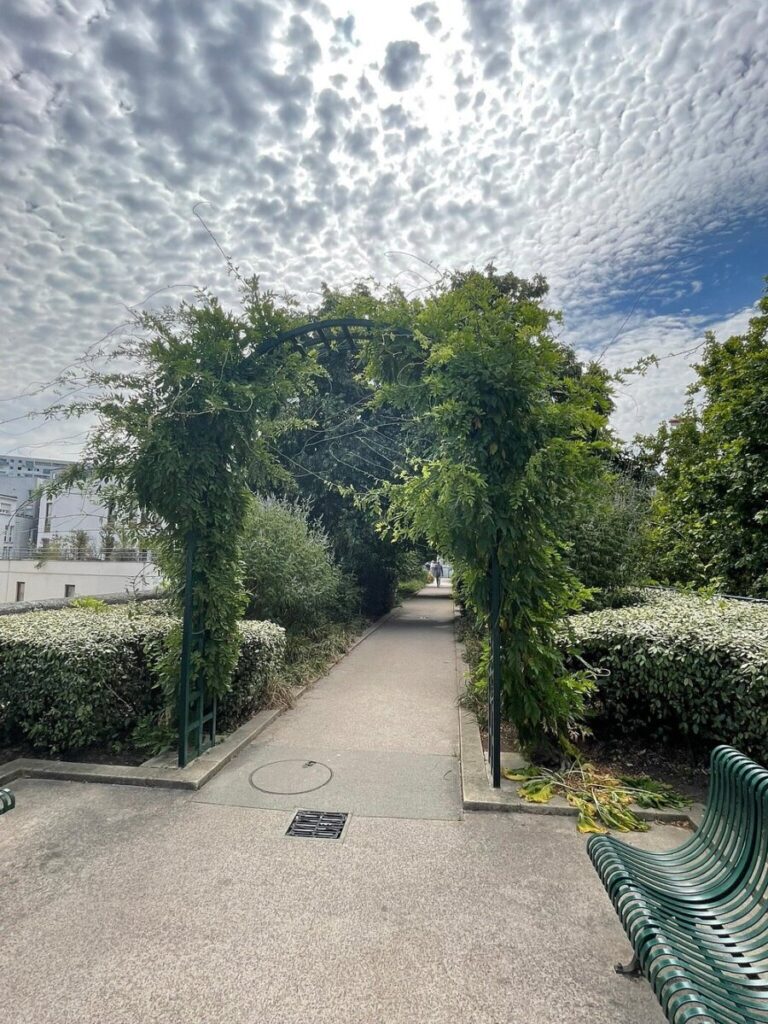
Landscape architect Jacques Vergely and architect Philippe Mathieux really deserve credit for seeing beauty where everyone else saw blight. Their design kept the industrial character but layered in lush greenery.
The city renamed the park Coulée Verte René-Dumont in 2013, after René Dumont, a French agronomist and environmentalist who pushed for sustainable development—a fitting tribute for a project that gave new life to old infrastructure.
Architect Patrick Berger also worked on parts of the design. The route starts just south of the Opéra Bastille, not far from where Gare de la Bastille once stood. It stretches nearly 5 kilometers through all kinds of landscapes—elevated gardens, ground-level paths, tree tunnels—ending near Bois de Vincennes.
Route and Main Sections of the Walk
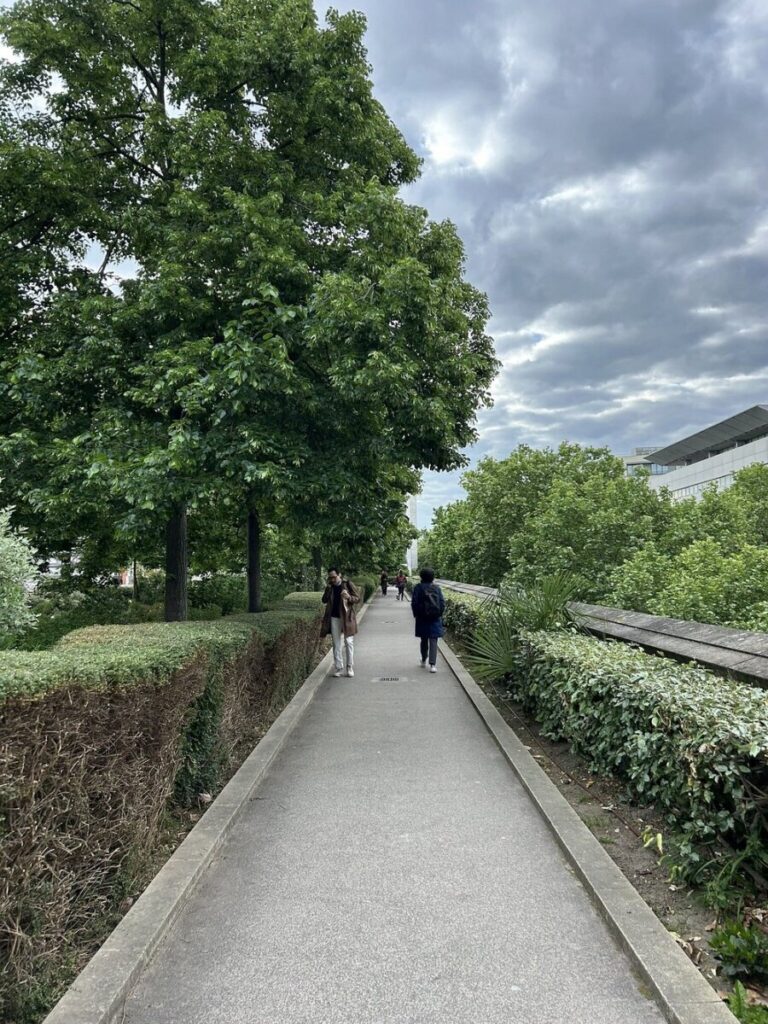
The promenade runs 4.7 kilometers through Paris’s 12th arrondissement, shifting from elevated gardens to ground-level paths. You’ll see everything from leafy walkways above the streets to tunnels and open green spaces as you head east.
Starting Points: Place de la Bastille and Avenue Daumesnil

You’ll probably want to start near the Opéra Bastille, where you’ll find the entrance along Rue de Lyon. From there, it’s just 200 meters to Avenue Daumesnil, where the elevated park officially begins.
The main entrance sits at Avenue Daumesnil and Rue de Lyon. There’s both stairs and an elevator, so it’s accessible if you’re pushing a stroller or need step-free access. I always tell friends to look for the red brick arches—you really can’t miss them.
There are several other access points along Avenue Daumesnil as you move east. You’ll spot staircases at Rue Hector Malot (this one also has an elevator), Rue de Rambouillet, and Place Moussa. But honestly, starting at the western end near Bastille is the way to do it if you want the full experience.
Viaduc des Arts and Elevated Gardens
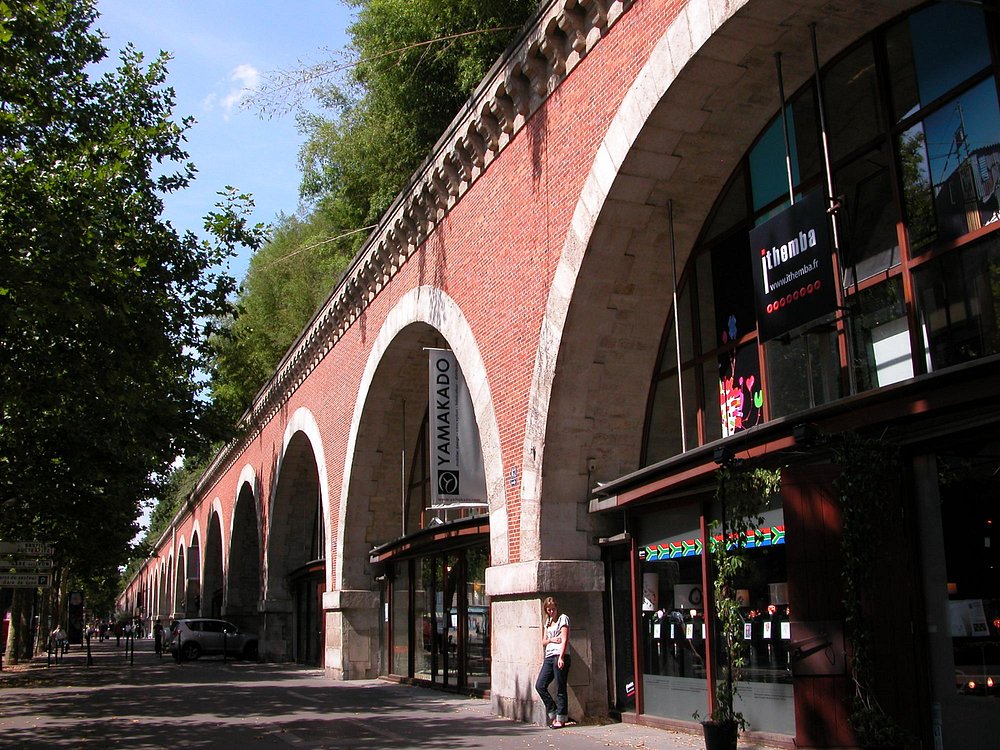
The first 1.4-kilometer stretch is probably what you picture when you think of the promenade. You’re walking on top of the former Viaduct de Bastille, surrounded by climbing roses, bamboo, and lush garden beds.
The height gives you surprising glimpses of Parisian rooftops and neighborhoods you’d never see from street level. Right below, tucked into those lovely brick arches, you’ll find the Viaduc des Arts—dozens of artisan workshops and galleries selling everything from handmade furniture to custom jewelry.
What you’ll spot along this stretch:
- Benches hidden among flowering plants
- Water fountains for refilling bottles
- Small art installations
- Viewing platforms with city views
The vegetation here feels wild but intentional. No cars—just pedestrians and the occasional runner, especially on Sunday mornings when Paris is still waking up.
Jardin de Reuilly and Surroundings
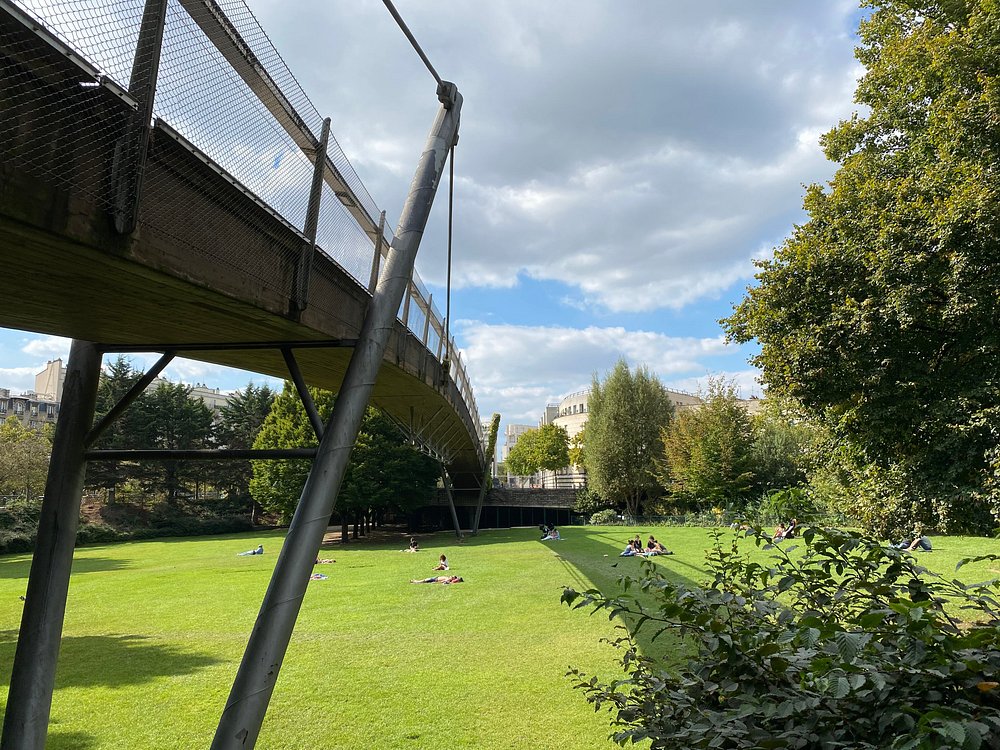
After the elevated part, you’ll come down to the Jardin de Reuilly, a proper park that opened in the late 1990s. This 0.3-kilometer green space has a big central lawn that fills up with locals when the sun’s out.
You’ve got two choices here: head straight across on the suspension bridge or take a detour through the garden’s shaded paths. I’d go for the detour if you’ve got time—each garden “room” has its own vibe.
Here’s a quirky highlight: the park has one of Paris’s only sparkling water fountains. You can fill your bottle with still or sparkling water for free. It’s a small thing, but it always makes me smile.
After the garden, you’ll continue along Allée Vivaldi, which drops to street level. This section allows cyclists, and you’ll notice the path splits into separate lanes. The 1.3-kilometer stretch along Rue Sahel keeps this setup—one lane for walkers, one for bikes, all lined with trees.
The path dips below street level in places, running through tunnels that follow the old railway route. It gets shadier here, and honestly, it starts to feel like you’re exploring abandoned train tracks—which, well, you are.
Eastward to Bois de Vincennes
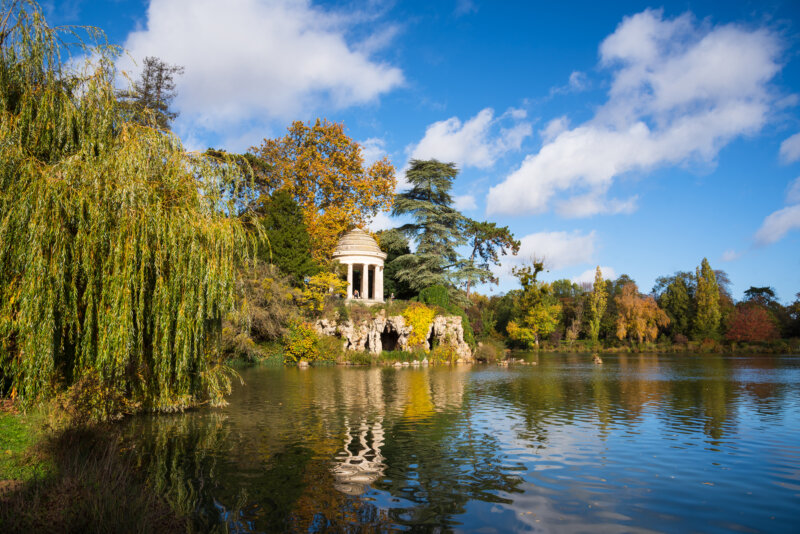
Once you head toward the city’s edge, the promenade shifts. Those neat gardens start to feel wilder as you get closer to the Bois de Vincennes.
The official path runs 5.3 kilometers if you go all the way to the Château de Vincennes. But honestly, most Parisians (myself included) usually turn back at Rue Sahel. The Bel-Air Métro station on Line 6 sits right there, so it’s easy to hop back to central Paris.
If you decide to keep going past Square Charles-Péguy, you’re signing up for a long walk back or a trek through the outer arrondissements, where Métro stops get few and far between. Around Porte Dorée and Porte de Vincennes, the path loses that curated park vibe and feels more like you’re skirting the city’s edge.
Distance markers:
- Bastille to Jardin de Reuilly: 1.7 km
- Jardin de Reuilly to Rue Sahel: 1.0 km
- Rue Sahel to Bois de Vincennes: 2.0 km
Heading toward Avenue Général Michel Bizot and beyond means you’ll need to grab the tram or walk through less scenic neighborhoods to find public transport. Unless you’re dead set on visiting the Château de Vincennes or wandering the Bois, Montgallet makes a pretty logical spot to stop.
See Related: Best Things to do in Paris, France
Highlights and Experience Along the Promenade Plantée
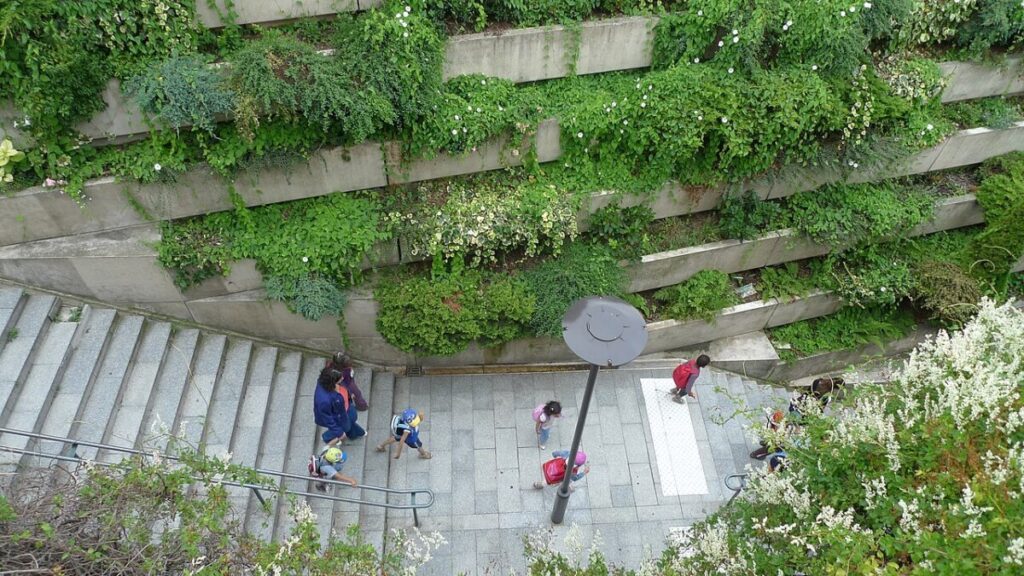
The walk treats you to a constantly changing mix of planted gardens, architectural details from the railway days, and rooftop views you really can’t get anywhere else in Paris. You’ll wander through tunnels tangled with vines, cross bridges lined with roses, and stumble on quiet nooks where locals linger with a coffee or a book.
Gardens, Flora, and Water Features
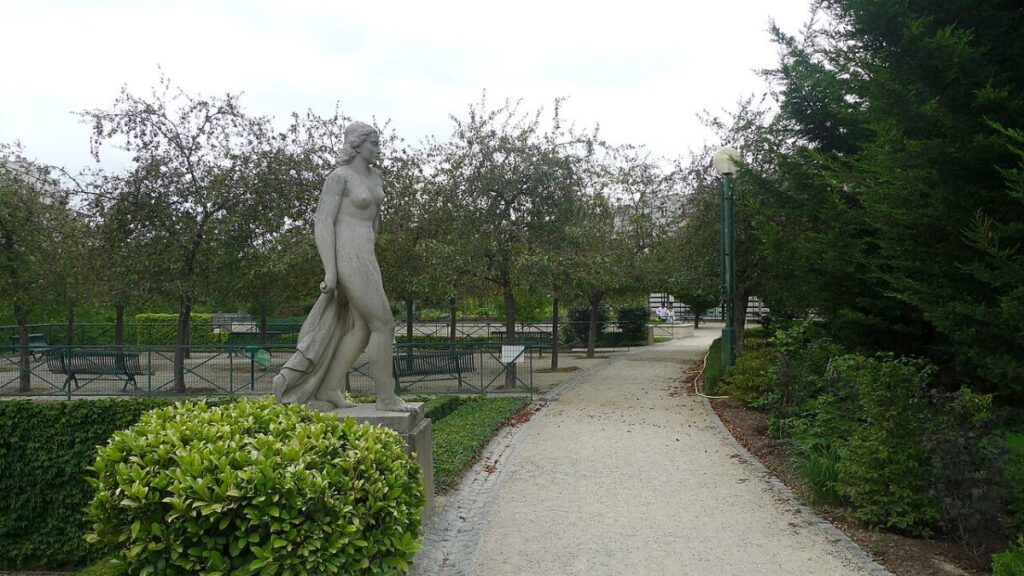
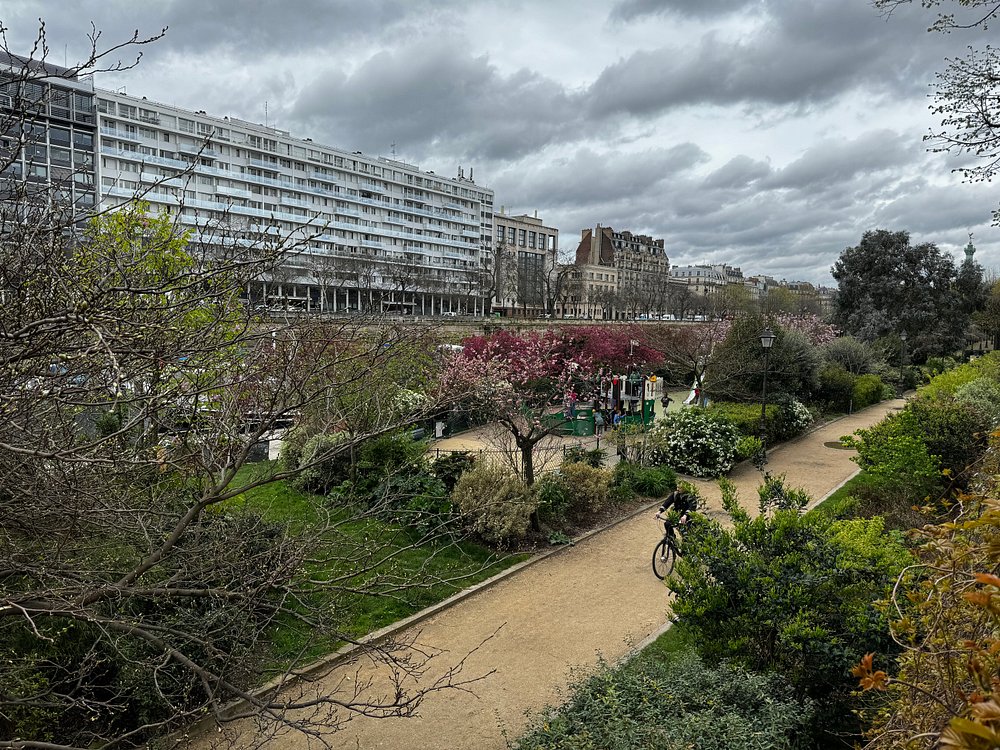
The Coulée Verte’s planted sections change as you head east from Bastille. In spring, wisteria spills over the trellises, and by summer, lavender and climbing roses take over. The gardeners have layered the plants—tall bamboo, then flowering shrubs, then ground cover that spills over the sides.
Jardin de Reuilly sits about halfway and offers something the elevated parts can’t: a real lawn where you can stretch out on the grass. There’s a public fountain here with both still and sparkling water, which is honestly one of the best free things to do in Paris if you need a refill on a hot day.
The path gets wilder as you go east. Trees tower overhead, birds get louder, and you almost forget you’re still flanked by apartment blocks.
Art Installations and Architecture
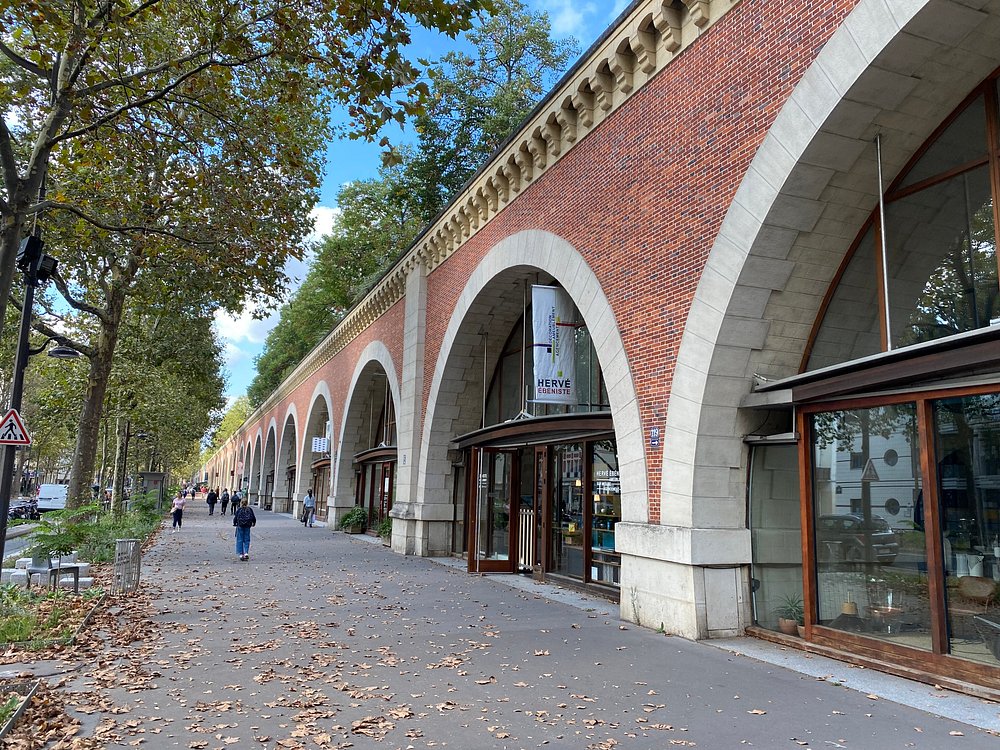
Old railway bones—iron bridges, stone arches, brick tunnels—give the promenade its backbone. You’re walking through a piece of 19th-century engineering softened by plants but never completely hidden.
Down below, the Viaduc des Arts fills those arches with artisan workshops. Through big windows, you can spot violin makers, glassblowers, and furniture designers at work. It’s worth heading down at least once to peek inside a studio or two.
Sculptures pop up here and there, but honestly, the architecture steals the show. Sometimes, modern apartment buildings cut right through the path, so you’re suddenly walking at treetop level through someone’s courtyard. It’s a little odd, but pretty cool.
Scenic Views and Photo Spots
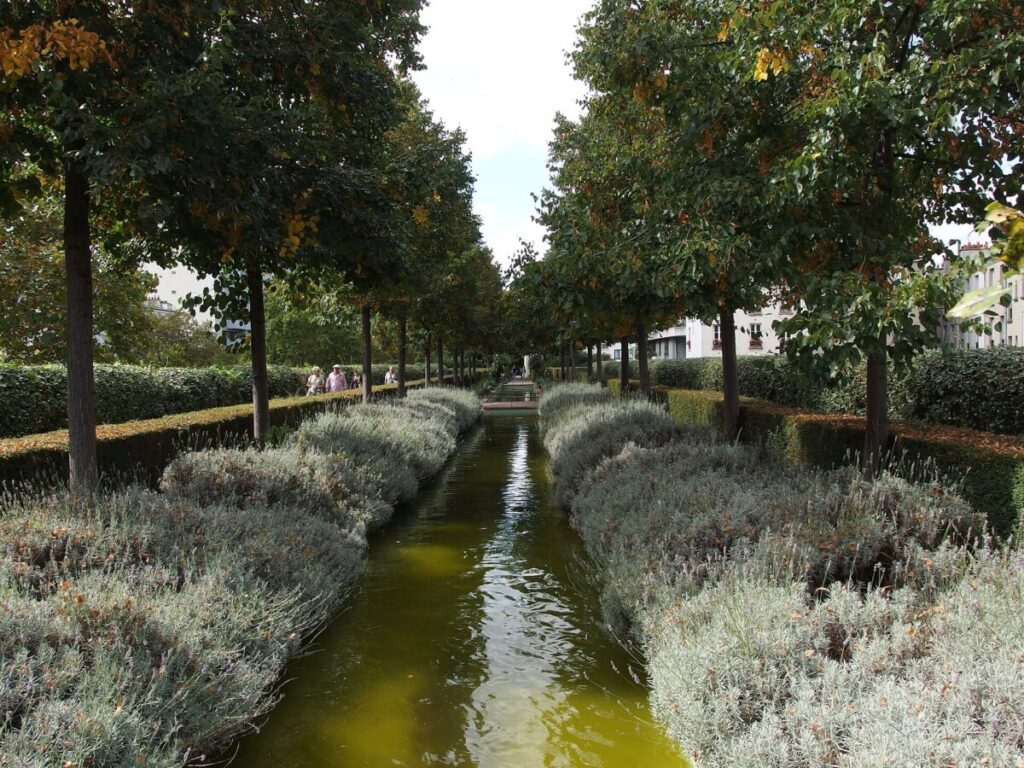
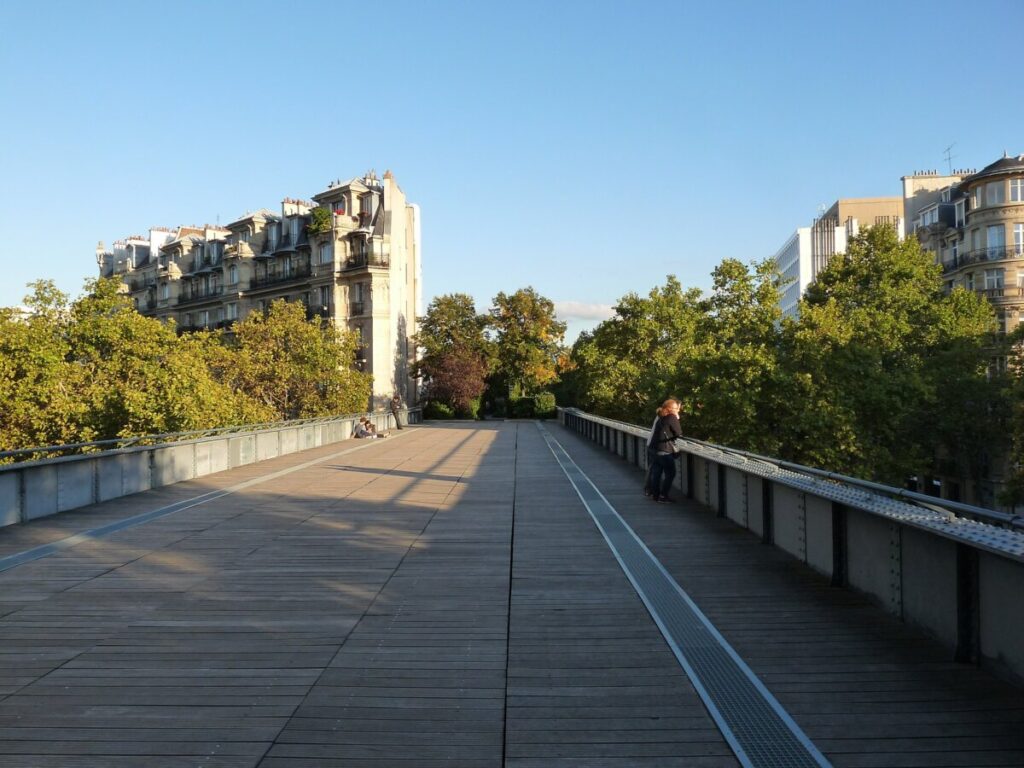
Up on the elevated sections, you get a unique view of Paris’s 12th arrondissement. Instead of street-level bustle, you peek down into private courtyards, across rooftops, and through little gaps that reveal hidden layers of the city.
The bridges are the best spots for photos. If you stop where the walkway crosses Avenue Daumesnil, you’ll see the garden floating above the traffic—a weird but beautiful mix of nature and city life.
If you’ve ever walked New York’s High Line, the vibe might feel familiar—but Paris actually did it first, way back in 1993. The views here aren’t quite as dramatic, but they’re more intimate, like you’re catching glimpses of the city’s secrets instead of towering over it.
Access, Practical Tips, and Accessibility
Getting to the Promenade Plantée is pretty straightforward. There are lots of entry points along the 12th arrondissement, and you can walk or cycle most of the way—though not everywhere allows bikes.
Entrances, Exits, and Nearby Metro Stations
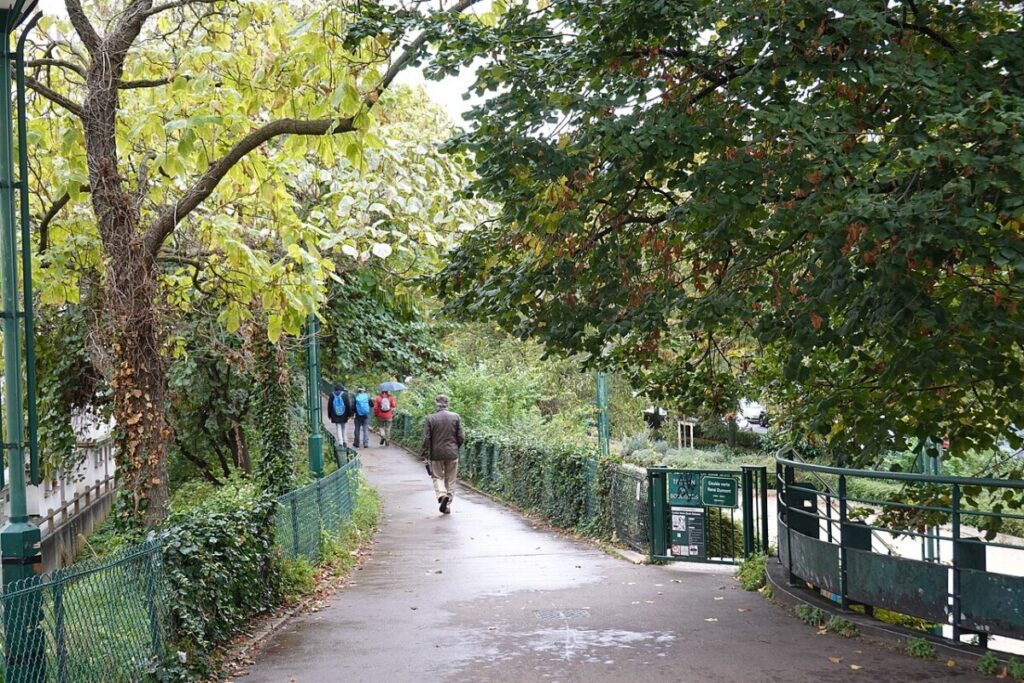
The main western entrance is near Place de la Bastille, where Métro Lines 1, 5, and 8 all meet. Just walk down Rue de Lyon about 200 meters and you’ll hit the Viaduc des Arts on Avenue Daumesnil.
But you don’t have to start at Bastille. The walkway has several access points along Avenue Daumesnil, usually where side streets cross under the viaduct. Look for staircases at Rue Hector Malot, Avenue Daumesnil at Rue de Rambouillet, and Place Moussa.
If you’re looking for a good place to leave the promenade, Rue Sahel is a practical exit. The Bel-Air Metro Line 6 station is close, so getting back is easy. And if you keep going to the end, you’ll reach Château de Vincennes with its own stop on Line 1.
Walking, Biking, and Facilities
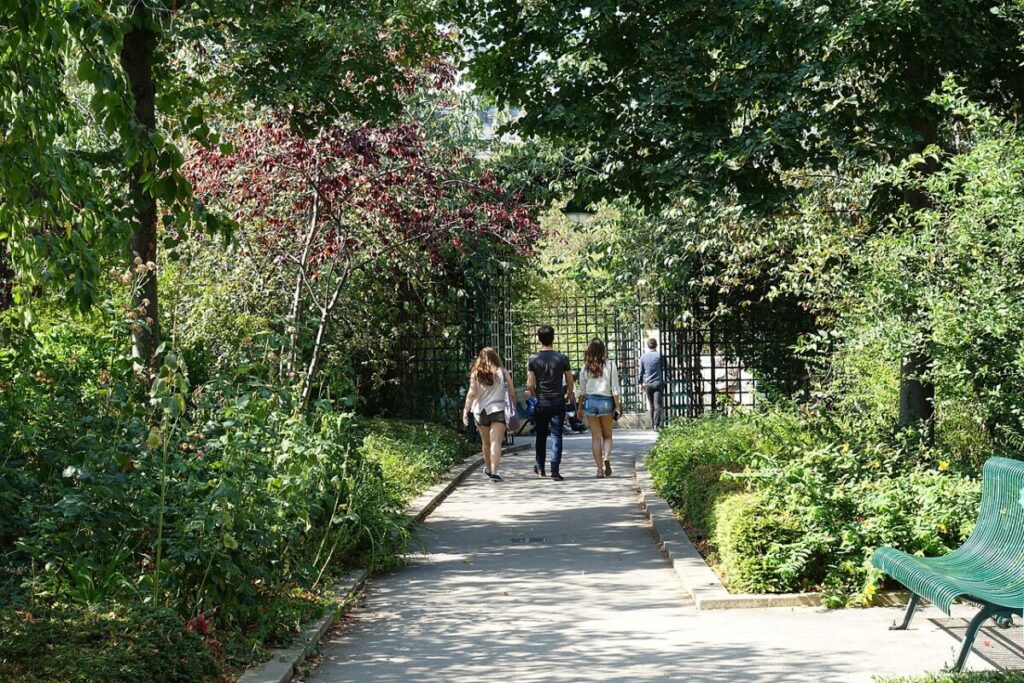
The first elevated stretch from Bastille is for pedestrians only—no bikes allowed up there. Locals love using this section for morning runs, and it’s one of the best free things to do in Paris.
Once you pass Jardin de Reuilly, things change up. The path drops to street level at Allée Vivaldi, and that’s where cyclists can join in.
You’ll spot Vélib bike rental stations here if you want to switch it up. Along Rue Sahel and through Tunnel de Reuilly, there are separate lanes for walkers and cyclists.
Water fountains pop up along the route, and Jardin de Reuilly even has sparkling water. Benches line most of the path—perfect for a quick break.
Accessibility for All Visitors

Wheelchair users should know that the Bastille Opera entrance only has stairs. The first elevator sits at 29 or 33 Avenue Daumesnil, and you’ll find another at Rue Hector Malot. These spots give you proper access to the elevated parts without battling stairs.
The street-level sections from Allée Vivaldi onward are naturally accessible for wheelchairs and strollers. The paths stay smooth, but in summer, thick vegetation can make things a bit narrow.
Fun Facts, Notable Inspirations, and Local Secrets
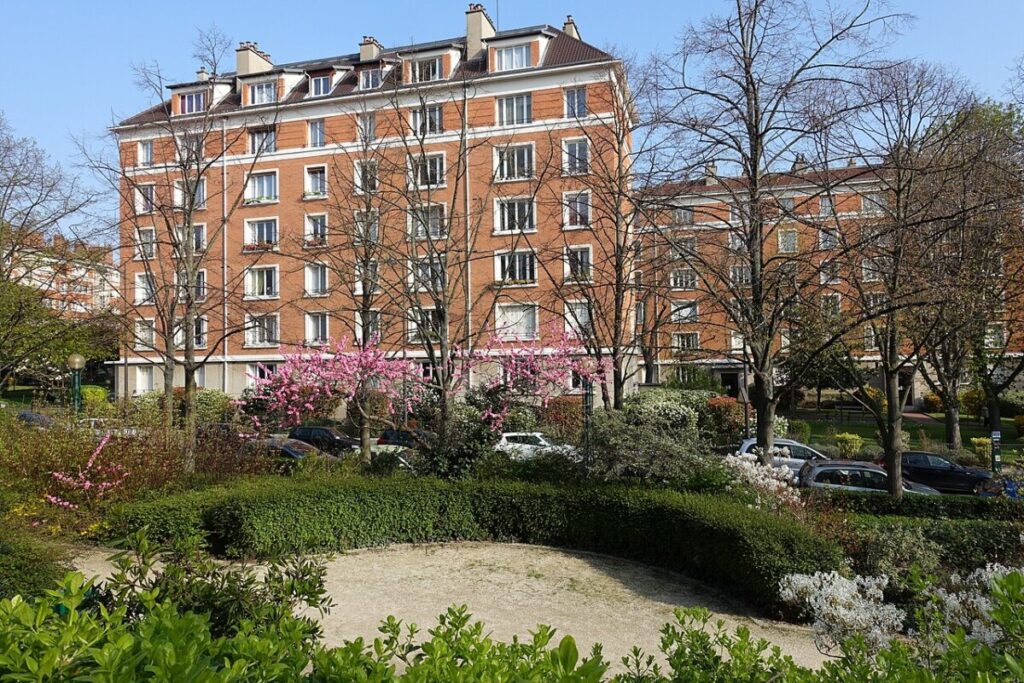
This park inspired New York’s famous High Line and ties into Paris’s bigger network of recycled railway paths. The promenade also hosts seasonal activities that most tourists never even hear about.
The Promenade Plantée’s Influence on New York’s High Line
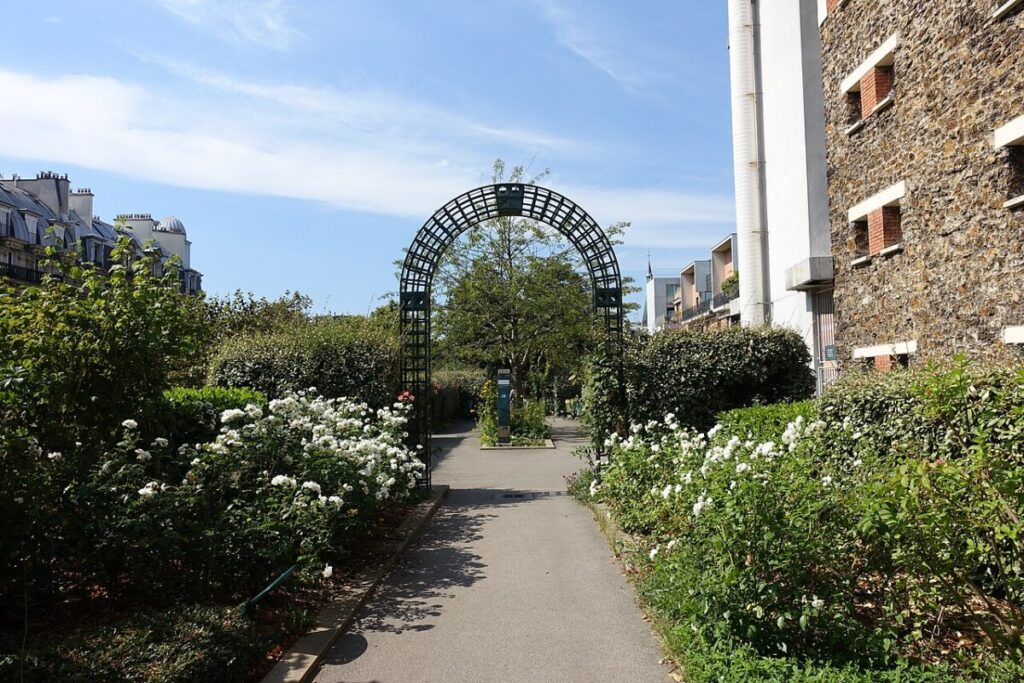
You’re actually walking on the world’s first elevated park built on old railway tracks. The Promenade Plantée opened in 1993, a full 16 years before New York’s High Line.
When Friends of the High Line founders Joshua David and Robert Hammond visited Paris in 2000, they walked the coulée verte and saw what could happen to Manhattan’s abandoned West Side rail line. The similarities are obvious—both projects turned industrial relics into green spaces above the city.
But here’s the thing: at first, Parisians thought it was a waste of money. People were skeptical about turning the old Vincennes railway into a garden path. Now, it’s beloved by locals and quietly discovered by visitors who stumble onto it.
The Promenade Plantée stretches nearly three miles, longer than the High Line’s 1.45 miles. And honestly, you won’t find nearly as many crowds here, even on perfect spring afternoons.
Connections to Petite Ceinture and Other Parisian Greenways
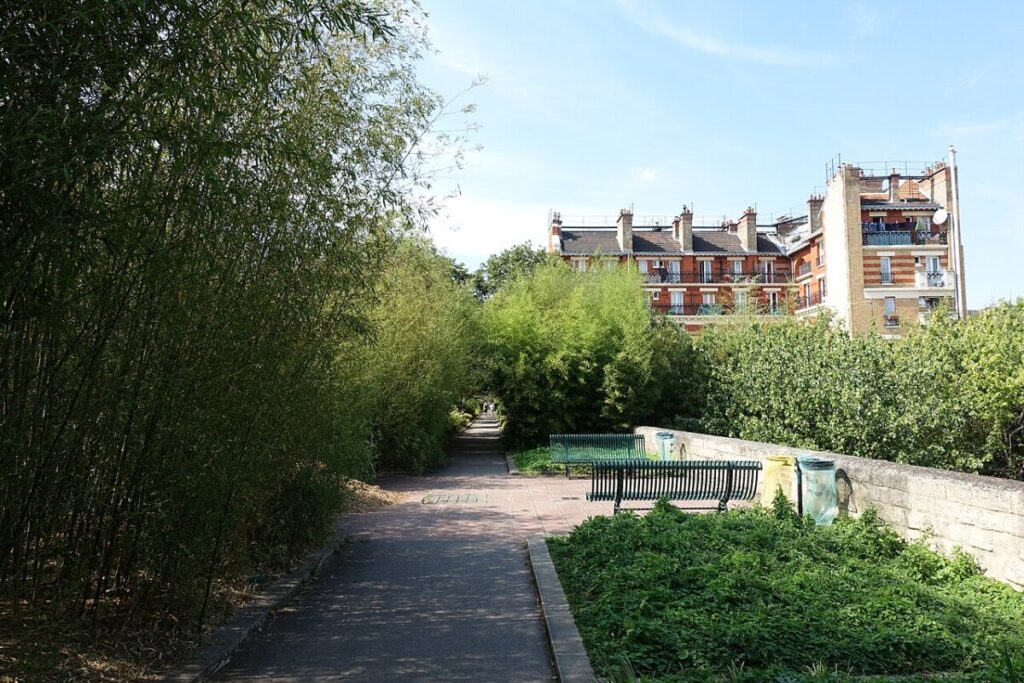
The Promenade Plantée is just one part of Paris’s growing network of reclaimed railway greenways. The Petite Ceinture, or “little belt,” is a 20-mile railway loop that once wrapped around Paris and now sits in various states of abandonment and renewal.
The Petite Ceinture isn’t totally open to the public yet, but some sections have become wild gardens and walking paths. The idea is similar—let nature take back these industrial spaces and create peaceful escapes from the city.
You can see how the Promenade Plantée mixes manicured landscaping with wilder patches. The designers kept some of the spontaneous growth from the years when the railway sat unused, blending it with more intentional garden design.
Eventually, the path leads to Bois de Vincennes, one of Paris’s biggest parks. This connection means you can walk from the heart of the city straight to the woods, never crossing a busy street.
Seasonal Events and Lesser-Known Spots
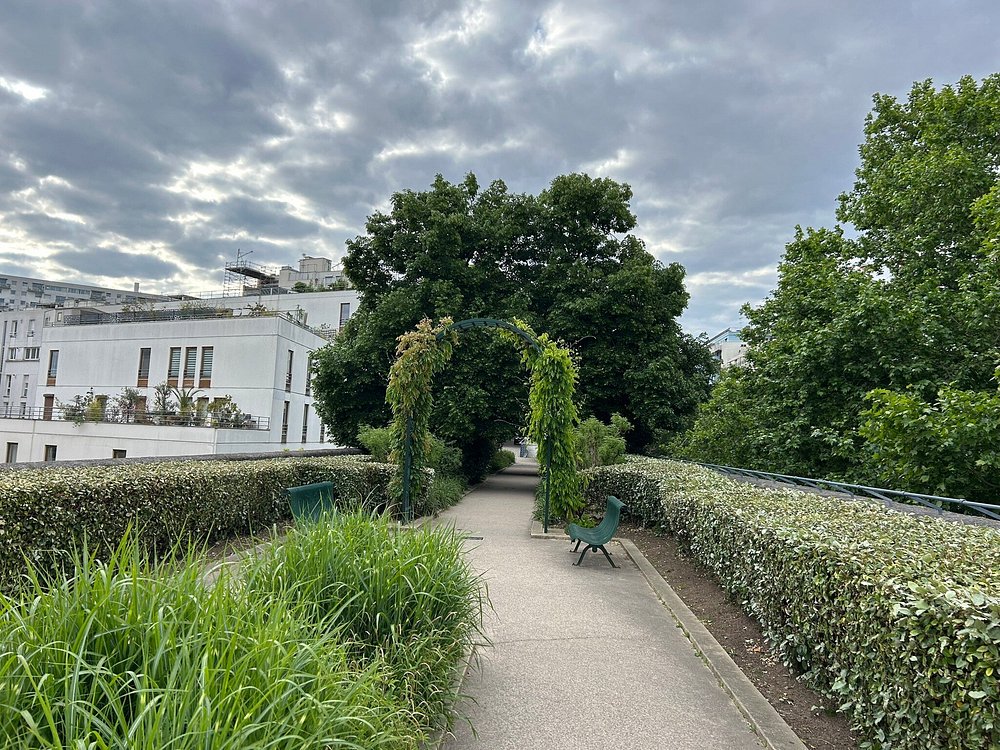
In spring, cherry blossoms and wisteria drape over the arches, turning parts of the path into flower tunnels. Autumn brings amber and red leaves, though the color change usually starts a bit later here—think mid-October.
Most people only walk the elevated stretch near Bastille, but the path keeps going at ground level through old tunnels and quieter neighborhoods. These bits feel almost secret.
Local joggers hit the promenade early—before 8 AM, you can have whole sections to yourself. Parisians also bring wine and cheese for quiet bench picnics in the late afternoon, especially on weekdays when tourists are elsewhere.
The park pops up in the film Before Sunset, where Jesse and Celine stroll along the path. You can spot the exact benches and arches if you know where to look—it’s roughly halfway along the elevated section near Jardin de Reuilly.
See Related: Expert Tips for Sightseeing in Paris: Discover the Best Attractions
Frequently Asked Questions
Visitors tend to ask the same things about logistics, timing, and what to expect before heading up to the walkway. Here’s what you really need to know.
Where’s the best place to start the elevated park walk in eastern Paris, and which metro stop is closest?
Start at the western entrance near Place de la Bastille if you want to experience the full journey from the Opéra Bastille eastward. The closest metro stop is Bastille, where lines 1, 5, and 8 all meet. Look for the low-key staircase at 44-46 Avenue Daumesnil—it can be easy to miss.
You can also start from the eastern end near Porte Dorée if you want to work your way back toward the center. That entrance puts you close to the Bois de Vincennes, which is a nice option if you’re planning to spend some time in the woods. Gare de Lyon is another good metro option, especially if you’re coming from elsewhere in Paris and want to check out the Viaduc des Arts before heading up.
How long does the full walk take at a relaxed pace, including a few photo stops?
Give yourself about two hours if you want to actually soak it all in instead of racing from one end to the other. The nearly 5-kilometer route stretches long enough that you’ll probably want to pause for some photos, maybe sit on a bench, or just wander down for coffee at one of the cafés below.
I’ve jogged it in under an hour before, but honestly, that misses the point. This place begs you to slow down and hang out a bit.
If you’re short on time—say, just an hour—try walking from Bastille to Jardin de Reuilly and back. That way, you’ll catch the best highlights without having to commit to the whole route.
What’s the easiest way to follow the route with a map, and where are the main entrances and exits?
The path runs in a straight shot above Avenue Daumesnil, so you really can’t get lost. Still, a map comes in handy for spotting access points and nearby metro stations as you go.
Google Maps marks the Promenade Plantée pretty clearly, and you can drop pins at whichever entrances you want to use. The main ones? There’s the western start at Avenue Daumesnil near Bastille, a good mid-route entrance by Jardin de Reuilly, and the eastern end close to Porte Dorée. Some entrances hide as skinny staircases squeezed between buildings, while others go right through Jardin de Reuilly, where you’ll see better signage and even an elevator.
Which section is the most scenic for first-timers—viaduct arches, tunnels, or the greener stretches toward the east?
The viaduct near Bastille gives you those iconic arched views, and you can peek down at the Viaduc des Arts workshops below. It’s got that classic Paris vibe—old stone, climbing roses, the whole deal.
But if I’m honest, I usually like the greener bits past Jardin de Reuilly. The path gets a little wild out there. Trees grow taller, birds get louder, and the place feels less polished—almost like you’ve stumbled onto a secret garden.
The tunnels? They’re just okay. You’ll walk through quickly, and mostly they just provide some shade when the sun gets too hot.
Is the walkway accessible for strollers or wheelchairs, and are there stairs or ramps at the entrances?
Most entrances have stairs, so wheelchair access isn’t great overall. But you’ll find ramps and an elevator near Jardin de Reuilly, which make that middle section much more doable.
Strollers can handle the path if you stick to accessible entrances, though it can get a bit tight when crowds show up. Bikes aren’t allowed, which actually makes things calmer if you’re walking with kids. If mobility’s an issue, it’s smart to check the Paris city website or call ahead to see which entrances currently have working elevators—sometimes things change without much notice.
What are the opening hours and best times to visit to avoid crowds and get great light?
The walkway usually opens around 7:30 am in summer and stays open until about 9:30 pm, as long as there’s enough daylight. In winter, they close things up earlier, right around dusk.
If you head out early in the morning, it just feels magical. Most of the path belongs to you, the light’s gentle, and Paris feels weirdly quiet—almost like it’s still waking up. Late afternoon’s also a solid choice, especially if you’re chasing that golden glow on the buildings.
Try not to go on weekends between 2 and 5 pm—Jardin de Reuilly gets packed with families, and it’s a whole different vibe. Honestly, weekday mornings are your best shot for a peaceful stroll and decent photos, without weaving around joggers every few steps.
Find Things to Do in Paris
Find Accommodation

Continue Planning Your Paris Trip
Exploring Libertine Saunas: A Beginner’s Guide
New to Paris's libertine saunas and going on your own? A beginner's guide to which venues welcome single…
Read Guide →
Versailles vs. Fontainebleau: Which Iconic Château Should You Choose?
Versailles or Fontainebleau for a day trip from Paris? The grand Hall of Mirrors and crowds versus a…
Read Guide →
Visiting the Louvre with Family: To Upgrade or Not to Upgrade?
Is the 15-euro Amis du Louvre family upgrade worth it when kids under 12 enter free? Why the…
Read Guide →