Collège néerlandais
Dutch College is a Paris Centre D'hébergement Pour Étudiants landmark located in the 14 arrondissement. Table of ContentsWillem Dudok\u2019s modernist masterpiece at the Cité universitaireAmsterdam School architecture in ParisInnovative student amenitiesRoyal inauguration and international cooperationHeritage preservation and contemporary relevanceLiving modernist heritageNearby in 14 Willem Dudok\u2019s modernist masterpiece at the Cité universitaire At the Cité internationale […]
Dutch College is a Paris Centre D'hébergement Pour Étudiants landmark located in the 14 arrondissement.
<\!-- wp:heading -->
Table of Contents
Willem Dudok\u2019s modernist masterpiece at the Cité universitaire
<\!-- /wp:heading --><\!-- wp:paragraph -->
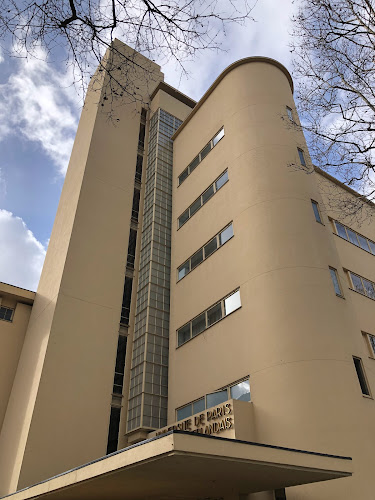
At the Cité internationale universitaire de Paris in the 14th arrondissement, the Collège néerlandais stands as the only realized design by Willem Marinus Dudok in France, representing a unique testimony to one of the most important architects of the Dutch school during the interwar period. This modernist residence, completed in 1938, showcases the sophisticated geometric vocabulary and innovative spatial concepts that defined the Amsterdam School movement.
<\!-- /wp:paragraph --><\!-- wp:paragraph -->
Commissioned at the height of Dudok\u2019s career—just as he was completing his masterpiece Hilversum Town Hall—the building demonstrates how Dutch modernist principles could be adapted to the international educational mission of the Cité universitaire. The project required extraordinary perseverance, with construction beginning in 1928 but facing financial difficulties that extended the building process for a full decade.
<\!-- /wp:paragraph --><\!-- wp:heading {"level":3} -->
Amsterdam School architecture in Paris
<\!-- /wp:heading --><\!-- wp:paragraph -->
The building\u2019s right-angled composition features interweaving geometric volumes and decorative restraint that constitute a major testimony to 1920s modernist architecture. Dudok\u2019s signature elements—large brise-soleils, dramatic overhangs, long horizontal and vertical fenestration, and a prominent corner tower—create a dynamic interplay of light, shadow, and geometric form.
<\!-- /wp:paragraph --><\!-- wp:paragraph -->
The corner tower, marking the main entrance, draws inspiration from medieval belfries found in northern Dutch towns, while the small-paned windows reference traditional Dutch domestic architecture. These cultural references demonstrate how modernist architects could honor national architectural traditions while embracing contemporary design principles.
<\!-- /wp:paragraph --><\!-- wp:heading {"level":3} -->
Innovative student amenities
<\!-- /wp:heading --><\!-- wp:paragraph -->
The Collège néerlandais distinguishes itself as the only residence at the Cité internationale to feature an indoor swimming pool, tiled in blue mosaic and representing the ultimate in 1930s luxury amenities. The building also boasts an impressive 33 rooftop terraces, creating outdoor spaces that provide both recreation and spectacular views across Paris.
<\!-- /wp:paragraph --><\!-- wp:paragraph -->
Dudok\u2019s design includes 141 accommodations with private sanitary facilities in most rooms—an advanced feature for student housing of the era. Each floor features fully equipped communal cooking spaces designed to encourage shared experiences and foster the international community that remains central to the Cité\u2019s mission.
<\!-- /wp:paragraph --><\!-- wp:heading {"level":3} -->
Royal inauguration and international cooperation
<\!-- /wp:heading --><\!-- wp:paragraph -->
The building\u2019s completion was made possible through joint financing from France and the Netherlands, reflecting the international cooperation that defined the Cité universitaire\u2019s founding vision. The official opening on December 2, 1938, was ceremoniously led by Princess Juliana and Prince Bernhard, emphasizing the project\u2019s significance for Dutch-French cultural relations.
<\!-- /wp:paragraph --><\!-- wp:paragraph -->
This royal inauguration occurred just as Europe was moving toward war, making the celebration of international educational cooperation particularly poignant. The building thus represents both architectural achievement and diplomatic optimism during a turbulent historical period.
<\!-- /wp:paragraph --><\!-- wp:heading {"level":3} -->
Heritage preservation and contemporary relevance
<\!-- /wp:heading --><\!-- wp:paragraph -->
Recognized as a national monument since 2005, the Collège néerlandais underwent comprehensive restoration between 2011 and 2016, funded by the Kingdom of the Netherlands, the Île-de-France region, and various French ministries. This international collaboration for preservation mirrors the original international cooperation that created the building.
<\!-- /wp:paragraph --><\!-- wp:paragraph -->
The restoration successfully modernized living standards while preserving Dudok\u2019s architectural vision, ensuring that contemporary students can experience both the building\u2019s historical significance and the comfort necessary for successful academic life. The project demonstrates how historic buildings can maintain their relevance through thoughtful adaptation.
<\!-- /wp:paragraph --><\!-- wp:heading {"level":3} -->
Living modernist heritage
<\!-- /wp:heading --><\!-- wp:paragraph -->
Today, the Collège néerlandais continues to serve its original function as student housing while standing as a masterpiece of Dutch modernist architecture in Paris. The building represents the enduring success of international educational cooperation and demonstrates how architectural excellence can enhance rather than hinder practical function.
<\!-- /wp:paragraph --><\!-- wp:paragraph -->
For visitors interested in modernist architecture, international education, or Dutch-French cultural relations, the Collège néerlandais offers a compelling example of how national architectural traditions can contribute to international projects while maintaining their distinctive character. Dudok\u2019s only French work remains a testament to the visionary spirit that created the Cité universitaire as a model for global educational cooperation.
<\!-- /wp:paragraph -->