
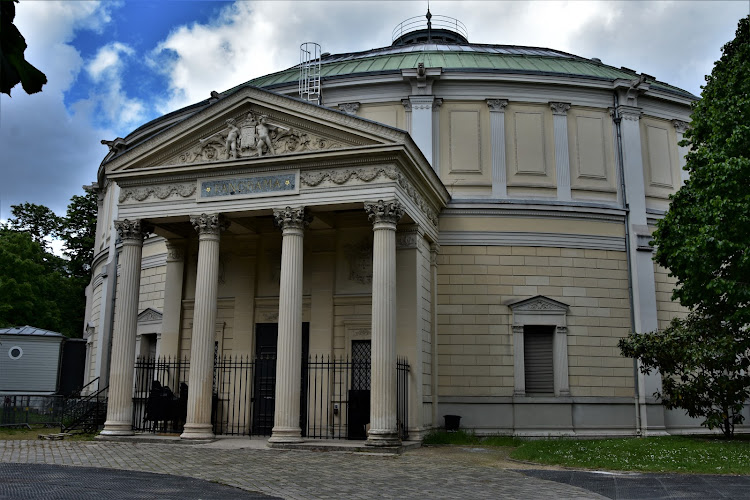
Prison de La Force
Vestige de la Petite Force ( prison de femmes) Mur mitoyen de l'Hôtel Lamoignon is a Paris Monument Culturel landmark located in the 4 arrondissement. The duc de la Force\u2019s mansion transformed into revolutionary prison and site of September Massacres On Rue du Roi de Sicile in the 4th arrondissement, the former Prison de La […]
Vestige de la Petite Force ( prison de femmes) Mur mitoyen de l'Hôtel Lamoignon is a Paris Monument Culturel landmark located in the 4 arrondissement.
<\!-- wp:heading -->
The duc de la Force\u2019s mansion transformed into revolutionary prison and site of September Massacres
<\!-- /wp:heading --><\!-- wp:paragraph -->
On Rue du Roi de Sicile in the 4th arrondissement, the former Prison de La Force occupies one of the most tragic sites in French revolutionary history and a sobering reminder of how private aristocratic residences could be transformed into instruments of political terror. Originally the Hôtel de la Force, the private residence of Henri-Jacques Nompar de Caumont, duc de la Force, this elegant mansion was converted during the Revolution into a prison that would witness some of the period\u2019s most horrific violence.
<\!-- /wp:paragraph --><\!-- wp:parameter --><\!-- wp:paragraph -->
The prison\u2019s division into Grande Force for male prisoners and Petite Force exclusively for women, unified under single management in 1830, reflects the systematic approach to incarceration that characterized revolutionary prison administration while demonstrating how domestic architectural spaces could be adapted to serve harsh penal functions.
<\!-- /wp:paragraph --><\!-- wp:heading {"level":3} -->
The September Massacres and Princesse de Lamballe\u2019s martyrdom
<\!-- /wp:heading --><\!-- wp:parameter --><\!-- wp:paragraph -->
La Force achieved tragic notoriety during the September Massacres of 1792, when violent mobs attacked the prison from September 3-7, massacring 160 prisoners including three priests and Marie Antoinette\u2019s beloved friend, the Princesse de Lamballe. This systematic violence represented the Revolution\u2019s darkest moment, when popular justice became mob vengeance that consumed both guilty and innocent with equal brutality.
<\!-- /wp:paragraph --><\!-- wp:parameter --><\!-- wp:paragraph -->
The Princesse de Lamballe\u2019s murder particularly shocked contemporary observers, as her loyalty to the royal family, rather than any political crime, made her a target for revolutionary rage. Her death at La Force symbolized how revolutionary violence could consume personal friendship and aristocratic culture along with political opposition.
<\!-- /wp:paragraph --><\!-- wp:heading {"level":3} -->
Revolutionary prison system and political incarceration
<\!-- /wp:heading --><\!-- wp:parameter --><\!-- wp:paragraph -->
The transformation of aristocratic residences into revolutionary prisons demonstrates how the Revolution systematically appropriated private property to serve new political purposes while creating comprehensive systems of political surveillance and punishment that targeted entire social classes rather than individual criminal behavior.
<\!-- /wp:paragraph --><\!-- wp:parameter --><\!-- wp:paragraph -->
The prison\u2019s role in housing political prisoners reflects broader revolutionary approach to justice that prioritized political conformity over traditional legal procedures, creating institutions that served ideological purposes while adapting existing architectural infrastructure to new governmental needs.
<\!-- /wp:paragraph --><\!-- wp:heading {"level":3} -->
Architectural remnants and historical memory
<\!-- /wp:heading --><\!-- wp:parameter --><\!-- wp:paragraph -->
Today, only fragments of the original prison walls remain visible in the Marais district, serving as subtle reminders of the revolutionary violence that once occurred within this now-vibrant neighborhood. These architectural vestiges provide tangible connections to revolutionary history while demonstrating how neighborhoods can recover from traumatic periods to serve new generations.
<\!-- /wp:paragraph --><\!-- wp:parameter --><\!-- wp:paragraph -->
The prison\u2019s disappearance from the contemporary urban landscape, with only wall sections surviving, reflects broader French approaches to dealing with difficult historical memory—preserving enough physical evidence for historical education while allowing neighborhoods to move beyond their traumatic associations.
<\!-- /wp:paragraph --><\!-- wp:heading {"level":3} -->
Historical documentation and revolutionary legacy
<\!-- /wp:heading --><\!-- wp:parameter --><\!-- wp:paragraph -->
The Prison de La Force serves as crucial documentation of how revolutionary fervor could transform private architectural spaces into sites of political violence while demonstrating the systematic nature of revolutionary justice that targeted entire social categories rather than individual criminal acts.
<\!-- /wp:paragraph --><\!-- wp:parameter --><\!-- wp:paragraph -->
For visitors to the Marais interested in French revolutionary history, political prison systems, or the transformation of aristocratic architecture during social upheaval, the remnants of La Force offer sobering insight into revolutionary violence and its impact on urban architecture and social life. The site demonstrates that historical preservation sometimes requires confronting uncomfortable truths about how political movements can consume both architectural heritage and human life, creating lessons about the importance of protecting both physical monuments and human rights during periods of political transformation.
<\!-- /wp:paragraph -->