
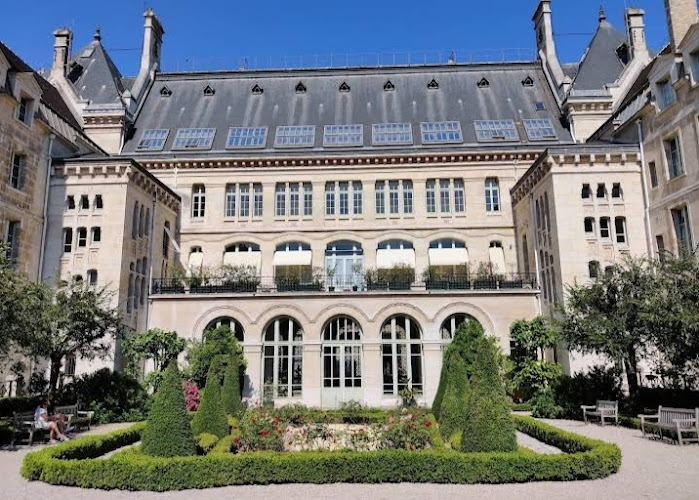
Lycée Louis-le-Grand
Lycée Louis-le-Grand is a Paris Lycée landmark located in the 5 arrondissement. The Jesuit academy that shaped France\u2019s intellectual elite from Molière to three presidents In the heart of the Latin Quarter in the 5th arrondissement, Lycée Louis-le-Grand stands as one of France\u2019s most prestigious educational institutions and a key element in the formation of […]
Lycée Louis-le-Grand is a Paris Lycée landmark located in the 5 arrondissement.
<\!-- wp:heading -->
The Jesuit academy that shaped France\u2019s intellectual elite from Molière to three presidents
<\!-- /wp:heading --><\!-- wp:paragraph -->
In the heart of the Latin Quarter in the 5th arrondissement, Lycée Louis-le-Grand stands as one of France\u2019s most prestigious educational institutions and a key element in the formation of French elites. Founded in the early 1560s by the Jesuits as the Collège de Clermont and renamed in 1682 to honor King Louis XIV (“Louis the Great”), this legendary school has produced an extraordinary roster of French intellectual, literary, and political leaders across more than four centuries of educational excellence.
<\!-- /wp:paragraph --><\!-- wp:paragraph -->
The school\u2019s strategic location, surrounded by the Sorbonne to the west, Collège de France to the north, and Panthéon campus to the south, places it at the geographic and intellectual center of French higher education, reinforcing its role as a bridge between secondary education and the nation\u2019s most prestigious academic institutions.
<\!-- /wp:paragraph --><\!-- wp:heading {"level":3} -->
Jesuit educational foundation and royal patronage
<\!-- /wp:heading --><\!-- wp:paragraph -->
The school\u2019s Jesuit origins reflect the Society of Jesus\u2019s commitment to rigorous intellectual training and comprehensive education that balanced classical learning with contemporary knowledge. Guillaume Duprat, bishop of Clermont, invited Jesuit students to establish themselves in Paris from 1550, creating the foundation for what would become one of Europeu2019s most influential educational institutions.
<\!-- /wp:paragraph --><\!-- wp:paragraph -->
The 1682 renaming to honor Louis XIV demonstrated royal recognition of the institution\u2019s excellence while establishing its role as a training ground for French elite that would serve both church and state. This royal patronage ensured the school\u2019s continued prestige and resources throughout the Ancien Régime.
<\!-- /wp:paragraph --><\!-- wp:heading {"level":3} -->
Literary giants and philosophical luminaries
<\!-- /wp:heading --><\!-- wp:paragraph -->
The school\u2019s alumni roster reads like a comprehensive catalog of French intellectual achievement. Molière received his formative education at the Collège de Clermont, developing the classical foundation that would inform his revolutionary theatrical works. Voltaire\u2019s time at the school shaped his intellectual development and satirical sensibility, while Victor Hugo, Charles Baudelaire, and Denis Diderot represent successive generations of literary and philosophical excellence.
<\!-- /wp:paragraph --><\!-- wp:paragraph -->
This concentration of literary genius demonstrates how rigorous classical education, combined with intellectual freedom and high academic standards, can nurture the creative and analytical capabilities that produce lasting cultural achievement and intellectual innovation.
<\!-- /wp:paragraph --><\!-- wp:heading {"level":3} -->
Presidential training ground and political leadership
<\!-- /wp:heading --><\!-- wp:paragraph -->
The school\u2019s role in training French political leadership reached its pinnacle with three presidents of the Fifth Republic—Georges Pompidou, Valéry Giscard d\u2019Estaing, and Jacques Chirac—all spending formative years “on the benches of Louis-le-Grand.” This remarkable concentration of presidential alumni demonstrates the school\u2019s continued relevance in preparing French leaders for public service.
<\!-- /wp:paragraph --><\!-- wp:paragraph -->
The school\u2019s success in combining rigorous academic preparation with leadership development shows how educational institutions can serve both individual intellectual development and broader national leadership needs while maintaining standards that attract the most capable students.
<\!-- /wp:paragraph --><\!-- wp:heading {"level":3} -->
Architectural reconstruction and modern facilities
<\!-- /wp:heading --><\!-- wp:paragraph -->
The school\u2019s almost complete reconstruction between 1885 and 1898 created the current campus with two large courtyards named Cour Molière and Cour Victor-Hugo, honoring the institution\u2019s most celebrated literary alumni. This architectural arrangement creates environments that celebrate intellectual achievement while providing functional spaces for contemporary educational needs.
<\!-- /wp:paragraph --><\!-- wp:paragraph -->
The courtyard design reflects monastic educational traditions while adapting to secular republican educational requirements, creating spaces that honor both historical heritage and contemporary academic mission.
<\!-- /wp:paragraph --><\!-- wp:heading {"level":3} -->
Contemporary excellence and grandes écoles preparation
<\!-- /wp:heading --><\!-- wp:paragraph -->
Today, accommodating over 1,800 students across lycée (800 pupils) and classes préparatoires (900 students) programs, Louis-le-Grand maintains its position as one of France\u2019s most selective institutions while serving its essential function of preparing students for entrance to the elite grandes écoles system.
<\!-- /wp:paragraph --><\!-- wp:paragraph -->
For visitors to Paris interested in French educational history, intellectual heritage, or the formation of national elites, Lycée Louis-le-Grand offers insight into how educational institutions can maintain excellence across centuries while adapting to serve evolving national needs. The school demonstrates that great educational institutions emerge when rigorous academic standards meet inspiring intellectual environments, creating places where individual talent can flourish in service of broader cultural and national advancement.
<\!-- /wp:paragraph -->