
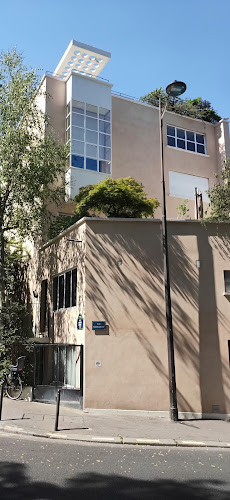
Maison Guggenbuhl
Maison Guggenbühl is a Paris Attractions landmark located in the 14 arrondissement. Intimate 1920s residential architecture in protected heritage At 14 rue Nansouty in the 14th arrondissement, Maison Guggenbuhl stands as a charming example of 1920s Parisian residential architecture, where intimate domestic design meets historic preservation to create a monument that celebrates the diversity of […]
Maison Guggenbühl is a Paris Attractions landmark located in the 14 arrondissement.
Intimate 1920s residential architecture in protected heritage
At 14 rue Nansouty in the 14th arrondissement, Maison Guggenbuhl stands as a charming example of 1920s Parisian residential architecture, where intimate domestic design meets historic preservation to create a monument that celebrates the diversity of architectural heritage beyond grand public buildings. Built between 1926 and 1927, this single-family detached home demonstrates how interwar residential architecture could achieve distinction through thoughtful design and cultural significance that earned official heritage protection for its contribution to Parisian architectural landscape.
Interwar residential innovation and domestic architecture
The Maison Guggenbuhl represents the evolution of Parisian domestic architecture during the 1920s, when post-war optimism and economic recovery enabled middle-class families to commission distinctive private residences that balanced traditional French residential values with contemporary architectural innovation and modern comfort requirements. The building’s design reflects the period’s architectural sophistication and the growing appreciation for residential architecture that could achieve aesthetic distinction while serving practical family needs, demonstrating how domestic buildings could contribute to neighborhood character and urban cultural heritage through thoughtful design and quality construction.Heritage protection and architectural significance
The mansion’s designation as a Monument Historique on January 15, 1975, with protection covering its façades and roofs, acknowledges the cultural importance of preserving examples of quality residential architecture that represent broader patterns of Parisian urban development and architectural evolution during the interwar period. This heritage recognition demonstrates France’s commitment to preserving architectural diversity, acknowledging that intimate domestic buildings can achieve cultural significance equal to grand monuments when they represent important periods in urban development and architectural history that shaped contemporary neighborhood character.14th arrondissement architectural diversity
The house contributes to the remarkable architectural diversity of the 14th arrondissement, which encompasses everything from medieval survivors to modernist masterpieces, demonstrating how different architectural periods can coexist harmoniously within the same neighborhood while each contributing distinctive character to the overall urban fabric. The building’s inclusion in Heritage Days programming ensures that the public can appreciate how domestic architecture from different periods contributes to Parisian cultural heritage, proving that architectural significance extends beyond famous monuments to include the residential buildings that create neighborhood identity and community character.Preserved domestic heritage and community identity
Today’s Maison Guggenbuhl continues serving its original residential function while maintaining its protected status, demonstrating how heritage preservation can support both architectural conservation and contemporary community needs through buildings that honor their historical significance while adapting to serve current residents. The preservation of 1920s residential architecture ensures that future generations can understand how Parisian neighborhoods developed their distinctive character through the accumulation of quality domestic buildings that reflect different periods of architectural taste and urban development patterns.Essential information
- Construction: 1926-1927
- Building type: Single-family detached residence
- Heritage status: Monument Historique (January 15, 1975)
- Protected elements: Façades and roofs
- Location: 14 rue Nansouty, 14th arrondissement
- Architectural period: Interwar residential design
- Cultural significance: Example of 1920s domestic architecture
- Public access: Heritage Days programming
Neighborhood context and heritage value
- Architectural diversity: Contributes to 14th arrondissement’s varied heritage
- Urban development: Represents interwar residential expansion
- Community character: Defines neighborhood identity through quality design
- Heritage recognition: Official acknowledgment of domestic architecture importance
- Continuing function: Active residential use with protected status
Intimate architectural heritage
Maison Guggenbuhl embodies the principle that architectural heritage encompasses the full spectrum of building types, where intimate domestic architecture can achieve cultural significance through quality design that represents important periods in urban development and neighborhood formation. This charming residence demonstrates how heritage preservation honors both grand monuments and modest buildings that together create the architectural diversity that defines Parisian neighborhood character. For residential architecture enthusiasts, heritage preservation admirers, or anyone interested in how domestic buildings contribute to urban cultural identity, the Maison Guggenbuhl offers a meaningful encounter with intimate architectural heritage, where 1920s residential design continues to serve family life while preserving the architectural memory that connects contemporary Parisians to the interwar period’s optimism and domestic refinement that shaped neighborhood development throughout the capital.