
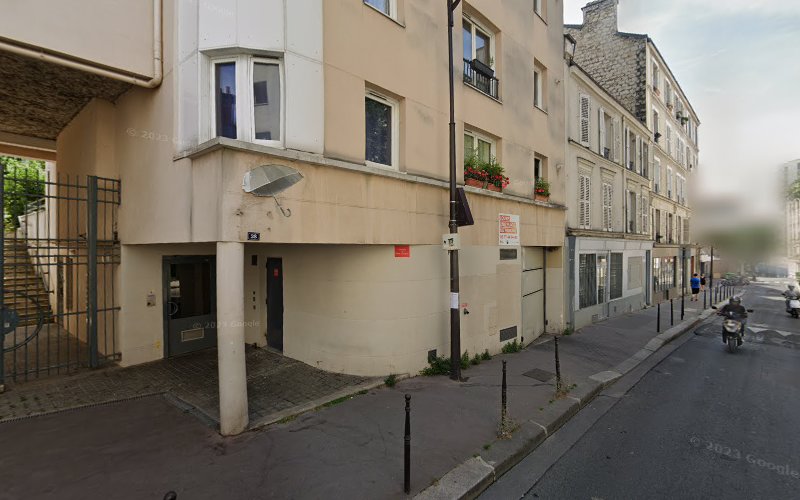
Regard de l’aqueduc Médicis
77 Av. Denfert Rochereau is a Paris historic landmark located in the 14 arrondissement. Royal water engineering for Luxembourg Palace In the 14th arrondissement, the Regard de l’aqueduc Médicis stands as a testament to one of Paris’s most ambitious royal infrastructure projects. Built on the orders of Queen Marie de Médicis in the early 17th […]
77 Av. Denfert Rochereau is a Paris historic landmark located in the 14 arrondissement.
Royal water engineering for Luxembourg Palace
In the 14th arrondissement, the Regard de l’aqueduc Médicis stands as a testament to one of Paris’s most ambitious royal infrastructure projects. Built on the orders of Queen Marie de Médicis in the early 17th century to supply water from Rungis springs to her new Luxembourg Palace, this remarkable hydraulic engineering achievement demonstrates how royal vision and technical innovation combined to create water systems that would serve Paris for over 400 years.
Marie de Médicis’s visionary water project
Originally conceived under Henri IV but completed under Marie de Médicis’s patronage, the aqueduc Médicis represented royal commitment to improving Parisian water supply while serving the Queen’s ambitious Luxembourg Palace project. In 1612, the Bureau de la Ville de Paris awarded construction to Jean Coingt, with earthwork beginning in 1613 and the young Louis XIII ceremonially laying the first stone at the grand regard de Rungis on July 17, 1613.
The project’s completion in 1623 created a functioning aqueduct that continues to operate today, demonstrating the exceptional quality of 17th-century French hydraulic engineering and the foresight of royal planners who understood that reliable water infrastructure was essential for urban development and royal residence comfort.
Engineering marvel through southern Paris
The aqueduct’s route through Fresnes, L’Haÿ-les-Roses, Cachan, Arcueil, Gentilly, and then the 14th and 6th arrondissements of Paris created an extensive underground water distribution network punctuated by regards—access points that allowed maintenance while enabling water oxygenation and purification through settling basins.
These regards demonstrate sophisticated understanding of hydraulic principles, where underground galleries required systematic access points for cleaning and repair while the water required treatment stations to maintain quality during the long journey from countryside springs to urban fountains.
Maison du Fontainier and water distribution
The aqueduct’s ultimate destination was the Maison du Fontainier at 42 avenue de l’Observatoire in the 14th arrondissement, which served dual functions: surface housing for the royal fontainier (water system supervisor) and underground water distribution center that divided flow between three beneficiaries—the king, the city, and religious communities.
This water distribution system supplied fourteen public fountains throughout Paris, demonstrating how royal infrastructure projects could serve broader public benefit while meeting specific royal needs for palace water supply and garden irrigation.
Haussmannian disruption and preservation challenges
The aqueduct’s operation was disrupted in 1865 when Baron Haussmann’s creation of avenue Reille in the 14th arrondissement cut the underground gallery between regards 22 and 23. This interruption, part of Napoleon III’s massive urban renovation, ended the Maison du Fontainier’s distribution role while demonstrating how modern urban development could compromise historic infrastructure.
Further disruption occurred in 1996 during creation of the ZAC Alésia-Montsouris development, which ruthlessly severed remaining sections of both the Lutèce and Médicis aqueducts, highlighting ongoing tension between urban development and archaeological preservation.
Surviving hydraulic heritage
Despite modern disruptions, portions of the aqueduc Médicis continue functioning today, proving the durability of 17th-century hydraulic engineering and the continuing relevance of royal infrastructure projects that prioritized long-term urban service over short-term construction economies.
Essential information
- Commission: Marie de Médicis (completed Henri IV’s project)
- Construction: 1612-1623
- Ceremonial stone: Louis XIII (July 17, 1613)
- Constructor: Jean Coingt
- Route: Rungis springs through southern suburbs to 14th arrondissement
- Terminus: Maison du Fontainier, 42 avenue de l’Observatoire
- Function: Water supply for Luxembourg Palace and public fountains
- Status: Partially operational (400+ years)
Hydraulic engineering and royal vision
The Regard de l’aqueduc Médicis embodies the intersection of royal ambition and technical excellence, where Marie de Médicis’s vision for Luxembourg Palace created infrastructure that served both royal comfort and public benefit through advanced hydraulic engineering. This remarkable system demonstrates how great infrastructure projects can honor both practical needs and aesthetic ideals while creating lasting urban improvements. For hydraulic engineering enthusiasts, royal history admirers, or anyone interested in how infrastructure shapes urban development, the aqueduc Médicis offers an extraordinary encounter with 17th-century innovation, where Marie de Médicis’s royal patronage created water systems that continue serving Paris over four centuries later, proving that the finest public works combine royal vision with technical excellence to create infrastructure that transcends its original purpose to serve generations of urban residents.