
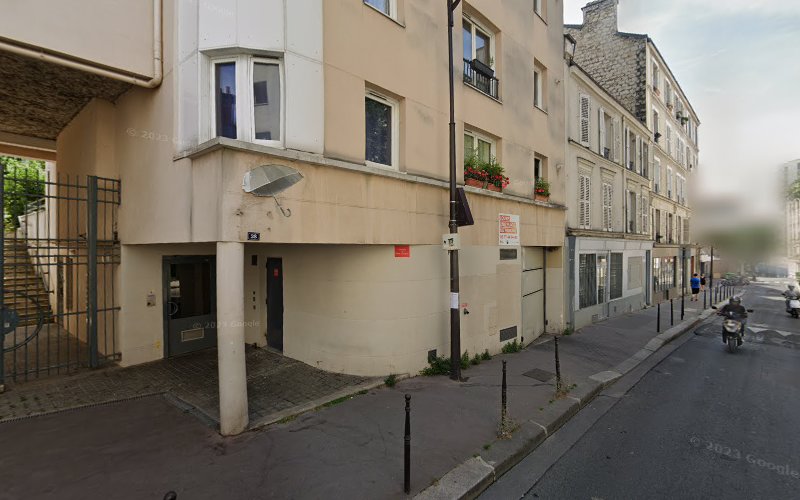
Relais de poste de la Barrière d’Enfer
77 Av. Denfert Rochereau is a Paris historic landmark located in the 14 arrondissement. Ledoux’s neoclassical tollhouse becomes artists’ sanctuary At 4 avenue du Colonel Henri Rol-Tanguy in the 14th arrondissement, the Relais de poste de la Barrière d’Enfer stands as a remarkable testament to architectural adaptation and cultural continuity. Originally built in 1787 by […]
77 Av. Denfert Rochereau is a Paris historic landmark located in the 14 arrondissement.
Ledoux’s neoclassical tollhouse becomes artists’ sanctuary
At 4 avenue du Colonel Henri Rol-Tanguy in the 14th arrondissement, the Relais de poste de la Barrière d’Enfer stands as a remarkable testament to architectural adaptation and cultural continuity. Originally built in 1787 by Claude Nicolas Ledoux as part of his revolutionary toll house system for the Fermiers généraux wall, this neoclassical coaching inn has evolved from tax collection point to artists’ workshop, demonstrating how great architecture can serve entirely new purposes while maintaining its essential character and historical significance.
Ledoux’s neoclassical vision and revolutionary taxation
The Barrière d’Enfer represented one of Claude Nicolas Ledoux’s most architecturally sophisticated toll houses, featuring two neoclassical pavilions designed to collect octroi taxes on goods entering Paris. Ledoux’s revolutionary approach elevated utilitarian tax collection into architectural art, proving that even mundane governmental functions could embody beauty and dignity through classical design principles.
The pavilions’ façades showcase round-arched arcades framed by protruding voussoirs in harp patterns, with friezes depicting dancers sculpted by Jean Guillaume Moitte. This decorative program demonstrates how Ledoux could combine practical function with artistic excellence, creating buildings that served fiscal purposes while contributing to Parisian architectural beauty.
Coaching inn and transportation heritage
Beyond tax collection, the complex included a relais de poste (coaching inn) with stables that served travelers entering Paris from the south. This dual function—taxation and accommodation—created comprehensive service facilities that managed both governmental revenue collection and commercial hospitality for the increasing traffic between Paris and provincial France.
The coaching inn’s strategic location at one of Paris’s major entry points made it an essential component of the city’s transportation infrastructure, where official business and commercial travel intersected within architectural spaces designed to honor both governmental authority and traveler comfort.Revolutionary survival and architectural preservation
The pavilions’ survival through the French Revolution—when most of Ledoux’s toll houses were destroyed by angry Parisians—demonstrates both their architectural merit and their adaptation to serve new purposes as revolutionary authorities replaced royal taxation with republican governance systems. The designation of both pavilions as historic monuments on April 13, 1907, represents one of France’s earliest architectural preservation efforts, acknowledging Ledoux’s contribution to French neoclassical architecture and the buildings’ significance in urban development history.Contemporary artists’ workshops and cultural transformation
Today’s former stables serve as artists’ workshops and residences, creating contemporary cultural function that honors the building’s tradition of serving travelers while adapting to modern creative needs. The March 1, 1982 protection of façades and roofs ensures preservation while allowing adaptive reuse for artistic purposes. This transformation from coaching inn to artists’ sanctuary demonstrates how historic buildings can continue serving community needs through cultural rather than commercial hospitality, where creative residents replace traveling guests while maintaining the building’s essential character as a place of temporary residence and professional activity.Essential information
- Construction: 1787
- Architect: Claude Nicolas Ledoux
- Original function: Toll house and coaching inn
- Historic designation: April 13, 1907 (pavilions)
- Current protection: March 1, 1982 (façades and roofs)
- Location: 4 avenue du Colonel Henri Rol-Tanguy, 14th arrondissement
- Current use: Artists’ workshops and residences
- Sculptor: Jean Guillaume Moitte (decorative friezes)
Architectural and cultural transformation
- Neoclassical features: Round-arched arcades, decorative voussoirs
- Artistic decoration: Dancing figures frieze by Moitte
- Historical significance: Survivor of Fermiers généraux wall
- Revolutionary survival: Adapted through political upheaval
- Contemporary mission: Supporting artistic community and creative work
From taxation to artistic creation
Relais de poste de la Barrière d’Enfer embodies the remarkable adaptability of great architecture and the continuing relevance of historic buildings to serve contemporary creative communities. This extraordinary complex demonstrates how Ledoux’s neoclassical vision could transcend its original governmental purpose to provide inspiring environments for artistic work and cultural production. For Ledoux architecture enthusiasts, historic preservation admirers, or anyone interested in how buildings adapt to serve changing community needs, the Relais de poste offers an inspiring encounter with architectural transformation, where 18th-century taxation infrastructure continues to shelter creative work beneath neoclassical elegance that proves great architecture can honor both its historical significance and its continuing mission to provide dignified spaces for human activity and cultural production.