
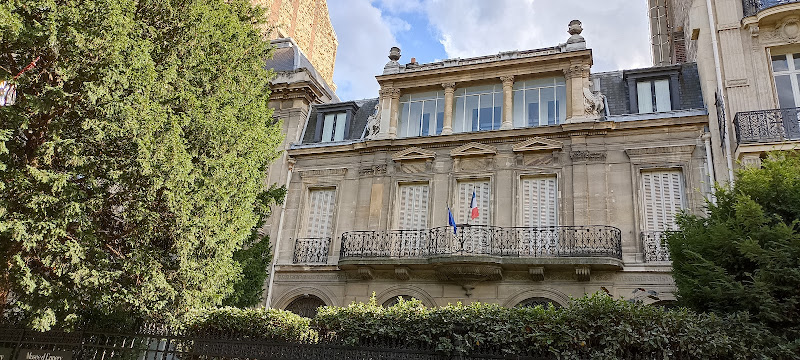
Musée d’Ennery
Ennery Museum is a Paris Museums landmark located in the 16 arrondissement. Japonisme pioneer’s mansion where 7,000 Asian treasures create intimate cultural sanctuary At 59 avenue Foch in the 16th arrondissement, Musée d’Ennery stands as the extraordinary legacy of Clémence d’Ennery, who transformed from actress to pioneering Asian art collector through passionate acquisition that assembled […]
Ennery Museum is a Paris Museums landmark located in the 16 arrondissement.
Japonisme pioneer’s mansion where 7,000 Asian treasures create intimate cultural sanctuary
At 59 avenue Foch in the 16th arrondissement, Musée d’Ennery stands as the extraordinary legacy of Clémence d’Ennery, who transformed from actress to pioneering Asian art collector through passionate acquisition that assembled 7,000 Chinese and Japanese objects within her 1875 Second Empire mansion, creating one of France’s most important Japonisme landmarks. Donated to the French State in 1908 with the stipulation that nothing could ever be moved or changed, this remarkable museum demonstrates how individual collecting passion can create cultural institutions that preserve both artistic heritage and collector vision through intimate domestic settings that maintain 19th-century aesthetic appreciation methods while serving contemporary cultural education about Asian artistic traditions.
Feminine collecting pioneer and masculine art world integration
Clémence d’Ennery’s achievement as “one of the few women acknowledged in the very close-knit, masculine collecting circle” demonstrates how exceptional cultural vision can overcome gender barriers within male-dominated art worlds through expertise and passion that earned professional recognition from collectors and dealers who valued knowledge over social conventions. This pioneering role proved that successful art collecting requires both aesthetic sensitivity and scholarly dedication that transcends social limitations when individual excellence serves broader cultural education through collection development that influences aesthetic taste and cultural understanding.
Her transition from theatrical performance to serious art collecting illustrates how diverse cultural experiences can inform aesthetic development when individual curiosity encounters sufficient financial resources and cultural guidance through collecting mentors who provided access to the finest Asian art available in late 19th-century Parisian dealers including Bing, Burty, Sichel, and Au Bon Marché that supplied objects representing authentic daily life across centuries of Chinese and Japanese cultural development.
Netsuke mastery and decorative arts excellence
The museum’s possession of the world’s largest public netsuke collection—nearly 3,000 miniature sculptures demonstrating Japanese artistic genius in wood, ivory, and bone—creates an unparalleled educational resource about Japanese decorative arts that served both practical belt attachment and aesthetic pleasure through miniature artistry that required exceptional technical skill and cultural knowledge. This collection concentration proves that specialized collecting can serve scholarly research while providing aesthetic education about artistic traditions that require intimate viewing to appreciate technical mastery and cultural significance.
The integration of Kakiemon porcelains, Kyoto ceramics, lacquered Namban cabinets, Noh masks, and okimono sculptures creates comprehensive representation of Japanese artistic achievement across multiple media and historical periods, demonstrating how exceptional collectors can achieve both breadth and depth through acquisition strategies that serve both aesthetic appreciation and cultural education about artistic traditions that require diverse examples to understand fully the scope and sophistication of Asian decorative arts excellence.
Preservation mandate and collector vision protection
The d’Ennery couple’s will requiring that “everything in the museum must remain identical to the layout designed by Clémence” creates unique preservation philosophy that maintains 19th-century collecting methodology while serving contemporary cultural education through museum experiences that honor both collector vision and visitor appreciation. This testamentary requirement proves that exceptional private collections can achieve optimal preservation when donor stipulations ensure institutional continuity that maintains both aesthetic arrangement and cultural context that enable contemporary visitors to experience historical collecting approaches within authentic domestic settings.
The policy that “nothing goes out, nothing comes in, nothing moves around” preserves both collection integrity and domestic atmosphere that enables visitors to experience Asian art appreciation as practiced during Japonisme’s height, demonstrating how successful museum preservation can serve both historical education and aesthetic experience through conservation approaches that maintain both object placement and cultural context that prove authentic collecting environments can continue serving cultural education when preservation maintains rather than adapts original collector vision.
Guimet administration and cultural integration
The museum’s administration by the Musée national des arts asiatiques—Guimet while maintaining complete independence demonstrates how institutional collaboration can serve both specialized collection preservation and broader Asian art education through partnerships that honor individual museum character while benefiting from shared expertise and resources. This administrative relationship proves that exceptional small museums can maintain distinctive identity while achieving operational efficiency through institutional cooperation that serves both immediate visitor experience and long-term collection preservation requirements.
The 2023 reopening after major renovations, maintaining Saturday guided tours for maximum 15 visitors, creates optimal balance between public accessibility and collection protection through visitation policies that ensure intimate museum experience while protecting delicate objects that require careful environmental control and limited exposure to maintain preservation standards appropriate for 19th-century Asian decorative arts that serve both immediate aesthetic appreciation and long-term scholarly research within domestic contexts that honor both collector legacy and contemporary cultural education mission.
Contemporary relevance and Japonisme documentation
Today’s role as “testimony of the taste for the Far East at the end of the 19th century” provides essential documentation of Japonisme movement that influenced French decorative arts, fashion, and aesthetic sensibility through Asian cultural appreciation that transformed European artistic development while creating collecting traditions that continue influencing contemporary cultural appreciation. This historical documentation proves that exceptional private collections can serve ongoing scholarly research while providing public education about cultural exchange that shaped modern aesthetic development through international artistic influence.
Essential information
- Collector: Clémence d’Ennery (pioneering female collector)
- Collection size: 7,000 Chinese and Japanese objects
- Building: 1875 Second Empire mansion, 59 avenue Foch
- State donation: 1908 with preservation mandate
- Netsuke collection: World’s largest public display (3,000 pieces)
- Administration: Musée Guimet oversight
- Reopening: April 8, 2023 after major renovation
- Access: Saturday guided tours, 15-person maximum
Collection and cultural significance
- Specialized focus: Daily life objects from 12th-19th century Asia
- Notable pieces: Kakiemon porcelains, Kyoto ceramics, Namban cabinets
- Preservation philosophy: Unchanging 19th-century collector arrangement
- Cultural documentation: Japonisme movement testimony
- Gender significance: Female collector achievement within male-dominated field
Feminine collecting genius creates Japonisme treasure sanctuary
Musée d’Ennery embodies the extraordinary achievement of pioneering feminine cultural leadership, where Clémence d’Ennery’s transformation from actress to acknowledged Asian art expert created one of Europe’s most intimate and comprehensive repositories of Chinese and Japanese decorative arts through collecting passion that transcended gender barriers to establish cultural institutions serving ongoing public education about Asian artistic traditions. This remarkable mansion-museum proves that exceptional private collections emerge when individual aesthetic sensitivity meets systematic acquisition methods and adequate financial resources, creating cultural treasures that serve both immediate visitor appreciation and long-term scholarly research through domestic settings that preserve both collector vision and cultural context essential for understanding 19th-century aesthetic appreciation and international cultural exchange. For Asian art enthusiasts, Japonisme scholars, or anyone interested in how feminine cultural leadership can generate lasting institutional legacy, this avenue Foch sanctuary offers an unparalleled encounter with collecting excellence, where 3,000 netsuke miniatures and comprehensive Japanese decorative arts demonstrate the patient dedication required to assemble world-class collections that continue serving cultural education through museum experiences that honor both collector legacy and visitor learning within intimate settings that prove the finest museums emerge when personal passion creates cultural institutions transcending individual ownership to serve universal human appreciation for artistic excellence and cross-cultural understanding through collections that document both aesthetic achievement and cultural exchange serving ongoing international appreciation for Asian artistic traditions within preserved domestic contexts that maintain both historical collecting methods and contemporary cultural accessibility.