Atelier du ferronnier Brandt
101 Bd Murat is a Paris historic landmark located in the 16 arrondissement. Where Art Deco ironwork mastery was forged At 76 rue Michel-Ange in the 16th arrondissement, the Atelier du ferronnier Brandt stands as a monument to one of the most celebrated metalwork artists of the Art Deco era. Established in 1901 by Edgar […]
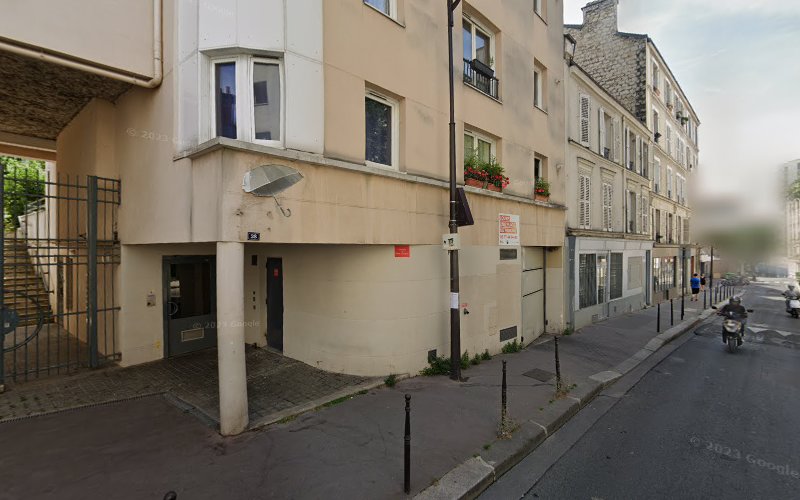
101 Bd Murat is a Paris historic landmark located in the 16 arrondissement.
Where Art Deco ironwork mastery was forged
At 76 rue Michel-Ange in the 16th arrondissement, the Atelier du ferronnier Brandt stands as a monument to one of the most celebrated metalwork artists of the Art Deco era. Established in 1901 by Edgar Brandt, this modest workshop grew into the epicenter of revolutionary decorative ironwork that defined the luxury aesthetic of the 1920s and 1930s, demonstrating how individual artistic vision and technical mastery could transform traditional craftsmanship into modern artistic expression that influenced international design.
Edgar Brandt’s artistic evolution and technical innovation
Edgar Brandt (1880-1960) began his career in the small rue Michel-Ange workshop, initially designing and forging jewelry, crosses, and brooches that demonstrated his exceptional skill with metal. In 1902, he founded the Établissements Brandt, employing specialized workers in a rational production approach that combined traditional blacksmithing techniques with modern industrial organization.
The atelier’s growth from a few workers to nearly 150 employees reflects Brandt’s success in creating a new market for luxury decorative ironwork. His revolutionary approach specialized each worker’s tasks while maintaining artistic coherence, proving that industrial methods could serve artistic excellence without compromising creative quality.
1925 Exposition triumph and Art Deco definition
Brandt’s workshop achieved international recognition at the seminal 1925 Exposition des Arts Décoratifs in Paris—the exhibition that gave Art Deco its name. His famous pieces, including doors, gates, tables, and his masterpiece screen “L’Oasis,” demonstrated how traditional ironwork could embrace modern aesthetic principles while achieving unprecedented artistic sophistication.
The exposition success enabled Brandt to open a gallery at 27 boulevard Malesherbes where he exhibited his creations alongside collaborations with other Art Deco masters including Daum and Lalique, creating a comprehensive luxury design ecosystem that influenced international decorative arts standards.
Industrial expansion and artistic empire
Following his 1925 triumph, Brandt expanded operations to include a state-of-the-art factory in Chatillon-sous-Bagneux where over 3,000 workers fabricated both decorative metalwork and armaments. This industrial scale enabled Brandt to serve international markets while maintaining the artistic quality that established his reputation for excellence.
The workshop’s production encompassed radiator grilles, fire screens, andirons, mirror frames, console tables, pedestals, jardinieres, floor lamps, and wall lamps that combined motifs from ancient Egypt and classical Greece with floral, animal, and geometric machine-inspired designs that defined Art Deco luxury.
Artistic synthesis and cultural influence
Brandt’s atelier represented the successful fusion of traditional French craftsmanship with modern aesthetic innovation, where ancient metalworking techniques served contemporary design sensibilities. His ability to combine historical decorative traditions with Art Deco geometric innovation created a distinctive artistic language that influenced luxury design worldwide.
The workshop’s location in the sophisticated 16th arrondissement provided appropriate setting for creating luxury decorative objects that would grace the most elegant Parisian interiors while serving as models for international Art Deco production that established French decorative arts leadership.
Legacy of decorative arts excellence
The Atelier du ferronnier Brandt continues to inspire appreciation for traditional craftsmanship and artistic innovation, where Edgar Brandt’s vision proved that ancient trades could achieve modern artistic relevance through creative vision and technical excellence. The workshop’s history demonstrates how individual artistic genius can transform entire decorative arts categories while creating lasting cultural influence.
Essential information
- Establishment: 1901
- Founder: Edgar Brandt (1880-1960)
- Original location: 76 rue Michel-Ange, 16th arrondissement
- Company founding: 1902 (Établissements Brandt)
- Workshop expansion: Up to 150 specialized employees
- Gallery: 27 boulevard Malesherbes (post-1925)
- Factory: Chatillon-sous-Bagneux (3,000+ workers)
- Recognition: 1925 Exposition des Arts Décoratifs
Artistic and technical achievements
- Masterpiece: “L’Oasis” screen (1925 Exposition)
- Product range: Jewelry, architectural ironwork, decorative objects
- Design influences: Ancient Egypt, classical Greece, floral motifs, geometric patterns
- Collaborations: Daum, Lalique, other Art Deco masters
- Legacy: Defined Art Deco metalwork standards internationally
Art Deco metalwork mastery
Atelier du ferronnier Brandt embodies the transformation of traditional craftsmanship into modern artistic expression, where Edgar Brandt’s innovative vision elevated metalwork from functional trade to luxury art form that defined Art Deco elegance. This remarkable workshop demonstrates how individual artistic genius can revolutionize entire decorative arts categories while creating international influence that extends far beyond original geographic boundaries. For Art Deco enthusiasts, decorative arts lovers, or anyone interested in how traditional crafts achieve modern artistic relevance, the Brandt atelier offers an extraordinary encounter with creative transformation, where ancient blacksmithing techniques met 1920s aesthetic innovation to create luxury objects that established French decorative arts supremacy and proved that the finest modern design could honor both traditional skill and contemporary artistic vision.