
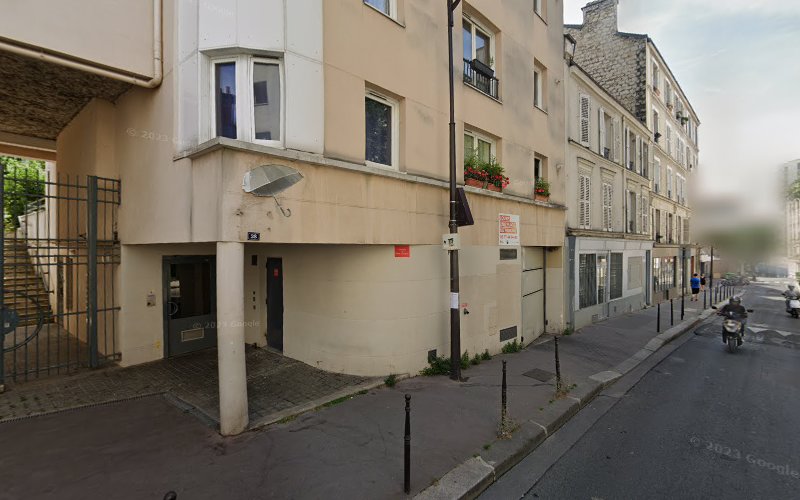
Central téléphonique Provence
Central téléphonique Provence is a Paris historic landmark located in the 9 arrondissement. François Le Cœur\u2019s functional architecture revolution and early telecommunications infrastructure At 17 rue du Faubourg-Poissonnière in the 9th arrondissement, the Central téléphonique Provence stands as a pioneering example of functional architecture and a monument to the telecommunications revolution that transformed urban communication […]
Central téléphonique Provence is a Paris historic landmark located in the 9 arrondissement.
<\!-- wp:heading -->
François Le Cœur\u2019s functional architecture revolution and early telecommunications infrastructure
<\!-- /wp:heading --><\!-- wp:parameter -->
At 17 rue du Faubourg-Poissonnière in the 9th arrondissement, the Central téléphonique Provence stands as a pioneering example of functional architecture and a monument to the telecommunications revolution that transformed urban communication in early 20th-century Paris. Built between 1911 and 1914 by architect François Le Cœur—disciple of Anatole de Baudot—this reinforced concrete structure represents a radical departure from traditional administrative buildings through its innovative approach to separating office and industrial functions while expressing distinct spatial purposes through both façade design and interior planning.
<\!-- /wp:paragraph --><\!-- wp:parameter -->
Protected as historic monument since 1999, covering façades and roofs at 15-17 rue du Faubourg-Poissonnière, 2-12 rue Bergère, and 2 rue du Conservatoire, this complex demonstrates how early 20th-century architects could create specialized infrastructure buildings that achieved both functional efficiency and architectural distinction appropriate to their technological and social significance.
<\!-- /wp:paragraph --><\!-- wp:heading {"level":3} -->
Revolutionary functional design and architectural expression
<\!-- /wp:heading --><\!-- wp:parameter -->
Le Cœur\u2019s innovative approach to expressing different functions through distinct façade treatments—with rue Bergère façade featuring large glass windows separated by fluted reinforced concrete pillars housing three superimposed 600-square-meter telephone exchange halls—demonstrates how industrial architecture could achieve both practical efficiency and aesthetic excellence while serving specialized technological requirements.
<\!-- /wp:paragraph --><\!-- wp:parameter -->
The contrasting façades on rue du Faubourg-Poissonnière and rue Bergère reflect Le Cœur\u2019s understanding that “function generates form,” creating architectural expressions that communicate building purpose while maintaining visual harmony within diverse urban contexts and varied functional requirements that demanded architectural flexibility and innovative design solutions.
<\!-- /wp:paragraph --><\!-- wp:heading {"level":3} -->
Decorative enrichment and artistic integration
<\!-- /wp:heading --><\!-- wp:parameter -->
The building\u2019s rich ornamentation—including undulating wrought iron by Szabo, blue and yellow glass paste frieze, and enamel work on the dome—demonstrates how functional architecture could incorporate artistic excellence while serving practical telecommunications infrastructure needs. This decorative program softens the orthogonal façade geometry while creating visual interest and cultural distinction that elevates utilitarian architecture to artistic achievement.
<\!-- /wp:paragraph --><\!-- wp:parameter -->
The integration of advanced decorative techniques with reinforced concrete construction shows how early 20th-century architects could combine structural innovation with artistic tradition while creating buildings that served both practical infrastructure needs and broader cultural enhancement of urban architectural environments.
<\!-- /wp:paragraph --><\!-- wp:heading {"level":3} -->
Telecommunications heritage and urban infrastructure
<\!-- /wp:heading --><\!-- wp:parameter -->
The building\u2019s dual function housing both telephone exchange and administrative offices reflects comprehensive approach to telecommunications infrastructure that coordinated technical operations with administrative management while creating architectural environments appropriate to the technological sophistication and social importance of modern communication systems.
<\!-- /wp:paragraph --><\!-- wp:parameter -->
This infrastructure integration demonstrates early understanding of how telecommunications buildings should serve both immediate technical requirements and broader social functions while contributing to urban architectural excellence and neighborhood character that makes specialized buildings enhance rather than detract from comprehensive urban cultural and architectural development.
<\!-- /wp:paragraph --><\!-- wp:heading {"level":3} -->
Architectural precedent and modernist influence
<\!-- /wp:heading --><\!-- wp:parameter -->
The building\u2019s recognition as precursor that announced functional architecture of the 1920s establishes its significance in architectural history while demonstrating how individual innovative buildings can influence broader architectural movements through successful integration of functional requirements with aesthetic achievement that inspires subsequent architects and urban planners.
<\!-- /wp:paragraph --><\!-- wp:parameter -->
For visitors to the 9th arrondissement interested in early modernist architecture, telecommunications history, or functional building design, the Central téléphonique Provence offers insight into how François Le Cœur\u2019s architectural innovation created infrastructure buildings that served both technological advancement and urban architectural excellence. The building demonstrates that great infrastructure architecture emerges when functional requirements inspire aesthetic innovation, creating specialized buildings that serve both immediate technological needs and broader cultural purposes while establishing architectural precedents that influence subsequent development of functional architecture and urban infrastructure design essential for modern urban civilization and technological advancement.
<\!-- /wp:paragraph -->