
Cité Bergère
2 Cité Bergère 1 11 is a Paris historic landmark located in the 9 arrondissement. Madame de Boulnois\u2019 1825 real estate innovation and neoclassical residential elegance Linking rue du Faubourg-Montmartre and rue Bergère in the 9th arrondissement, the Cité Bergère stands as one of the Restoration period\u2019s most original urban creations and a testament to […]
2 Cité Bergère 1 11 is a Paris historic landmark located in the 9 arrondissement.
<\!-- wp:heading -->
Madame de Boulnois\u2019 1825 real estate innovation and neoclassical residential elegance
<\!-- /wp:heading --><\!-- wp:parameter -->
Linking rue du Faubourg-Montmartre and rue Bergère in the 9th arrondissement, the Cité Bergère stands as one of the Restoration period\u2019s most original urban creations and a testament to innovative 19th-century residential development that combined speculative real estate vision with architectural excellence. Created in 1827 by Madame de Boulnois, wife of Baron d\u2019Empire Louis Jacques François Boulnois, through land acquisition beginning in 1824, this L-shaped passage represents a major real estate operation during the neighborhood\u2019s expansion under Charles X.
<\!-- /wp:paragraph --><\!-- wp:parameter -->
Originally conceived as a private passage closed at night, featuring sidewalks (innovative for the period) and street lighting, the cité exemplifies the most elegant neoclassical style while demonstrating how private residential development could achieve both commercial success and architectural distinction through careful attention to urban design and community planning.
<\!-- /wp:paragraph --><\!-- wp:heading {"level":3} -->
Chopin\u2019s Parisian debut and literary luminaries
<\!-- /wp:heading --><\!-- wp:parameter -->
The passage achieved cultural significance through its distinguished residents, including Frédéric Chopin who briefly lived at number 4 in the Hôtel de France (now Hôtel de la Cité Bergère) from June 1832 to June 1833 as he began his Parisian career, and German Romantic poet Heinrich Heine in 1837. The 1828 residence of porcelain manufacturer Weil—maternal family of Marcel Proust—adds literary connection to this cultured residential environment.
<\!-- /wp:paragraph --><\!-- wp:parameter -->
These artistic and literary residents demonstrate how elegant residential developments could attract cultural luminaries while providing environments that fostered artistic creativity and intellectual development within sophisticated urban settings that honored both privacy and cultural exchange.
<\!-- /wp:paragraph --><\!-- wp:heading {"level":3} -->
Political upheaval and historical witness
<\!-- /wp:heading --><\!-- wp:parameter -->
During December 1851\u2019s coup d\u2019état by Louis-Napoléon Bonaparte, the Cité Bergère experienced tragic moments when dozens of victims of political repression were stored within the passage, demonstrating how even elegant residential enclaves could not escape broader political violence and social upheaval that characterized 19th-century French political transformation.
<\!-- /wp:paragraph --><\!-- wp:parameter -->
This dark historical episode reflects the cité\u2019s role as witness to broader French political evolution while showing how residential developments designed for tranquility and cultural refinement could be swept into national political conflicts and social transformation that affected all areas of Parisian life.
<\!-- /wp:paragraph --><\!-- wp:heading {"level":3} -->
Contemporary hotel transformation and architectural preservation
<\!-- /wp:heading --><\!-- wp:parameter -->
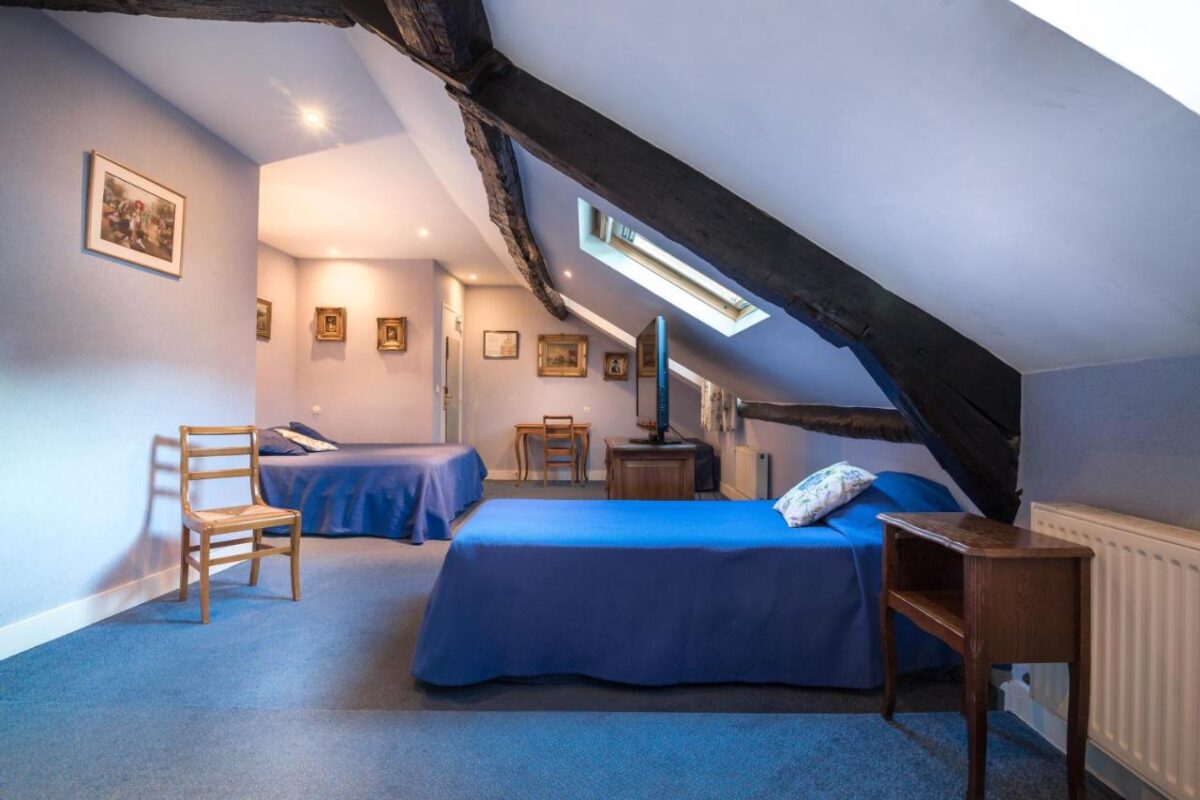
The passage\u2019s current function as home to numerous hotels with elaborate ironwork entrances demonstrates successful adaptive reuse that maintains architectural heritage while serving contemporary hospitality needs within the Grand Boulevards tourist district near famous arcades Passage Jouffroy and Passage des Panoramas.
<\!-- /wp:paragraph --><\!-- wp:parameter -->
This transformation from exclusive residential enclave to hospitality district shows how historic residential architecture can evolve to serve new economic functions while preserving essential character and architectural distinction that makes neighborhoods culturally attractive and economically viable.
<\!-- /wp:paragraph --><\!-- wp:heading {"level":3} -->
Neoclassical heritage and urban planning innovation
<\!-- /wp:heading --><\!-- wp:parameter -->
The cité\u2019s elegant neoclassical style and innovative urban features—private lighting, sidewalks, and controlled access—established precedents for residential development that influenced subsequent Parisian neighborhood planning while demonstrating how private real estate development could achieve both commercial success and cultural distinction through architectural excellence and community planning.
<\!-- /wp:paragraph --><\!-- wp:parameter -->
For visitors to the 9th arrondissement interested in neoclassical architecture, 19th-century urban development, or Chopin\u2019s Parisian period, the Cité Bergère offers insight into how Madame de Boulnois\u2019 real estate vision created lasting residential environments that continue serving urban needs while preserving important connections to French literary and musical heritage. The cité demonstrates that great residential developments emerge when speculative investment meets architectural vision, creating neighborhoods that serve both immediate commercial purposes and broader cultural functions while establishing urban planning innovations that influence subsequent community development and residential architecture throughout French urban civilization.
<\!-- /wp:paragraph -->