<\!-- wp:heading -->
Félix Duban\u2019s architectural masterpiece training France\u2019s artistic elite for 350 years
<\!-- /wp:heading --><\!-- wp:paragraph -->
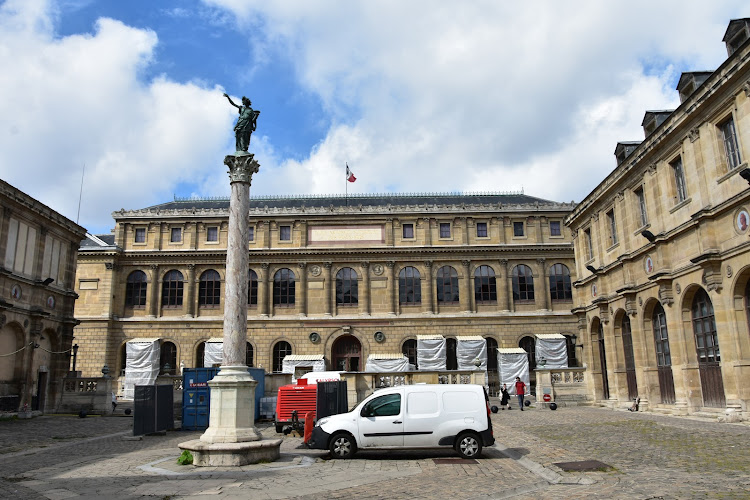
At 14 rue Bonaparte in the 6th arrondissement, the École Nationale Supérieure des Beaux-Arts occupies a vast architectural complex between Quai Malaquais and rue Bonaparte that represents over 350 years of French artistic education and architectural excellence. Heir to the Académie Royale de Peinture et de Sculpture founded by Louis XIV in the 17th century, this public institution under the Ministry of Culture continues its mission of training students for high-level artistic creation while maintaining its position as one of Europe\u2019s most prestigious art schools.
<\!-- /wp:paragraph --><\!-- wp:paragraph -->
The schoolu2019s strategic location in the heart of Saint-Germain-des-Prés, directly across from the Louvre, creates an environment where students can access both contemporary artistic education and the worldu2019s greatest art collections while benefiting from the intellectual atmosphere that has made the Left Bank synonymous with artistic and cultural excellence.
<\!-- /wp:paragraph --><\!-- wp:heading {"level":3} -->
Félix Duban\u2019s 19th-century architectural vision
<\!-- /wp:heading --><\!-- wp:parameter --><\!-- wp:paragraph -->
The school\u2019s current architectural character largely reflects French architect Félix Duban\u2019s 1830 commission for the main building, which created extraordinary interiors that take visitors\u2019 breath away through their synthesis of historical preservation and contemporary educational functionality. Duban\u2019s work demonstrates how 19th-century architects could honor existing heritage while creating inspiring environments for artistic education.
<\!-- /wp:parameter --><\!-- wp:parameter --><\!-- wp:paragraph -->
The complex incorporates buildings spanning the 17th to 19th centuries, with the oldest structures being the chapel and annexes from an early 17th-century monastery, creating architectural environments that connect contemporary artistic education with centuries of French cultural tradition and spiritual contemplation.
<\!-- /wp:paragraph --><\!-- wp:heading {"level":3} -->
Revolutionary atelier system and artistic mentorship
<\!-- /wp:heading --><\!-- wp:parameter --><\!-- wp:paragraph -->
The school\u2019s traditional atelier system, where students work directly under recognized international artists rather than learning through formal classroom instruction, maintains pedagogical approaches that have proven successful for centuries while adapting to contemporary artistic practices. Current ateliers led by artists including Clément Cogitore, Valérie Jouve, Julien Sirjacq, Tim Eitel, Tatiana Trouvé, and Michel Blazy ensure direct transmission of artistic knowledge and technique.
<\!-- /wp:parameter --><\!-- wp:parameter --><\!-- wp:paragraph -->
This mentorship approach creates intimate artistic communities where over 500 students can develop individual artistic voices while benefiting from direct contact with established artists who understand both technical excellence and contemporary artistic discourse.
<\!-- /wp:paragraph --><\!-- wp:heading {"level":3} -->
Comprehensive collections and cultural resources
<\!-- /wp:heading --><\!-- wp:parameter --><\!-- wp:paragraph -->
The school\u2019s collection of approximately 450,000 items, including artworks and historical books, constitutes one of France\u2019s largest public art collections, providing students and visitors with comprehensive access to artistic heritage ranging from classical master drawings to cutting-edge contemporary works. This vast resource demonstrates the institution\u2019s commitment to preserving artistic tradition while fostering innovation.
<\!-- /wp:paragraph --><\!-- wp:parameter --><\!-- wp:paragraph -->
Regular exhibitions in the Quai Malaquais space and the Chapel create dynamic presentations that connect historical collections with contemporary artistic production, showing how great art schools can serve both educational and broader cultural functions while maintaining their essential mission of artistic training.
<\!-- /wp:paragraph --><\!-- wp:heading {"level":3} -->
Contemporary artistic disciplines and technological integration
<\!-- /wp:heading --><\!-- wp:parameter --><\!-- wp:paragraph -->
The school\u2019s curriculum expansion to include painting, installation, graphic arts, photography, sculpture, digital media, and video reflects contemporary understanding of artistic practice while maintaining traditional disciplines that have defined fine arts education for centuries. This comprehensive approach ensures students can develop expertise across multiple media while understanding connections between traditional and contemporary artistic expression.
<\!-- /wp:paragraph --><\!-- wp:parameter --><\!-- wp:paragraph -->
The integration of hypermedia and digital arts with classical training demonstrates how historic art institutions can embrace technological innovation while preserving the fundamental artistic skills and cultural knowledge that define comprehensive artistic education.
<\!-- /wp:paragraph --><\!-- wp:heading {"level":3} -->
Living artistic heritage and cultural influence
<\!-- /wp:heading --><\!-- wp:parameter --><\!-- wp:paragraph -->
Today, the École Nationale Supérieure des Beaux-Arts continues to fulfill its mission of training artistic leaders while serving broader cultural functions through exhibitions, public programming, and preservation of France\u2019s artistic heritage. The school demonstrates how educational institutions can maintain excellence across centuries while adapting to serve evolving artistic needs and cultural demands.
<\!-- /wp:paragraph --><\!-- wp:parameter --><\!-- wp:paragraph -->
For visitors to Paris interested in French artistic education, Beaux-Arts architecture, or contemporary art production, the school offers an exceptional encounter with living artistic tradition where historical heritage meets cutting-edge creative practice. The institution proves that great art schools achieve lasting cultural significance by combining rigorous artistic training with preservation of cultural heritage, creating environments where individual artistic development serves broader cultural advancement while maintaining the highest standards of technical excellence and creative innovation.
<\!-- /wp:paragraph -->