
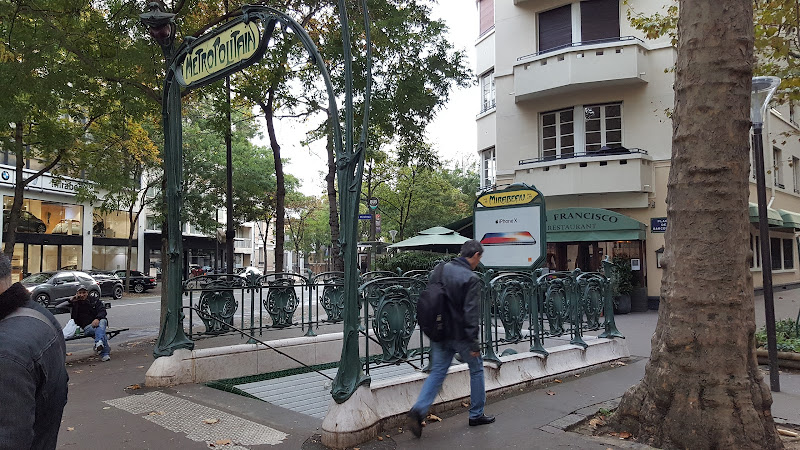
Art Nouveau entrance where lily-of-the-valley stalks illuminate metropolitan elegance
Lily-of-the-valley inspiration and naturalistic engineering
Historical protection and cultural preservation triumph
Contemporary transportation and cultural tourism
Essential information
- Designer: Hector Guimard (Art Nouveau pioneer)
- Location: Place de Barcelone, avenue de Versailles/rue Mirabeau junction
- Design period: 1900-1913 (Style Métro era)
- Materials: Cast iron painted oxidized brass green
- Signature elements: Lily-of-the-valley stalks with red-orange globe lights
- Protection: Historical monument (1978, renewed 2016)
- Survival status: One of 86 remaining from 167 original entrances
- Neighborhood context: Prestigious 16th arrondissement residential area
Design and cultural significance
- Naturalistic concept: Botanical forms suggesting organic growth
- Functional integration: Transportation access, lighting, signage unified
- Cultural evolution: Initial resistance to beloved Parisian symbols
- Preservation achievement: Protected status ensuring Art Nouveau heritage
- International recognition: Global appreciation for Parisian design excellence
Botanical architecture transforms transportation into urban poetry
The Édicule Guimard at Mirabeau embodies the extraordinary transformation of utilitarian transportation infrastructure into Art Nouveau sculptural experience, where Hector Guimard’s lily-of-the-valley inspired design created metro entrance that proved functional urban infrastructure could achieve poetic beauty through botanical observation expressed in cast iron forms that connected metropolitan commuters to natural wisdom while serving practical transportation requirements within prestigious 16th arrondissement residential contexts demanding both functional efficiency and aesthetic excellence. This remarkable entrance demonstrates how exceptional public art emerges when naturalistic design principles meet practical urban infrastructure requirements, creating transportation access that serves both immediate mobility needs and long-term cultural education through design excellence that honors both botanical inspiration and metropolitan functionality worthy of Historical Monument protection and ongoing international architectural appreciation. For Art Nouveau enthusiasts, botanical design admirers, or anyone interested in how natural observation can inspire urban infrastructure excellence, this Mirabeau entrance offers an extraordinary encounter with transportation poetry, where lily-of-the-valley stalks and flower-bud lighting create metro access that proves the finest public art achieves immortality through ongoing functional service rather than mere museum preservation, demonstrating that authentic urban beauty emerges when visionary designers understand how natural forms can inform technological infrastructure while serving both practical metropolitan transportation and cultural education through design innovation that continues inspiring appreciation for the relationship between natural wisdom and urban infrastructure excellence serving diverse community mobility and cultural needs within prestigious residential contexts requiring both transportation efficiency and aesthetic distinction worthy of ongoing heritage protection and cultural tourism appreciation.