
<\!-- wp:heading -->
Charles Le Brun\u2019s baroque masterpiece and sanctuary of traditional Latin liturgy
<\!-- /wp:heading --><\!-- wp:paragraph -->
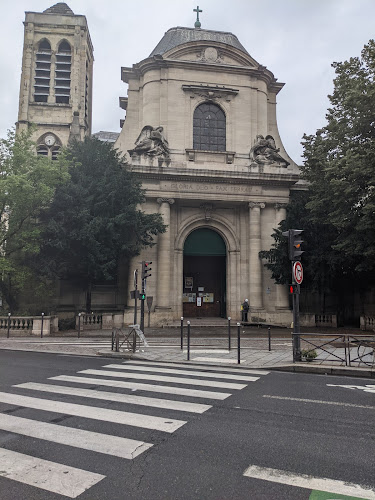
On rue des Bernardins in the 5th arrondissement, near the Latin Quarter and Seine River, the Église Saint-Nicolas-du-Chardonnet stands as one of Paris\u2019s finest examples of French baroque church architecture and a unique center for traditional Catholic worship. Built between 1656 and 1763 with façade design by Charles Le Brun—the royal architect renowned for his work at Versailles—this magnificent church demonstrates how baroque architectural principles could be adapted to serve Parisian parish needs while achieving the visual splendor necessary to express divine glory.
<\!-- /wp:heading --><\!-- wp:paragraph -->
The church\u2019s remarkable construction spanning over a century, with final consecration only achieved in 1937, reflects the ambitious architectural vision that sought to create comprehensive sacred environments worthy of royal artistic patronage while serving the spiritual needs of the local community in one of Paris\u2019s most intellectually vibrant neighborhoods.
<\!-- /wp:paragraph --><\!-- wp:heading {"level":3} -->
Le Brun\u2019s classical baroque design and royal artistic patronage
<\!-- /wp:heading --><\!-- wp:parameter --><\!-- wp:paragraph -->
Charles Le Brun\u2019s façade design demonstrates how royal court artistic expertise could enhance parish church architecture, creating classical baroque compositions that integrate Versailles-level sophistication with intimate neighborhood religious life. The nave\u2019s cruciform pillars and classical acanthus-decorated capitals, combined with rounded Roman-style arches separating outer aisles from nave, showcase French baroque architecture\u2019s synthesis of classical antiquity with contemporary spiritual expression.
<\!-- /wp:paragraph --><\!-- wp:parameter --><\!-- wp:paragraph -->
The lavish interior decoration featuring paintings, medallions, and sculpture creates comprehensive baroque artistic environments designed to visually express divine glory while facilitating liturgical worship that engages both intellectual understanding and emotional response to sacred beauty and religious truth.
<\!-- /wp:paragraph --><\!-- wp:heading {"level":3} -->
Traditional Latin Mass and liturgical preservation
<\!-- /wp:heading --><\!-- wp:parameter --><\!-- wp:paragraph -->
Since 1977, the church has been administered by the Society of St. Pius X, making it one of the few Parisian churches maintaining pre-Vatican II liturgical traditions including celebration of Traditional Latin Mass. The modification of interior arrangements to suit Tridentine Mass requirements—with priest facing east rather than congregation and removal of modern “Novus Ordo” altar—preserves historical liturgical practices that connect contemporary worship with centuries of Catholic tradition.
<\!-- /wp:paragraph --><\!-- wp:parameter --><\!-- wp:paragraph -->
This commitment to traditional liturgy attracts worshippers seeking authentic connections to historical Catholic practice while providing visitors with opportunities to experience liturgical worship as it was celebrated for centuries before contemporary reforms, creating living links to French Catholic spiritual heritage.
<\!-- /wp:paragraph --><\!-- wp:heading {"level":3} -->
Coysevox\u2019s Le Brun tomb and artistic heritage
<\!-- /wp:heading --><\!-- wp:parameter --><\!-- wp:paragraph -->
The church\u2019s most precious artistic treasure is the funeral monument of Charles Le Brun and his wife Suzanne Butay, created by sculptor Antoine Coysevox (1640-1720) in the Chapel of Saint-Charles-Borromée. This masterwork demonstrates how great artists could honor their contemporaries through sculptural achievement while creating lasting monuments to artistic excellence and creative collaboration.
<\!-- /wp:paragraph --><\!-- wp:parameter --><\!-- wp:paragraph -->
The presence of Jean-Baptiste Corot\u2019s rare religious painting among the church\u2019s 19th-century artistic treasures shows how parish churches could continue attracting major artistic contributions across multiple historical periods while maintaining their essential function as centers of community worship and spiritual life.
<\!-- /wp:paragraph --><\!-- wp:heading {"level":3} -->
Medieval origins and architectural continuity
<\!-- /wp:heading --><\!-- wp:parameter --><\!-- wp:paragraph -->
The churchu2019s origins in a 1230 chapel built in a field planted with chardons (thistles)—hence its distinctive name—establishes deep medieval roots that connect contemporary worship with centuries of Christian presence in the Latin Quarter. The mid-17th-century decision to replace the aging medieval structure with Le Brun\u2019s baroque design demonstrates how parish communities could invest in architectural excellence while maintaining spiritual continuity.
<\!-- /wp:paragraph --><\!-- wp:parameter --><\!-- wp:paragraph -->
For visitors to Paris interested in baroque religious architecture, traditional Catholic liturgy, or French artistic heritage, Saint-Nicolas-du-Chardonnet offers an exceptional encounter with Charles Le Brunu2019s church design while experiencing authentic traditional worship within one of the Latin Quarteru2019s most architecturally distinguished religious buildings. The church proves that great religious architecture emerges when royal artistic expertise serves parish spiritual needs, creating sacred environments that honor both traditional liturgical practice and contemporary artistic achievement while maintaining the timeless appeal that makes historic worship relevant to new generations seeking authentic spiritual experience.
<\!-- /wp:paragraph -->