
<\!-- wp:heading -->
Soufflot\u2019s neoclassical law faculty and the world\u2019s second-oldest legal education center
<\!-- /wp:heading --><\!-- wp:paragraph -->
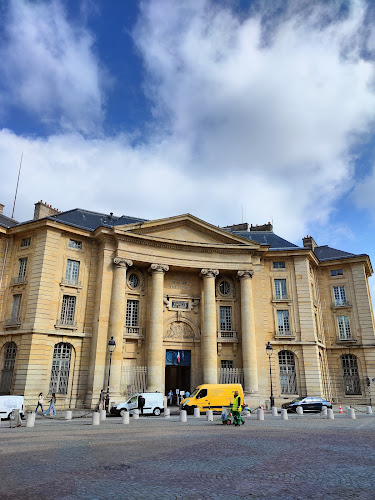
At Place du Panthéon and rue d\u2019Assas in the 5th arrondissement, the Université Paris-Panthéon-Assas stands as the direct inheritor of the Faculty of Law of Paris, the world\u2019s second-oldest law faculty, founded in the 12th century as part of the medieval University of Paris. This prestigious institution, commonly known as Assas or Paris 2, has maintained its position at the heart of the Latin Quarter since the 13th century, establishing France as a global center for legal education and jurisprudential scholarship.
<\!-- /wp:paragraph --><\!-- wp:parameter --><\!-- wp:paragraph -->
The university\u2019s dual campus arrangement—honoring both Place du Panthéon and rue d\u2019Assas addresses—reflects the institution\u2019s growth from medieval origins to contemporary comprehensive legal education while maintaining essential connections to the historical foundations that have made Paris a center of legal thought and practice for over eight centuries.
<\!-- /wp:paragraph --><\!-- wp:heading {"level":3} -->
Soufflot\u2019s architectural masterpiece and royal educational patronage
<\!-- /wp:heading --><\!-- wp:parameter --><\!-- wp:paragraph -->
Louis XV\u2019s 1753 decision to construct a new law faculty building on Place du Panthéon led to the commissioning of Jacques-Germain Soufflot, himself a faculty alumnus who had become royal architect. Soufflot\u2019s design and supervision of construction from 1771 to 1773, with opening in 1774, created neoclassical educational architecture that embodied Enlightenment ideals about legal education while providing dignified settings for jurisprudential scholarship.
<\!-- /wp:paragraph --><\!-- wp:parameter --><\!-- wp:paragraph -->
Soufflot\u2019s architectural vision demonstrates how neoclassical principles could serve contemporary educational needs while honoring the ancient traditions of legal scholarship that connected French jurisprudence to Roman law foundations and medieval scholarly development.
<\!-- /wp:paragraph --><\!-- wp:heading {"level":3} -->
Post-war expansion and Lemaresquier\u2019s modern architecture
<\!-- /wp:heading --><\!-- wp:parameter --><\!-- wp:paragraph -->
The 1950s construction of the rue d\u2019Assas building, designed by Charles Lemaresquier, Alain le Normand, and François Carpentier between 1959 and 1963, created contemporary educational facilities on the former Société Marinoni grounds. The new building\u2019s main lecture theatre, accommodating 1,700 seats and representing France\u2019s largest at inauguration, demonstrates how legal education architecture could adapt to serve post-war educational democratization and expanding student populations.
<\!-- /wp:paragraph --><\!-- wp:parameter --><\!-- wp:paragraph -->
This modern expansion shows how historic educational institutions can grow to meet contemporary needs while maintaining their essential character as centers of legal scholarship and professional training that serve both national and international legal communities.
<\!-- /wp:paragraph --><\!-- wp:heading {"level":3} -->
Legal education excellence and national leadership
<\!-- /wp:heading --><\!-- wp:parameter --><\!-- wp:paragraph -->
As France\u2019s largest and leading law faculty, ranked #1 by Le Figaro Étudiant in 2023, Panthéon-Assas continues the medieval tradition of legal excellence while serving nearly 3,000 foreign students (15% of total enrollment) and hosting over 200 guest lecturers annually. This international engagement demonstrates how French legal education can maintain global leadership while preserving distinctive national legal traditions.
<\!-- /wp:paragraph --><\!-- wp:parameter --><\!-- wp:paragraph -->
The creation of innovative programs including the 2008 Collège de droit and 2011 École de droit reflects institutional commitment to educational excellence while maintaining the comprehensive legal curriculum that has made French legal education influential throughout the francophone world and beyond.
<\!-- /wp:paragraph --><\!-- wp:heading {"level":3} -->
International expansion and global legal influence
<\!-- /wp:heading --><\!-- wp:parameter --><\!-- wp:paragraph -->
The university\u2019s four international campuses in Dubai, Mauritius, Paris, and Singapore demonstrate how French legal education traditions can serve global legal development while maintaining the intellectual rigor and cultural sophistication that have characterized Parisian legal scholarship since the medieval period.
<\!-- /wp:paragraph --><\!-- wp:parameter --><\!-- wp:paragraph -->
This international presence reflects the university\u2019s success in adapting medieval legal education traditions to serve contemporary global legal needs while preserving the essential character and educational excellence that have made French legal education internationally respected and influential.
<\!-- /wp:paragraph --><\!-- wp:heading {"level":3} -->
Architectural heritage and educational continuity
<\!-- /wp:heading --><\!-- wp:parameter --><\!-- wp:paragraph -->
The combination of Soufflot\u2019s 18th-century neoclassical architecture with Lemaresquier\u2019s mid-20th-century modern expansion creates comprehensive educational environments that honor both historical legal tradition and contemporary educational innovation, demonstrating how great educational institutions can maintain architectural distinction while adapting to serve evolving professional and scholarly needs.
<\!-- /wp:paragraph --><\!-- wp:parameter --><\!-- wp:paragraph -->
For visitors to the Latin Quarter interested in French legal history, neoclassical educational architecture, or the evolution of university education, Panthéon-Assas offers insight into how medieval legal scholarship traditions continue serving contemporary legal education while maintaining the intellectual rigor and cultural sophistication that have made French legal education globally influential. The university demonstrates that great legal institutions emerge when architectural excellence supports scholarly tradition, creating environments where legal knowledge can advance while serving both national legal needs and international legal development through comprehensive education that honors both historical precedent and contemporary innovation.
<\!-- /wp:paragraph -->