
<\!-- wp:heading -->
Jacques Gondouin\u2019s neoclassical masterpiece and Léon Ginain\u2019s Belle Époque expansion
<\!-- /wp:heading --><\!-- wp:paragraph -->
In the heart of the 6th arrondissement, the historic École de Médecine stands as one of French neoclassicism\u2019s most important and influential achievements, representing over two centuries of medical education excellence within architectural settings that embody Enlightenment ideals about scientific advancement and public health. Built by Jacques Gondouin between 1769 and 1786 under Louis XV\u2019s patronage, this revolutionary medical school created new models for scientific education while establishing architectural precedents that influenced institutional design throughout Europe.
<\!-- /wp:paragraph --><\!-- wp:paragraph -->
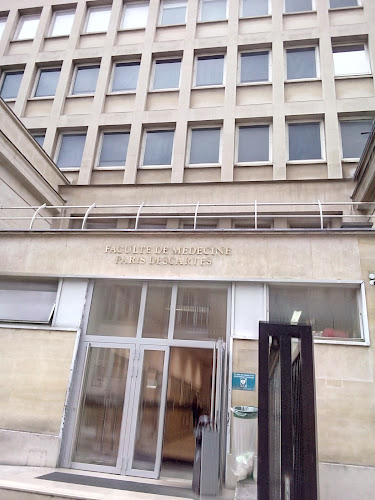
The building\u2019s evolution through Léon Ginain\u2019s monumental 1879-1900 expansion along Boulevard Saint-Germain demonstrates how medical institutions can grow to meet evolving educational needs while maintaining their essential character as centers of scientific excellence and humanitarian service.
<\!-- /wp:paragraph --><\!-- wp:heading {"level":3} -->
Gondouin\u2019s revolutionary neoclassical design
<\!-- /wp:heading --><\!-- wp:paragraph -->
Gondouin\u2019s design, strongly influenced by Greek antiquity, features the central building\u2019s main neoclassical façade on rue de l\u2019École-de-Médecine, an interior court of honor, and the magnificent amphitheater with semicircular top-lit anatomy theatre roofed with a coffered hemi-dome. The Ionic colonnade on the street elevation, with its central triumphal arch leading to the courtyard, creates one of Paris\u2019s finest examples of how neoclassical principles could serve contemporary scientific and educational purposes.
<\!-- /wp:paragraph --><\!-- wp:parameter --><\!-- wp:paragraph -->
The amphitheater\u2019s design demonstrates Gondouin\u2019s understanding of how architectural spaces could enhance medical education through optimal sight lines, natural lighting, and acoustic properties that facilitated both instruction and demonstration, establishing standards for medical education architecture that influenced institutions worldwide.
<\!-- /wp:paragraph --><\!-- wp:heading {"level":3} -->
Ginain\u2019s Belle Époque expansion and institutional growth
<\!-- /wp:heading --><\!-- wp:parameter --><\!-- wp:paragraph -->
Léon Ginain\u2019s magnificent expansion, built between 1879 and 1900 along Boulevard Saint-Germain, created a monumental façade that housed the central offices of the Faculty of Medicine including a ceremonial assembly room, extensive library, museum, and archival spaces. This expansion demonstrates how 19th-century architects could honor 18th-century neoclassical precedents while creating contemporary institutional facilities.
<\!-- /wp:paragraph --><\!-- wp:parameter --><\!-- wp:paragraph -->
Ginain\u2019s library, inaugurated in 1891, created one of Paris\u2019s most impressive medical research facilities while maintaining architectural harmony with Gondouin\u2019s original neoclassical vision. This successful integration shows how institutional architecture can evolve to serve growing academic needs while preserving essential character and aesthetic coherence.
<\!-- /wp:paragraph --><\!-- wp:heading {"level":3} -->
Portal sculptures and medical symbolism
<\!-- /wp:heading --><\!-- wp:parameter --><\!-- wp:paragraph -->
The ornate portal at 83 Boulevard Saint-Germain features two larger-than-life caryatids sculpted by Gustave Crauck, with the left figure representing Medicine and the right figure symbolizing Surgery (recognizable by her saw and knife). This sculptural program demonstrates how medical architecture could incorporate allegorical art that honored both the scientific and humanitarian aspects of medical practice.
<\!-- /wp:paragraph --><\!-- wp:parameter --><\!-- wp:paragraph -->
These architectural elements reflect 19th-century understanding of how institutional buildings should communicate their mission through artistic decoration while creating dignified environments that inspire both students and faculty to pursue excellence in medical education and patient care.
<\!-- /wp:paragraph --><\!-- wp:heading {"level":3} -->
Museum of medical history and educational heritage
<\!-- /wp:heading --><\!-- wp:parameter --><\!-- wp:paragraph -->
The Faculty houses the Museum of the History of Medicine, opened in 1954, which presents a chronological and thematic view of medical and surgical development from antiquity to present day through approximately 1,500 historical medical instruments. This comprehensive collection demonstrates how medical education institutions can serve both contemporary training needs and historical preservation functions.
<\!-- /wp:paragraph --><\!-- wp:parameter --><\!-- wp:paragraph -->
The museum\u2019s integration within active medical education facilities creates unique educational environments where students can understand their profession\u2019s historical development while learning contemporary techniques, fostering appreciation for both medical heritage and ongoing innovation.
<\!-- /wp:paragraph --><\!-- wp:heading {"level":3} -->
Contemporary medical education and architectural legacy
<\!-- /wp:heading --><\!-- wp:parameter --><\!-- wp:paragraph -->
Today, as part of Paris Cité University (formerly University of Paris Descartes), the École de Médecine continues to serve its original mission of training medical professionals while preserving Gondouinu2019s neoclassical architectural achievement and Ginainu2019s Belle Époque expansion as monuments to French medical education excellence.
<\!-- /wp:paragraph --><\!-- wp:parameter --><\!-- wp:paragraph -->
For visitors to Paris interested in medical history, neoclassical architecture, or the evolution of scientific education, the École de Médecine offers an exceptional encounter with Gondouin\u2019s architectural innovation and France\u2019s leadership in medical education. The building proves that great educational architecture emerges when architectural excellence serves scientific mission, creating environments that inspire both aesthetic appreciation and scholarly achievement while advancing human knowledge in service of health and healing.
<\!-- /wp:paragraph -->