
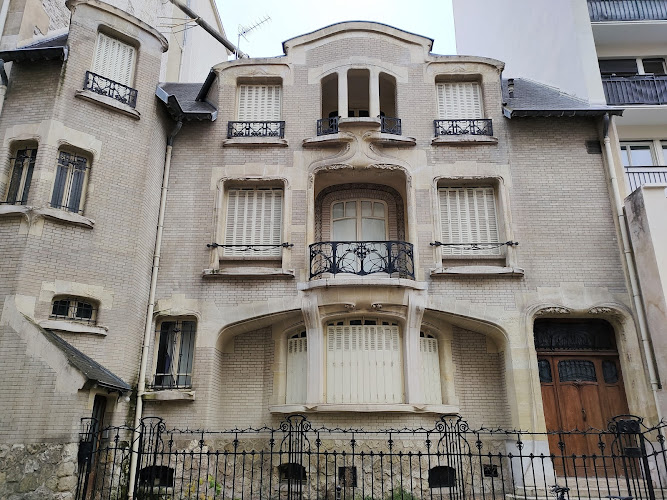
Guimard’s mature masterpiece destined to become Art Nouveau pilgrimage center
At 60 rue Jean de La Fontaine in the 16th arrondissement, Hôtel Mezzara stands as Hector Guimard’s 1910-1911 architectural evolution toward refined Art Nouveau excellence, built for textile manufacturer and lace designer Paul Mezzara during the architect’s mature period when elaborate early decoration yielded to sophisticated restraint using modest brick and millstone materials with ochre and black color schemes. This extraordinary mansion demonstrates how artistic maturity can generate architectural refinement that serves both practical residential requirements and ongoing cultural significance through design evolution that transcends decorative exuberance to achieve lasting aesthetic excellence worthy of becoming the future Guimard Museum opening in 2027-2028 through comprehensive restoration that will transform private residence into public cultural institution celebrating France’s Art Nouveau heritage.
Paul Mezzara’s artistic entrepreneurship and decorative excellence
Paul Mezzara’s progression from artistic career to successful lace and embroidery factory operation in Venice and Paris demonstrates how creative talent can generate financial success that enables architectural patronage when artistic understanding meets commercial prosperity through business achievement that serves both immediate luxury residential requirements and broader cultural heritage creation. His 1910 election as vice-president of the Society of Decorative Artists alongside Guimard proves how exceptional architectural clients can contribute to cultural development through patronage relationships that serve both individual residential excellence and collective artistic movement advancement through collaboration that honors both client artistic sophistication and architect innovative vision.
The textile manufacturer’s commission of Guimard during the architect’s mature period created optimal conditions for architectural excellence when artistic client understanding met refined architectural vision through design collaboration that achieved both practical residential functionality and aesthetic innovation serving both immediate family comfort and long-term cultural heritage preservation through mansion construction that proves exceptional residential architecture emerges when enlightened patronage meets architectural maturity through building projects that serve both individual achievement and collective cultural advancement.
Architectural maturity and refined decoration
The mansion’s vast central hall illuminated by sumptuous skylight, remarkable Art Nouveau staircase railings, and preserved dining room with Guimard-designed furniture and Charlotte Chauché-Guilleré frescoes demonstrates how architectural maturity can achieve comprehensive aesthetic coordination that serves both practical residential function and cultural education through integrated design that proves exceptional Art Nouveau architecture can maintain decorative excellence while embracing functional sophistication. This interior achievement illustrated how successful residential design requires coordination between architectural vision and decorative arts collaboration through projects that serve both immediate family luxury and ongoing cultural heritage preservation.
The two superimposed loggias in the central section create architectural rhythm that demonstrates Guimard’s evolved approach to facade composition through elements that achieve both aesthetic distinction and practical residential functionality while maintaining the organic architectural philosophy that defined Art Nouveau innovation. This architectural sophistication proved that Art Nouveau maturity could transcend early decorative exuberance to achieve refined excellence that serves both aesthetic education and practical residential requirements through design approaches that honor both architectural innovation and residential comfort within urban contexts requiring both artistic distinction and family living functionality.
Museum transformation and cultural preservation
The 50-year lease granted to Le Cercle Guimard for creating the future Guimard Museum through €6 million restoration beginning 2026 demonstrates how exceptional architectural heritage can achieve optimal preservation through museum transformation that serves both building conservation and public cultural education about Art Nouveau excellence. This museum project proves that successful architectural preservation requires both adequate financial investment and institutional commitment to cultural programming that honors both architectural heritage and ongoing public education through adaptive use that maintains building integrity while serving broader cultural mission worthy of both heritage protection and cultural tourism development.
Contemporary relevance and Art Nouveau renaissance
Essential information
- Owner/Commissioner: Paul Mezzara (textile manufacturer, lace designer)
- Architect: Hector Guimard (mature period)
- Construction: 1910-1911
- Location: 60 rue Jean de La Fontaine, 16th arrondissement
- Architectural style: Refined Art Nouveau with ochre brick and black railings
- Historic protection: Monument historique (2017)
- Future museum: Guimard Museum opening 2027-2028
- Restoration budget: €6 million beginning 2026
Architectural and cultural significance
- Artistic collaboration: Guimard furniture, Charlotte Chauché-Guilleré frescoes
- Interior excellence: Central skylight hall, Art Nouveau staircase
- Design maturity: Refined approach replacing early decorative exuberance
- Cultural mission: Future premier Art Nouveau museum destination
- Preservation model: Private residence transformed into public cultural institution
Architectural maturity creates Art Nouveau temple for cultural pilgrimage
Hôtel Mezzara embodies the extraordinary achievement of Art Nouveau architectural maturity that transcended decorative fashion to create lasting residential excellence worthy of museum transformation, where Hector Guimard’s refined design for textile entrepreneur Paul Mezzara demonstrated how artistic evolution could achieve both practical residential sophistication and enduring cultural significance through architecture that honors both functional efficiency and aesthetic innovation serving future museum mission celebrating France’s Art Nouveau heritage. This remarkable mansion proves that exceptional residential architecture emerges when architectural maturity meets enlightened patronage, creating buildings that serve both immediate family luxury and long-term cultural preservation through design excellence that transcends private residential purpose to become public cultural institutions worthy of international architectural pilgrimage and ongoing educational programming. For Art Nouveau enthusiasts, architectural museum admirers, or anyone interested in how residential excellence can achieve lasting cultural influence, this future Guimard Museum offers an unprecedented encounter with architectural transformation, where preserved skylight halls and integrated decorative arts demonstrate the comprehensive planning required to create residential environments that maintain both domestic authenticity and museum accessibility, proving that the finest residential architecture achieves immortality through ongoing cultural service rather than mere historical preservation, creating spaces where Art Nouveau excellence continues inspiring contemporary architectural appreciation and design education through museum programming that honors both individual architectural achievement and collective movement legacy within preserved domestic contexts that serve both immediate visitor education and long-term architectural heritage preservation serving ongoing appreciation for innovative design approaches that transformed early 20th-century Parisian residential development.