
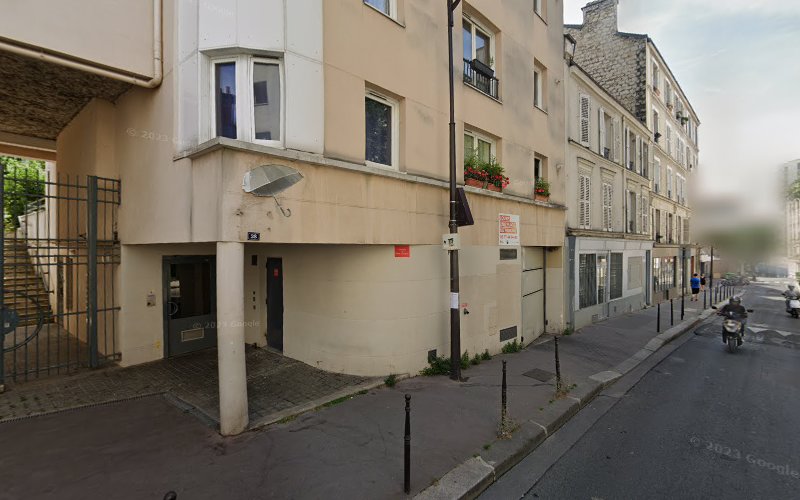
Immeubles Walter
2 Bd Suchet is a Paris historic landmark located in the 16 arrondissement. Art Deco citadel where luxury residential innovation created modern garden city At Porte de la Muette in the 16th arrondissement, the Immeubles Walter stand as architect Jean Walter’s 1929-1931 revolutionary residential complex, where three stone buildings surrounding interior courtyards and green spaces […]
2 Bd Suchet is a Paris historic landmark located in the 16 arrondissement.
Art Deco citadel where luxury residential innovation created modern garden city
At Porte de la Muette in the 16th arrondissement, the Immeubles Walter stand as architect Jean Walter’s 1929-1931 revolutionary residential complex, where three stone buildings surrounding interior courtyards and green spaces created an Art Deco “citadel” that established new standards for luxury Parisian living on vacant land reclaimed from demolished Thiers fortifications. This extraordinary ensemble demonstrates how visionary residential architecture can serve both individual luxury requirements and broader urban planning innovation through design that integrates garden city principles with Art Deco aesthetics, proving that exceptional residential development can achieve both immediate commercial success and lasting cultural significance through architectural excellence that transcends private residential function to become protected heritage serving ongoing inspiration for luxury residential design and urban planning innovation.
Modern housing philosophy and rational planning
Artisanal excellence and decorative collaboration
Celebrity residence and cultural prestige
Historical protection and contemporary luxury relevance
Essential information
- Architect: Jean Walter
- Construction: 1929-1931
- Location: Porte de la Muette, bounded by Boulevard Suchet and Avenue du Maréchal-Maunoury
- Design concept: Modern garden city within Art Deco citadel
- Site history: Built on demolished Thiers fortifications
- Ironwork: Raymond Subes decorative metalwork
- Historical protection: Monument historique (August 23, 2006)
- Apartment size: 450 square meters with luxury finishes
Architectural and cultural significance
- Residential innovation: Three buildings with interior courtyards and green spaces
- Celebrity residents: Catherine Deneuve, Pierre Balmain, Serge Dassault
- Luxury materials: Mahogany doors, travertine floors, exposed stone
- Urban planning: Garden city principles within prestigious arrondissement
- Cultural prestige: Premier luxury residential address status
Luxury residential architecture achieves cultural heritage status
Immeubles Walter embody the extraordinary achievement of Art Deco residential architecture that transcended private luxury development to become protected cultural heritage, where Jean Walter’s modern garden city vision created residential excellence that served both immediate luxury living requirements and long-term architectural influence through design innovation that established new standards for Parisian residential development while attracting cultural and business elites seeking sophisticated urban living within architecturally distinguished environments. This remarkable complex proves that exceptional residential architecture emerges when comprehensive planning meets unlimited financial resources and expert craftsmanship, creating luxury living environments that serve both individual residential comfort and collective cultural heritage through buildings that honor both private family needs and public architectural contribution worthy of historical monument protection and ongoing cultural appreciation. For Art Deco enthusiasts, luxury residential admirers, or anyone interested in how exceptional residential development can achieve lasting cultural significance, this Porte de la Muette complex offers an unparalleled encounter with residential excellence, where Raymond Subes ironwork and garden city planning demonstrate the sophisticated coordination required to create luxury residential environments that maintain both individual apartment magnificence and collective architectural distinction, proving that the finest residential architecture achieves immortality through ongoing luxury service rather than mere historical preservation, creating spaces where contemporary luxury living honors both architectural heritage and evolving residential sophistication requirements within prestigious urban contexts that continue attracting cultural and business elites seeking authentic luxury residential experience within protected architectural settings that serve both immediate comfort and long-term cultural appreciation.