
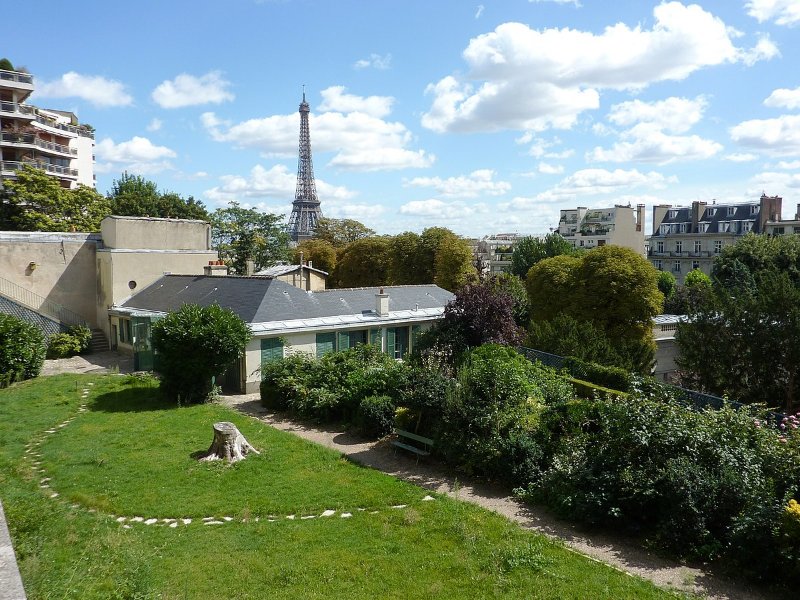
Literary sanctuary where Balzac created La Comédie Humaine in Passy refuge
At 47 rue Raynouard in the 16th arrondissement, Maison de Balzac preserves the only surviving Parisian residence of Honoré de Balzac, where the literary giant lived from 1840-1847 under his housekeeper’s name to escape creditors while creating his monumental La Comédie Humaine within these intimate domestic spaces overlooking the Seine. This extraordinary house museum demonstrates how creative genius can transcend financial adversity to achieve literary immortality through works that continue influencing world literature, proving that exceptional artistic achievement often emerges from challenging personal circumstances when individual talent meets appropriate creative environments that support sustained intellectual work despite economic pressures that threaten artistic productivity.
Creative refuge and literary productivity
Eiffel Tower garden and aesthetic inspiration
Literary archives and character genealogy
Municipal preservation and contemporary literary education
Essential information
- Literary resident: Honoré de Balzac (1799-1850)
- Residence period: 1840-1847 (under pseudonym Mr. de Breugnol)
- Location: 47 rue Raynouard, 16th arrondissement
- Major work: La Comédie Humaine written here
- Municipal acquisition: 1949
- Museum status: One of Paris’s three literary museums
- Recent renovation: Reopened 2019
- Admission: Free (fees for temporary exhibitions)
Literary and cultural significance
- Preserved workspace: Original writing table, turquoise cane, coffee maker
- Literary archives: Manuscripts, first editions, character genealogy
- Garden sanctuary: 650 square meters with Eiffel Tower views
- Research library: Ground-floor scholarly resources since 1971
- Cultural integration: Part of Paris literary museum network
Literary refuge creates immortal fictional universe
Maison de Balzac embodies the extraordinary power of domestic tranquility to support literary genius, where Honoré de Balzac’s seven-year Passy residence provided the peaceful environment necessary for creating La Comédie Humaine, the monumental fictional universe that continues serving world literature through social realism that captured essential human nature within 19th-century French society while achieving universal relevance that transcends historical and cultural boundaries. This remarkable house museum proves that exceptional literary achievement often requires refuge from financial pressures and social obligations through residential spaces that support sustained creative concentration, demonstrating how preserved writer environments can continue inspiring contemporary literary appreciation and creative development through intimate encounter with the domestic contexts that enabled extraordinary artistic productivity. For literary heritage enthusiasts, creative process admirers, or anyone interested in how domestic environments can support artistic genius, this preserved residence offers an unparalleled encounter with creative sanctuary excellence, where original writing furniture and Eiffel Tower garden views demonstrate the aesthetic and practical requirements that enabled one of literature’s greatest achievements, proving that the finest literary house museums achieve lasting significance through ongoing cultural service that honors both writer legacy and contemporary educational mission within residential contexts that maintain both domestic authenticity and museum accessibility, creating spaces where literary heritage continues inspiring appreciation for the creative processes that generate artistic works transcending individual biography to serve universal human understanding and cultural enrichment through literature that documents essential social truths worthy of ongoing study and celebration.