
<\!-- wp:heading -->
Jacques Deschamps\u2019 neo-classical arcade and the epicenter of Parisian antique culture
<\!-- /wp:heading --><\!-- wp:parameter -->
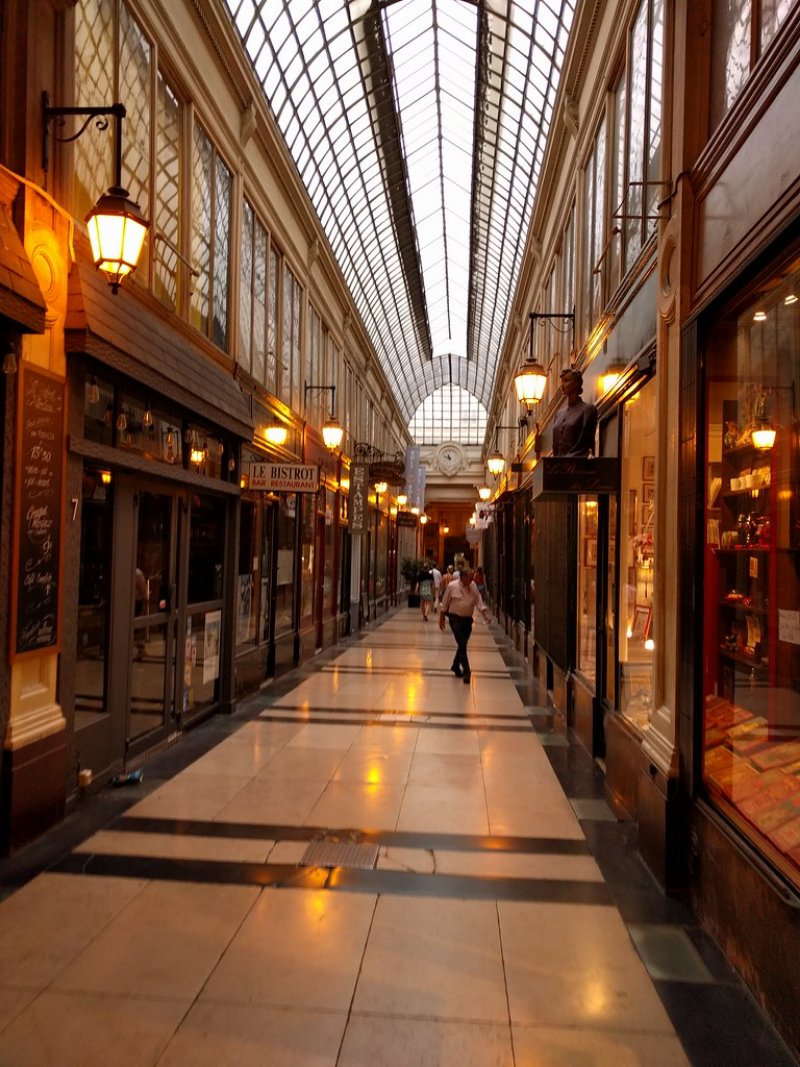
Linking 6 rue de la Grange-Batelière to 31 rue du Faubourg-Montmartre in the 9th arrondissement, Passage Verdeau stands as one of Paris\u2019s most elegant covered arcades and the undisputed center of the capital\u2019s antique and rare book trade. Built in 1847 as part of the comprehensive development project that included Passage des Panoramas and Passage Jouffroy, this 75-meter-long gallery demonstrates how 19th-century commercial architecture could achieve both practical retail function and cultural distinction through sophisticated design and specialized merchant communities.
<\!-- /wp:paragraph --><\!-- wp:parameter -->
Named after Jean-Baptiste-Ossian Verdeau, primary shareholder of the building society responsible for its creation, the passage developed its distinctive character through proximity to the Hôtel Drouot auction house, opened in 1852, which transformed the surrounding area into Paris\u2019s premier destination for art dealers, antique specialists, and collectors from around the world.
<\!-- /wp:paragraph --><\!-- wp:heading {"level":3} -->
Architectural elegance and neo-classical sophistication
<\!-- /wp:heading --><\!-- wp:parameter -->
Jacques Deschamps\u2019 architectural vision created a splendid example of mid-19th-century neo-classical style through an imposing glass roof with distinctive fishbone arch design that bathes the interior in natural light while providing weather protection. The decorative wooden shopfronts, 19th-century clock, and careful attention to proportional relationships create comprehensive aesthetic environments that elevate commercial activity to cultural experience.
<\!-- /wp:paragraph --><\!-- wp:parameter -->
The passage\u2019s architectural restraint and classical elegance demonstrate how French commercial design could achieve sophistication through understated excellence rather than ostentatious display, creating environments that enhance rather than overwhelm the specialized merchandise and cultural activities that define the arcade\u2019s character.
<\!-- /wp:paragraph --><\!-- wp:heading {"level":3} -->
Hôtel Drouot influence and antique dealer concentration
<\!-- /wp:heading --><\!-- wp:parameter -->
The passage\u2019s evolution into Paris\u2019s premier destination for antique dealers, rare books, vintage postcards, collectors\u2019 cameras, engravings, lithographs, and fine art reflects its strategic proximity to Hôtel Drouot, the “Mecca of Parisian auctions.” This geographical advantage created synergistic commercial relationships where auction activity generated demand for specialized dealers who could serve international collectors and connoisseurs.
<\!-- /wp:paragraph --><\!-- wp:parameter -->
The layout and decoration of shops remaining largely unchanged since their inception demonstrates remarkable commercial continuity and authentic preservation of 19th-century retail environments where specialized knowledge and personal service relationships continue to define commercial excellence and cultural authenticity.
<\!-- /wp:paragraph --><\!-- wp:heading {"level":3} -->
Art galleries and cultural programming
<\!-- /wp:heading --><\!-- wp:parameter -->
The passage\u2019s more than half-dozen addresses dedicated to the arts—including Galerie Maillard-Fouilleul, Galerie Sophie Marcellin, and Honoré des Arts at the corner with rue de la Grange-Batelière—create comprehensive cultural programming that demonstrates how commercial passages can serve fine arts presentation while maintaining their essential retail character and specialized merchant communities.
<\!-- /wp:paragraph --><\!-- wp:parameter -->
The survival of establishments like the photography shop at nos. 14-16, occupying the same premises since 1901, demonstrates extraordinary commercial continuity and authentic preservation of specialized retail traditions that connect contemporary visitors to over a century of consistent cultural and commercial excellence.
<\!-- /wp:paragraph --><\!-- wp:heading {"level":3} -->
Peaceful atmosphere and collector destination
<\!-- /wp:heading --><\!-- wp:parameter -->
The passage\u2019s reputation as less crowded than famous counterparts like Passage des Panoramas creates optimal conditions for serious browsing and collector activity, where international visitors and Parisian connoisseurs can explore rare treasures without tourist crowds that might compromise the contemplative atmosphere essential for antique appreciation and cultural discovery.
<\!-- /wp:paragraph --><\!-- wp:parameter -->
This peaceful character attracts collectors from around the world who come to stroll, bargain, and enjoy the charm of an authentic gallery environment where specialized knowledge and cultural sophistication create shopping experiences that honor both commercial tradition and artistic appreciation.
<\!-- /wp:paragraph --><\!-- wp:heading {"level":3} -->
Living heritage and cultural commerce
<\!-- /wp:heading --><\!-- wp:parameter -->
Today, Passage Verdeau continues maintaining its historic vocation as destination for art, antiques, and rare books while preserving the architectural and commercial authenticity that makes it invaluable for understanding how 19th-century commercial culture created specialized retail environments that serve both practical collector needs and broader cultural functions.
<\!-- /wp:paragraph --><\!-- wp:parameter -->
For visitors to Paris interested in antique culture, rare book collecting, or authentic 19th-century commercial architecture, Passage Verdeau offers an exceptional encounter with how specialized retail communities can create lasting cultural institutions. The passage demonstrates that great commercial heritage emerges when architectural excellence meets specialized merchant expertise, creating shopping environments that serve both immediate collector needs and broader cultural purposes while preserving important connections to traditional retail culture and specialized knowledge that make commercial districts culturally distinctive and personally enriching for visitors seeking authentic rather than generic shopping experiences.
<\!-- /wp:paragraph -->