
<\!-- wp:heading -->
Vincent d\u2019Indy\u2019s musical revolution in the former English Benedictine convent
<\!-- /wp:heading --><\!-- wp:paragraph -->
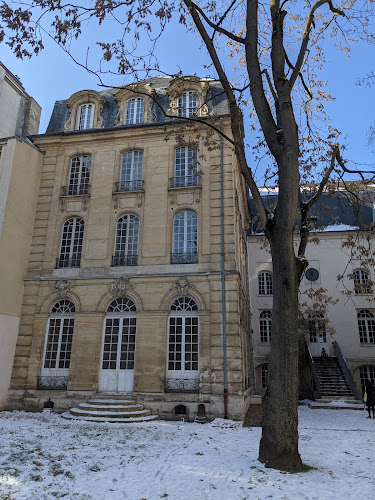
In the Latin Quarter of the 5th arrondissement, the Schola Cantorum de Paris occupies a historic English Benedictine convent and represents one of the most significant musical education reforms in French history. Founded in 1894 by Charles Bordes, Alexandre Guilmant, and Vincent du2019Indy as a counterbalance to the Paris Conservatoireu2019s emphasis on opera, this private music conservatory established revolutionary approaches to musical education that would influence European musical culture for generations.
<\!-- /wp:paragraph --><\!-- wp:paragraph -->
After opening in 1896 on rue Stanislas in Montparnasse, the school settled permanently in 1900 within its current Latin Quarter location, where the historic religious architecture provides an inspiring environment for the sacred and secular musical traditions that define the Scholau2019s comprehensive educational mission.
<\!-- /wp:paragraph --><\!-- wp:heading {"level":3} -->
César Franck\u2019s influence and pedagogical revolution
<\!-- /wp:heading --><\!-- wp:paragraph -->
Vincent d\u2019Indy\u2019s vision for the Schola emerged directly from his studies with César Franck at the Paris Conservatoire and his dissatisfaction with conventional musical education standards. As Franck\u2019s devoted student, d\u2019Indy understood how comprehensive musical education should embrace both technical excellence and deep cultural understanding, leading him to establish curriculum that fostered study of late Baroque and early Classical works, Gregorian chant, and Renaissance polyphony.
<\!-- /wp:paragraph --><\!-- wp:parameter --><\!-- wp:paragraph -->
This pedagogical approach represented radical departure from operatic focus toward comprehensive musical literacy that would prepare musicians to understand and perform the full spectrum of Western musical tradition while developing individual artistic voices grounded in historical knowledge and technical mastery.
<\!-- /wp:paragraph --><\!-- wp:heading {"level":3} -->
D\u2019Indy\u2019s directorial leadership and institutional development
<\!-- /wp:heading --><\!-- wp:parameter --><\!-- wp:paragraph -->
From 1900 until his death in 1931, d\u2019Indy\u2019s leadership established the Schola\u2019s reputation for musical excellence while creating educational environments that combined rigorous technical training with broad cultural education. His curriculum design reflected understanding that great musicians require both instrumental proficiency and comprehensive knowledge of musical history, theory, and cultural context.
<\!-- /wp:parameter --><\!-- wp:paragraph -->
D\u2019Indy\u2019s emphasis on sacred music traditions, early music performance, and comprehensive musical literacy established educational models that influenced music education throughout Europe while demonstrating how alternative institutions could complement rather than compete with established conservatories.
<\!-- /wp:paragraph --><\!-- wp:heading {"level":3} -->
Historic convent architecture and musical atmosphere
<\!-- /wp:heading --><\!-- wp:parameter --><\!-- wp:paragraph -->
The school\u2019s location within the former English Benedictine convent creates ideal acoustic and spiritual environments for musical education, where centuries of religious musical tradition enhance contemporary artistic education. The historic architecture provides both practical performance spaces and inspiring settings that connect students to the sacred musical traditions that form essential foundations of Western musical culture.
<\!-- /wp:parameter --><\!-- wp:paragraph -->
The integration of musical education within religious architectural settings demonstrates how sacred spaces can continue serving their essential mission of fostering spiritual and cultural elevation through adapted educational functions that honor both architectural heritage and contemporary artistic needs.
<\!-- /wp:paragraph --><\!-- wp:heading {"level":3} -->
Contemporary musical education and institutional continuity
<\!-- /wp:heading --><\!-- wp:parameter --><\!-- wp:paragraph -->
Today, with nearly 1,200 students and 80 teachers, the Schola Cantorum continues its mission as one of the world\u2019s oldest private musical institutions, maintaining d\u2019Indy\u2019s vision of comprehensive musical education while adapting to serve contemporary musical needs and artistic development. The 2014 celebration of the school\u2019s 120th anniversary demonstrates institutional continuity and ongoing relevance in French musical life.
<\!-- /wp:paragraph --><\!-- wp:parameter --><\!-- wp:paragraph -->
For visitors to Paris interested in musical education history, French musical tradition, or the intersection of sacred architecture with artistic training, the Schola Cantorum offers an exceptional encounter with Vincent d\u2019Indy\u2019s revolutionary educational vision realized within authentic historical settings. The school proves that great musical institutions emerge when visionary pedagogy meets inspiring architectural environments, creating spaces where musical excellence can flourish through comprehensive education that honors both tradition and innovation while fostering individual artistic development within broader cultural understanding.
<\!-- /wp:paragraph -->