<\!-- wp:heading -->
Hittorff and Davioud\u2019s circular architecture evolution from panorama to contemporary creation
<\!-- /wp:heading --><\!-- wp:parameter -->
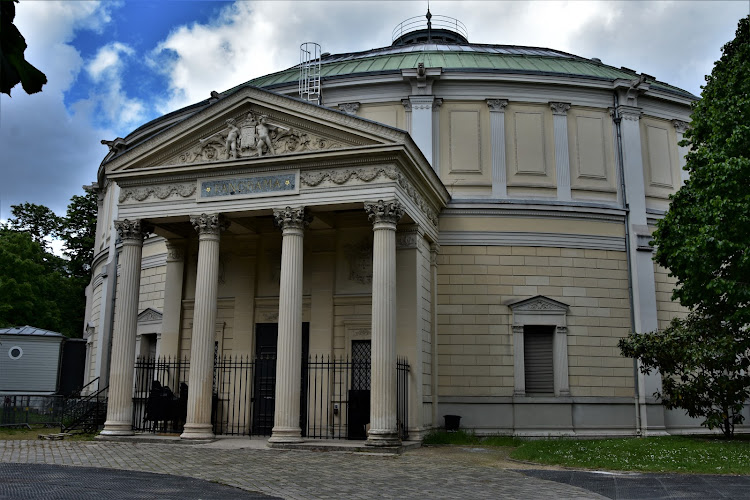
At 2bis Avenue Franklin Delano Roosevelt in the 8th arrondissement, Théâtre du Rond-Point occupies a unique circular building that embodies nearly two centuries of Parisian entertainment evolution from panorama exhibitions through Belle Époque ice dancing to contemporary theatrical excellence. Originally conceived in 1838 by Jacques Ignace Hittorff as a rotunda for the Champs-Élysées and reconstructed by Gabriel Davioud in 1857, this remarkable venue demonstrates how architectural innovation can serve diverse cultural functions while maintaining essential character as place dedicated to public entertainment and artistic excellence.
<\!-- /wp:paragraph --><\!-- wp:parameter -->
The building\u2019s architectural journey from Hittorff\u2019s 1839 rotunda through Davioud\u2019s neoclassical enhancement to contemporary theatrical adaptation reflects broader Parisian entertainment evolution while showing how great architectural structures can serve multiple cultural purposes across changing social and artistic contexts without losing essential character and cultural significance.
<\!-- /wp:paragraph --><\!-- wp:heading {"level":3} -->
Davioud\u2019s neoclassical enhancement and panorama innovation
<\!-- /wp:heading --><\!-- wp:parameter -->
Gabriel Davioud\u2019s 1857 reconstruction enhanced the rotunda\u2019s neoclassical style while creating optimal circular spaces for panoramic painting displays around interior walls, demonstrating how 19th-century architects could adapt existing structures to serve new entertainment technologies while maintaining architectural distinction and cultural sophistication appropriate to Champs-Élysées cultural programming.
<\!-- /wp:paragraph --><\!-- wp:parameter -->
The circular plan\u2019s effectiveness for immersive art experiences established architectural precedents that would prove equally valuable for theatrical performance, showing how architectural solutions for one cultural function can enhance subsequent artistic and entertainment uses through flexible spatial design and optimal audience-performer relationships.
<\!-- /wp:paragraph --><\!-- wp:heading {"level":3} -->
<\!-- /wp:heading --><\!-- wp:parameter -->
The 1894 transformation into Palais de Glace, where visitors danced on ice during the Belle Époque\u2019s height, demonstrates how entertainment venues could embrace innovative recreational technologies while serving sophisticated social functions that attracted Parisian high society seeking novel cultural and social experiences within elegant architectural settings.
<\!-- /wp:paragraph --><\!-- wp:parameter -->
This ice dancing phase reflects broader Belle Époque fascination with technological entertainment innovation and social activities that combined physical recreation with cultural sophistication, establishing precedents for how entertainment venues could serve both recreational and cultural functions within unified programming approaches.
<\!-- /wp:paragraph --><\!-- wp:heading {"level":3} -->
Contemporary creation focus and multidisciplinary programming
<\!-- /wp:heading --><\!-- wp:parameter -->
Under current direction by Laurence de Magalhaes and Stéphane Ricordel, the theatre\u2019s dedication to contemporary creation through exclusive presentation of living playwrights\u2019 works, combined with cosmopolitan multidisciplinary programming featuring over thirty shows annually, demonstrates how historic venues can serve cutting-edge artistic development while maintaining architectural integrity and cultural distinction.
<\!-- /wp:paragraph --><\!-- wp:parameter -->
The venue\u2019s three performance spaces—including 760-seat Salle Renaud-Barrault and additional studio spaces—enable diverse programming from drama and dance to music and hybrid performances while accommodating international artists within intimate settings that enhance performer-audience connection and artistic innovation.
<\!-- /wp:paragraph --><\!-- wp:heading {"level":3} -->
Cultural hub integration and comprehensive programming
<\!-- /wp:heading --><\!-- wp:parameter -->
The theatre\u2019s integration of café-restaurant, gallery, and bookshop within the performance complex creates comprehensive cultural environments where audiences can extend their artistic experiences through pre-show dining, post-performance discussion, and ongoing cultural engagement that demonstrates how contemporary theatres can serve broader cultural education and community building functions.
<\!-- /wp:paragraph --><\!-- wp:parameter -->
For visitors to the Champs-Élysées interested in contemporary theatre, historic entertainment architecture, or innovative cultural programming, Théâtre du Rond-Point offers an exceptional encounter with how Hittorff and Davioud\u2019s architectural vision continues serving contemporary artistic creation through commitment to living playwrights and multidisciplinary performance. The theatre demonstrates that great cultural institutions emerge when historic architecture meets contemporary artistic innovation, creating venues that honor both architectural heritage and ongoing creative development while establishing comprehensive cultural destinations that serve both immediate entertainment needs and broader cultural education essential for understanding how artistic innovation continues enriching urban cultural life.
<\!-- /wp:paragraph -->