
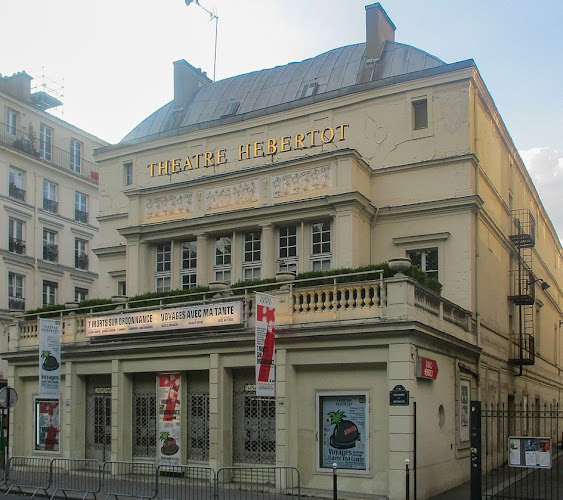
At 78 bis Boulevard des Batignolles in the 17th arrondissement stands one of Paris’s most prestigious theatrical institutions—the Théâtre Hébertot. For nearly two centuries, this intimate venue has served as a showcase for literary giants and theatrical innovators, from Samuel Beckett to Eugène Ionesco, cementing its reputation as a crucible of avant-garde performance and dramatic excellence.
## From Batignolles Beginnings to Cultural Institution
The theatre’s story begins in 1838 when it opened as the Théâtre des Batignolles, serving the growing neighborhood that would become a haven for artists and writers. The original building reflected the 19th-century Parisian passion for live entertainment, providing a cultural gathering place for residents of this emerging district.
In 1907, the venue was renamed Théâtre des Arts, signaling its elevated artistic ambitions. This transformation reflected Paris’s growing appreciation for theatrical innovation and literary adaptation. The name change marked the beginning of the theatre’s reputation for hosting sophisticated, intellectually challenging productions.
The theatre acquired its current name in 1940, honoring Jacques Hébertot, a distinguished playwright and journalist who championed experimental theatre and literary adaptation. This naming represented more than mere tribute—it established the venue’s commitment to hosting work that challenged conventional theatrical boundaries.
## Literary Theatre and Post-War Innovation
Following World War II, the Théâtre Hébertot became a vital center for the renewal of French theatre. The venue’s 315-seat capacity created an intimate atmosphere perfect for the psychologically complex works that emerged from the existentialist movement and Theatre of the Absurd.
The theatre has welcomed some of history’s greatest literary dramatists, including Jean Anouilh, whose plays explored moral complexity and historical tragedy; Eugène Ionesco, whose absurdist masterpieces like “The Bald Soprano” redefined theatrical possibility; and Samuel Beckett, whose revolutionary approach to dramatic structure and human existence transformed modern theatre.
## Samuel Beckett and the Absurdist Revolution
While “Waiting for Godot” premiered at the Théâtre de Babylone in January 1953, the Théâtre Hébertot played a crucial role in establishing Beckett’s reputation in Paris. In June 1956, Roger Blin’s production of “En attendant Godot” was performed at the Hébertot, bringing Beckett’s revolutionary vision to a wider Parisian audience.
This production represented more than a simple transfer—it marked the Hébertot’s commitment to hosting work that challenged audiences intellectually and emotionally. Beckett’s presence at the theatre, documented in photographs with the cast and director, demonstrated the venue’s appeal to serious literary artists.
The success of Beckett’s work at the Hébertot helped establish the theatre as a destination for audiences seeking intellectually rigorous drama. The intimate setting proved perfect for Beckett’s exploration of human isolation and existential uncertainty.
## The Architecture of Intimacy
The Théâtre Hébertot’s 315-seat capacity creates an unmatched sense of proximity between performers and audience. This intimacy serves the venue’s commitment to literary drama, where subtle psychological nuances and complex dialogue require close attention.
The theatre’s design reflects 19th-century French theatrical architecture, with elegant proportions that create acoustic excellence and visual clarity. Every seat provides an excellent view of the stage, ensuring that audiences can appreciate both the grand gestures and subtle details that define great dramatic performance.
This architectural intimacy has made the venue particularly suited to one-person shows, chamber pieces, and works that depend on psychological complexity rather than spectacular effects. The space encourages the kind of concentrated attention that literary drama demands.
## Contemporary Cultural Mission
Today, the Théâtre Hébertot continues its mission of presenting sophisticated theatrical work that challenges and enlightens audiences. The venue regularly hosts literary adaptations, contemporary dramas, and works by emerging playwrights who follow in the tradition of Beckett and Ionesco.
The theatre’s programming reflects a commitment to intellectual rigor and artistic excellence. Productions range from classic French drama to contemporary international works, always selected for their literary merit and theatrical innovation.
## Visiting the Théâtre Hébertot
**Address:** 78 bis Boulevard des Batignolles, 75017 Paris
**Metro:** Rome (Line 2) or Place de Clichy (Lines 2, 13)
**Capacity:** 315 seats
**Atmosphere:** Intimate, literary, sophisticated
**Programming:** Classical and contemporary drama, literary adaptations
The theatre offers excellent accessibility features and provides a welcoming environment for both regular theatre-goers and newcomers to dramatic performance. The venue’s staff takes pride in maintaining the highest standards of hospitality and cultural service.
## The Literary Theatre Legacy
The Théâtre Hébertot represents the best of Parisian cultural tradition: a commitment to intellectual excellence, artistic innovation, and the belief that theatre can explore the deepest questions of human existence. The venue’s history with literary giants like Beckett, Ionesco, and Anouilh demonstrates theatre’s power to transform written literature into living dramatic experience.
For visitors seeking authentic Parisian culture beyond tourist attractions, the Théâtre Hébertot offers an opportunity to engage with the same artistic traditions that have made Paris a global cultural capital. Here, literature comes alive, ideas become embodied, and audiences participate in the ongoing conversation between past and present that defines great theatre.
## Cultural Pilgrimage for Theatre Lovers
Attending a performance at the Théâtre Hébertot creates a direct connection to the literary and theatrical movements that shaped modern culture. The intimate setting, distinguished history, and commitment to artistic excellence make every visit a cultural pilgrimage—an opportunity to experience theatre as Samuel Beckett, Eugène Ionesco, and other literary giants intended: as a profound exploration of what it means to be human.