
<\!-- wp:heading -->
Alfred Butt\u2019s neo-Moorish palace and the temple of French musical theatre
<\!-- /wp:heading --><\!-- wp:paragraph -->
At 25 rue de Mogador in the 9th arrondissement, Théâtre Mogador stands as one of Paris\u2019s most spectacular musical theatre venues and a unique synthesis of English music hall tradition with neo-Moorish architectural splendor. Founded in 1913 by Alfred Butt, president general of the Société des music-halls parisiens and director of ten London establishments including the celebrated Palace and Empire, this magnificent theatre demonstrates how international entertainment expertise could create distinctively Parisian cultural institutions that serve both local and global audiences.
<\!-- /wp:paragraph --><\!-- wp:parameter --><\!-- wp:paragraph -->
Originally named “Palace Theatre” to appeal to British soldiers during World War I, the venue was inaugurated in 1919 in the presence of President Woodrow Wilson before being renamed Théâtre Mogador after the historic Moroccan city, with future American President Franklin D. Roosevelt attending the renaming ceremony. This international political recognition reflects the theatre\u2019s immediate importance in Franco-American cultural relations.
<\!-- /wp:paragraph --><\!-- wp:heading {"level":3} -->
Bertie Crewe and Édouard-Jean Niermans\u2019 architectural collaboration
<\!-- /wp:heading --><\!-- wp:parameter --><\!-- wp:paragraph -->
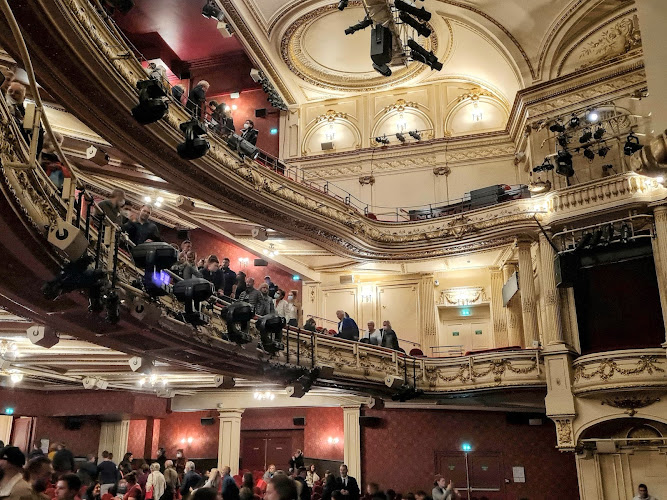
The collaboration between engineer Bertie Crewe—globally renowned for theatre construction achievements—and architect Édouard-Jean Niermans created an extraordinary synthesis of English music hall functionality with neo-Moorish decorative magnificence. The majestic façade and sumptuously ornamented 1,600-seat auditorium demonstrate how theatrical architecture could achieve both practical performance excellence and aesthetic distinction worthy of international cultural attention.
<\!-- /wp:paragraph --><\!-- wp:parameter --><\!-- wp:paragraph -->
The English-style horseshoe auditorium configuration, with all seats facing the stage, creates optimal sight lines and acoustic properties while the neo-Moorish decorative elements throughout interior and exterior establish distinctive visual identity that makes Mogador immediately recognizable among Parisian entertainment venues.
<\!-- /wp:paragraph --><\!-- wp:heading {"level":3} -->
Legendary performers and cultural milestones
<\!-- /wp:heading --><\!-- wp:parameter --><\!-- wp:paragraph -->
The theatre\u2019s golden age featured performances by Mistinguett—France\u2019s most popular singer throughout the 1920s and 1930s—Sergei Diaghilev\u2019s Ballet Russes, and subsequent international stars including Édith Piaf, the Rolling Stones, and Sting. This programming demonstrated the venue\u2019s unique ability to serve both French cultural tradition and international entertainment innovation within unified theatrical setting.
<\!-- /wp:paragraph --><\!-- wp:parameter --><\!-- wp:paragraph -->
The theatreu2019s role in hosting Broadway-style productions including “A Chorus Line” (1995), “My Fair Lady” (1983), “Les Misérables” (1991), “Cats,” “The Lion King,” and “Mamma Mia!” established Mogador as the premier venue for American musical theatre in Paris, creating French audiences for international musical comedy while maintaining distinctive Parisian theatrical character.
<\!-- /wp:paragraph --><\!-- wp:heading {"level":3} -->
Fire recovery and architectural restoration
<\!-- /wp:heading --><\!-- wp:parameter --><\!-- wp:paragraph -->
The dramatic 2016 fire shortly before “Phantom of the Opera\u2019s” premiere, followed by extensive renovation and 2017 reopening with “Grease,” demonstrates the theatre\u2019s resilience and continued cultural importance. The 2007 restoration project by architect Stéphane Millet, which recovered original colors and moldings, ensures preservation of the neo-Moorish decorative scheme while updating technical capabilities for contemporary productions.
<\!-- /wp:paragraph --><\!-- wp:parameter --><\!-- wp:paragraph -->
These restoration efforts reflect French commitment to maintaining historic entertainment venues that achieve irreplaceable cultural significance through architectural distinction and performance excellence, creating institutions that serve both preservation and ongoing cultural purposes.
<\!-- /wp:paragraph --><\!-- wp:heading {"level":3} -->
Broadway in Paris and international musical theatre
<\!-- /wp:heading --><\!-- wp:parameter --><\!-- wp:paragraph -->
Mogador\u2019s evolution into “the temple of musical comedies” demonstrates how French theatrical institutions can successfully adapt international entertainment forms while maintaining distinctive national character and aesthetic identity. The theatre\u2019s success in presenting Broadway productions with French sensibility creates unique cultural synthesis that serves both artistic innovation and cultural preservation.
<\!-- /wp:paragraph --><\!-- wp:parameter --><\!-- wp:paragraph -->
For visitors to Paris interested in musical theatre, neo-Moorish architecture, or international entertainment culture, Théâtre Mogador offers an exceptional encounter with how theatrical excellence can transcend national boundaries while maintaining cultural specificity. The theatre proves that great performance venues emerge when architectural distinction meets programming excellence, creating environments where international artistic movements can flourish while contributing to local cultural life and establishing new traditions that honor both global artistic development and distinctive national theatrical character.
<\!-- /wp:paragraph -->