
<\!-- wp:heading -->
Napoleon III and Haussmann\u2019s civic architecture embodying Second Empire administrative excellence
<\!-- /wp:heading --><\!-- wp:paragraph -->
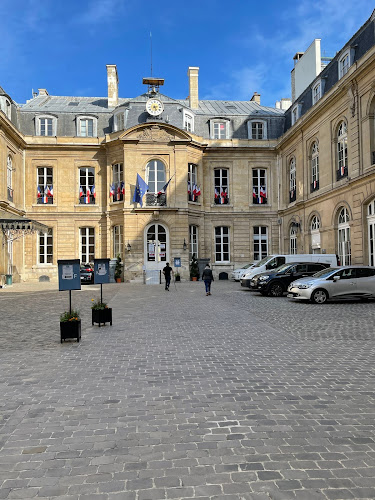
At 6 rue Drouot in the 9th arrondissement, the Town Hall of Paris IXe arrondissement stands as a distinguished example of Napoleon III and Baron Haussmann\u2019s comprehensive urban transformation that created modern Paris through systematic civic architecture and administrative reform. Built during the vast public works program that modernized Paris between 1853 and 1870, this neoclassical civic building embodies the Second Empire\u2019s vision of unified administrative architecture that could serve both practical governmental functions and symbolic representation of imperial authority and urban sophistication.
<\!-- /wp:paragraph --><\!-- wp:parameter --><\!-- wp:paragraph -->
The town hall\u2019s integration within Haussmann\u2019s broader urban planning demonstrates how individual civic buildings could contribute to comprehensive neighborhood transformation while maintaining architectural dignity appropriate to democratic governance and community administrative needs that serve local residents within imperial administrative systems.
<\!-- /wp:paragraph --><\!-- wp:heading {"level":3} -->
Haussmannian architectural unity and civic design
<\!-- /wp:heading --><\!-- wp:parameter -->
The building\u2019s neoclassical façade and grand interior spaces reflect Haussmann\u2019s systematic approach to civic architecture that created uniform aesthetic standards while providing functional spaces for local administration, public meetings, and ceremonial occasions that serve both practical governmental needs and broader cultural functions appropriate to democratic civic life.
<\!-- /wp:parameter --><\!-- wp:parameter -->
This architectural approach demonstrates how Second Empire urban planning could coordinate individual building design with broader neighborhood development while establishing civic architecture standards that influenced French municipal building design throughout the 19th century and beyond.
<\!-- /wp:paragraph --><\!-- wp:heading {"level":3} -->
Administrative center and community governance
<\!-- /wp:heading --><\!-- wp:parameter -->
The town hall\u2019s continuing function as administrative center for the 9th arrondissement demonstrates how Haussmann\u2019s civic architecture could serve both imperial administrative needs and republican democratic governance while maintaining architectural dignity and functional efficiency that makes civic buildings worthy of public respect and community pride.
<\!-- /wp:parameter --><\!-- wp:parameter -->
The building\u2019s role as hub of district activity provides visitors with opportunities to witness contemporary Parisian civic life while understanding how 19th-century administrative architecture continues serving practical governmental functions within neighborhoods that balance historical heritage with contemporary administrative requirements.
<\!-- /wp:paragraph --><\!-- wp:heading {"level":3} -->
Second Empire legacy and democratic adaptation
<\!-- /wp:heading --><\!-- wp:parameter -->
The successful adaptation of imperial administrative architecture to serve republican democratic governance demonstrates how great civic buildings can transcend their original political context to serve evolving governmental needs while maintaining essential character as spaces dedicated to public service and community governance.
<\!-- /wp:paragraph --><\!-- wp:parameter -->
The town hall\u2019s architectural preservation within contemporary administrative use shows how historic civic buildings can maintain both aesthetic excellence and practical function while serving democratic values and community needs that honor both historical heritage and contemporary civic requirements.
<\!-- /wp:paragraph --><\!-- wp:heading {"level":3} -->
Civic heritage and community identity
<\!-- /wp:heading --><\!-- wp:parameter -->
Today, the Town Hall of Paris IXe arrondissement continues embodying Haussmann\u2019s vision of civic architecture that serves both practical administrative needs and broader cultural functions while maintaining architectural dignity that inspires public respect for democratic institutions and community governance that makes neighborhoods function effectively.
<\!-- /wp:paragraph --><\!-- wp:parameter -->
For visitors to the 9th arrondissement interested in Haussmannian architecture, Second Empire urban planning, or French civic institutions, the town hall offers insight into how Napoleon III and Haussmann\u2019s administrative vision continues serving contemporary democratic governance. The building demonstrates that great civic architecture emerges when administrative efficiency meets architectural excellence, creating governmental institutions that serve both practical public administration and broader cultural purposes while establishing civic dignity and community pride that make democratic governance worthy of public support and architectural celebration.
<\!-- /wp:paragraph -->