
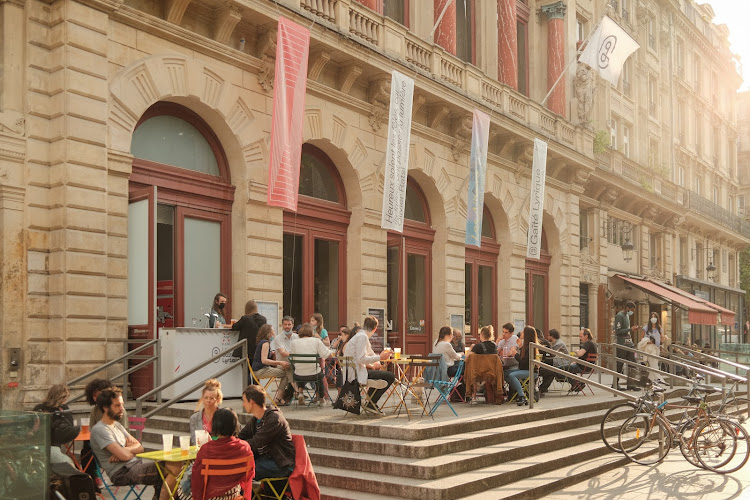
Théâtre de la Gaîté
La Gaîté Lyrique is a Paris Centre Culturel landmark located in the 3 arrondissement. From Boulevard du Crime to digital arts center: Hittorff\u2019s Italian-style theatre transformed The legacy of Théâtre de la Gaîté spans over two and a half centuries of Parisian entertainment history, from its 1759 founding by Jean-Baptiste Nicolet on Boulevard du Temple […]
La Gaîté Lyrique is a Paris Centre Culturel landmark located in the 3 arrondissement.
<\!-- wp:heading -->
From Boulevard du Crime to digital arts center: Hittorff\u2019s Italian-style theatre transformed
<\!-- /wp:heading --><\!-- wp:paragraph -->
The legacy of Théâtre de la Gaîté spans over two and a half centuries of Parisian entertainment history, from its 1759 founding by Jean-Baptiste Nicolet on Boulevard du Temple to its contemporary incarnation as La Gaîté Lyrique digital arts center at 3-5 rue Papin in the 3rd arrondissement. This remarkable evolution demonstrates how theatrical institutions can adapt to serve changing cultural needs while preserving essential connections to their foundational artistic mission.
<\!-- /wp:paragraph --><\!-- wp:paragraph -->
Originally established as the Théâtre de Nicolet for “Grands Danseurs,” the venue gained royal recognition when invited to perform for Louis XV\u2019s court in 1772, earning the prestigious title “Grands-Danseurs du Roi” before prudently adopting the less politically charged “Théâtre de la Gaîté” during the Republic\u2019s founding in 1792.
<\!-- /wp:paragraph --><\!-- wp:heading {"level":3} -->
Boulevard du Temple\u2019s theatrical golden age
<\!-- /wp:heading --><\!-- wp:parameter --><\!-- wp:paragraph -->
During its Boulevard du Temple period, the theatre evolved from fairground entertainment to sophisticated theatrical programming, pioneering the development of pantomime into early 19th-century melodrama. By 1779, Bachaumont\u2019s Mémoires secrets noted that the theatre\u2019s industrial ambition had reached heights where “his theatre today rivals the Opera itself,” demonstrating how popular entertainment could achieve artistic legitimacy.
<\!-- /wp:paragraph --><\!-- wp:parameter --><\!-- wp:paragraph -->
This Boulevard du Crime location established the theatre\u2019s reputation for innovative programming that combined spectacular entertainment with artistic excellence, creating precedents for how popular venues could serve both commercial success and cultural advancement.
<\!-- /wp:paragraph --><\!-- wp:heading {"level":3} -->
Hittorff and Cusin\u2019s Italian-style reconstruction
<\!-- /wp:heading --><\!-- wp:parameter --><\!-- wp:paragraph -->
The 1862 relocation during Haussmann\u2019s modernization led architects Jacques-Ignace Hittorff and Alphonse Cusin to create a new Italian-style theatre on rue Papin that opened September 3, 1862. This reconstruction demonstrated how 19th-century architects could honor theatrical tradition while adapting to new urban contexts and contemporary performance requirements.
<\!-- /wp:paragraph --><\!-- wp:parameter --><\!-- wp:paragraph -->
The new theatre\u2019s design, with its 1,800-seat auditorium and orchestra pit accommodating 60 musicians, created optimal conditions for the operetta and opera programming that would define the venue\u2019s artistic identity through its transformation into the Gaîté-Lyrique.
<\!-- /wp:paragraph --><\!-- wp:heading {"level":3} -->
Offenbach\u2019s directorship and operatic innovation
<\!-- /wp:heading --><\!-- wp:parameter --><\!-- wp:paragraph -->
Jacques Offenbach\u2019s directorship from 1873 to 1874 established the theatre as a premier venue for operatic innovation, with premieres including his “Le roi Carotte” (1872) and “Le voyage dans la lune” (1875). Camille Saint-Saëns\u2019 “Le timbre d\u2019argent” premiered here in 1877, while Serge Diaghilev\u2019s Ballets Russes performed in 1921, 1923, and 1925, including premieres of Prokofiev\u2019s “Chout” and Stravinsky\u2019s “Les noces.”
<\!-- /wp:paragraph --><\!-- wp:parameter --><\!-- wp:paragraph -->
This programming demonstrates the theatre\u2019s continued role in advancing musical and choreographic art through support for both established and experimental works that pushed artistic boundaries while maintaining connection to popular entertainment traditions.
<\!-- /wp:paragraph --><\!-- wp:heading {"level":3} -->
Contemporary digital arts transformation
<\!-- /wp:heading --><\!-- wp:parameter --><\!-- wp:paragraph -->
The City of Paris\u2019s 2010 transformation of the space into La Gaîté Lyrique digital arts and modern music center demonstrates how historic performance venues can evolve to serve contemporary artistic movements while preserving essential architectural elements. The preservation of the original façade, entrance, and foyer maintains visual connections to theatrical heritage while creating spaces for digital art, electronic music, and multimedia performance.
<\!-- /wp:paragraph --><\!-- wp:parameter --><\!-- wp:paragraph -->
This adaptive reuse reflects understanding that great performance venues can transcend specific art forms to serve the essential human need for spaces where artistic innovation and cultural expression can flourish, whether through 18th-century pantomime, 19th-century opera, or 21st-century digital arts.
<\!-- /wp:paragraph --><\!-- wp:heading {"level":3} -->
Cultural continuity and artistic evolution
<\!-- /wp:heading --><\!-- wp:parameter --><\!-- wp:paragraph -->
Today, La Gaîté Lyrique maintains the site\u2019s 250-year tradition of artistic innovation while serving contemporary cultural needs through programming that embraces digital arts, electronic music, video games, and multimedia performance. This evolution demonstrates how performance venues can honor their historical mission while adapting to serve new art forms and audiences.
<\!-- /wp:paragraph --><\!-- wp:parameter --><\!-- wp:paragraph -->
For visitors to Paris interested in theatrical history, operatic heritage, or contemporary digital arts, the site offers an exceptional encounter with cultural evolution and artistic adaptation. The venue proves that great performance spaces achieve lasting significance by maintaining their essential character as places where artistic innovation can flourish while adapting to serve the creative expressions that define each successive generation, creating cultural continuity that connects past achievement with contemporary artistic exploration.
<\!-- /wp:paragraph -->